
BlogDestinationsWalking in Portugal: Best Walking Trips and Routes
Walking in Portugal: Best Walking Trips and Routes

Nadine Gravis
Oct 5, 2026
Whether exploring Algonquin Provincial Park by canoe, or hiking Torres del Paine, Nadine loves spending time outdoors and sharing about her experiences.
Portugal packs an unusual amount of variety into a relatively small country. You’ll encounter coastal paths that follow cliffs and fishing villages, mountain routes crossing granite plateaus and green valleys, and island walks that pass volcanic craters, levadas, forests, all stamped with Atlantic viewpoints. Many of the best trips finish each day in places where food, wine, and local history are as memorable as the walking itself.
The mainland ranges from the wild southwest coast to the mountains of Peneda-Gerês and Serra da Estrela, while Madeira and the Azores add volcanic island landscapes offshore.
Several of these regions can also be explored on Self-Guided Portugal Hiking Trips, with accommodation, luggage transfers, and route information arranged in advance on many itineraries.
What Are Walking Trips in Portugal Like?
Walking conditions change considerably between regions. The Fisherman’s Trail is exposed and sandy in places, Madeira combines levadas with steeper mountain paths, and Serra da Estrela introduces longer days in Portugal’s highest mountain range. Sintra and the Algarve offer easier access to towns, beaches, and cultural sites, while the Azores involve island-to-island travel and volcanic terrain.
Most multi-day trips use hotels or guesthouses rather than mountain huts. Luggage transfers are common on self-guided itineraries, so walkers can carry a daypack between overnight stops. Sand, heat, and repeated climbs can make moderate coastal distances feel harder than expected.
Best Walking Trips and Routes in Portugal
1. Rota Vicentina and the Fisherman’s Trail
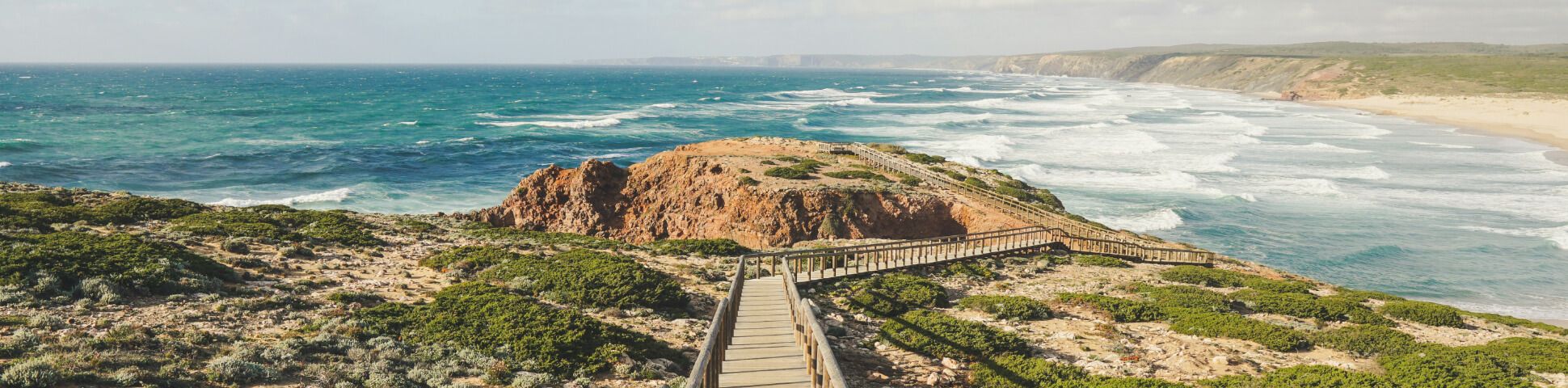
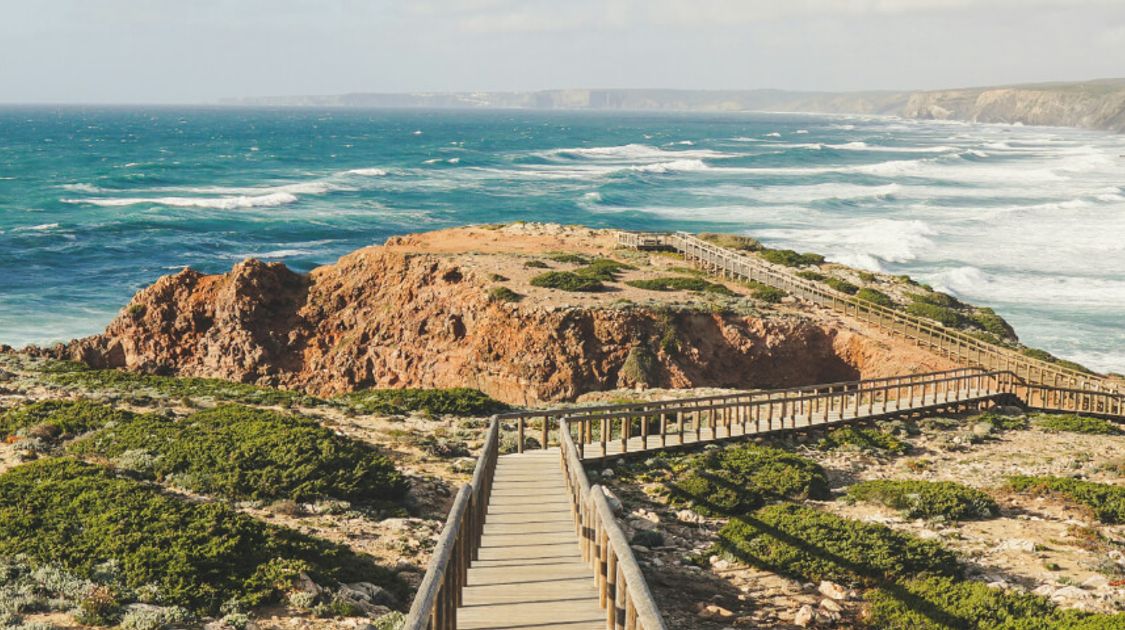
The southwest coast is one of Portugal’s signature walking areas. The Fisherman’s Trail forms part of the wider Rota Vicentina network and follows the Atlantic through Alentejo and the western Algarve. Expect cliffs, beaches, low scrub, fishing villages, and long sections where the sea stays in view for most of the day.
Some stages cross loose sand, so the route can feel more tiring than its elevation profile suggests. Vila Nova de Milfontes, Almograve, Zambujeira do Mar, and Odeceixe provide regular village stops along the wild coastline.
The Portugal’s Fisherman’s Trail Walking Tour is a seven-day self-guided trip rated Moderate (3/5). Daily walking reaches up to 21 km, and luggage transfers are included.
2. Madeira and the Levada Walks
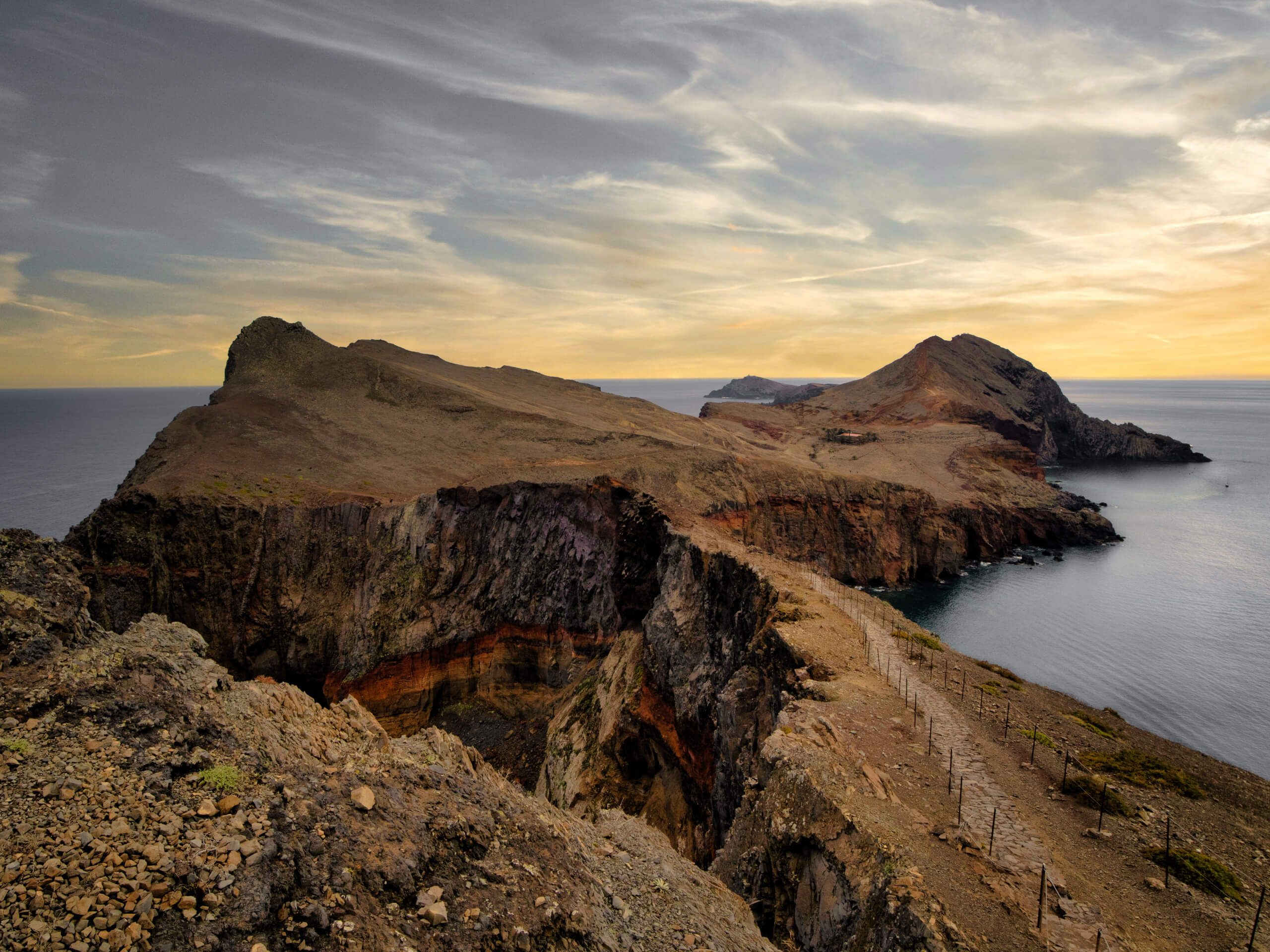
Madeira is defined by steep volcanic mountains dropping toward the Atlantic, with walking routes that cut through laurel forest, follow irrigation channels known as levadas, and traverse old paths between villages. The island’s compact size makes it possible to experience several landscapes without spending large amounts of time in transit.
Levada walks can be gentle, but Madeira also has narrow mountain paths, exposed viewpoints, and steeper ascents. Conditions can change quickly between the north coast, central highlands, and sunnier south.
The Madeira Walking Tour is an eight-day self-guided trip also rated Moderate (3/5). It uses Machico and Santana as bases and includes levadas, coastal paths, laurel forest, and sections of the Caminho Real.
Madeira and the Levada Walks
3. The Algarve Coast
The Algarve is best known for beaches, but its coastline also works well for a walking holiday. Around Lagos and the western Algarve, paths run above limestone and sandstone cliffs, through small bays, and past headlands such as Ponta da Piedade. Farther east, the landscape opens into the wetlands and barrier islands of Ria Formosa.
Historic towns, beaches, restaurants, and swimming are never far from the trail. Summer heat can be demanding, so cooler months are often more comfortable for longer days on foot.
The Algarve Coastal Walking Tour is an eight-day self-guided trip that also falls under the Moderate (3/5) category. It runs year-round and includes luggage transfers, with the longest stage reaching 19 km through Ria Formosa Nature Park.
4. The Azores
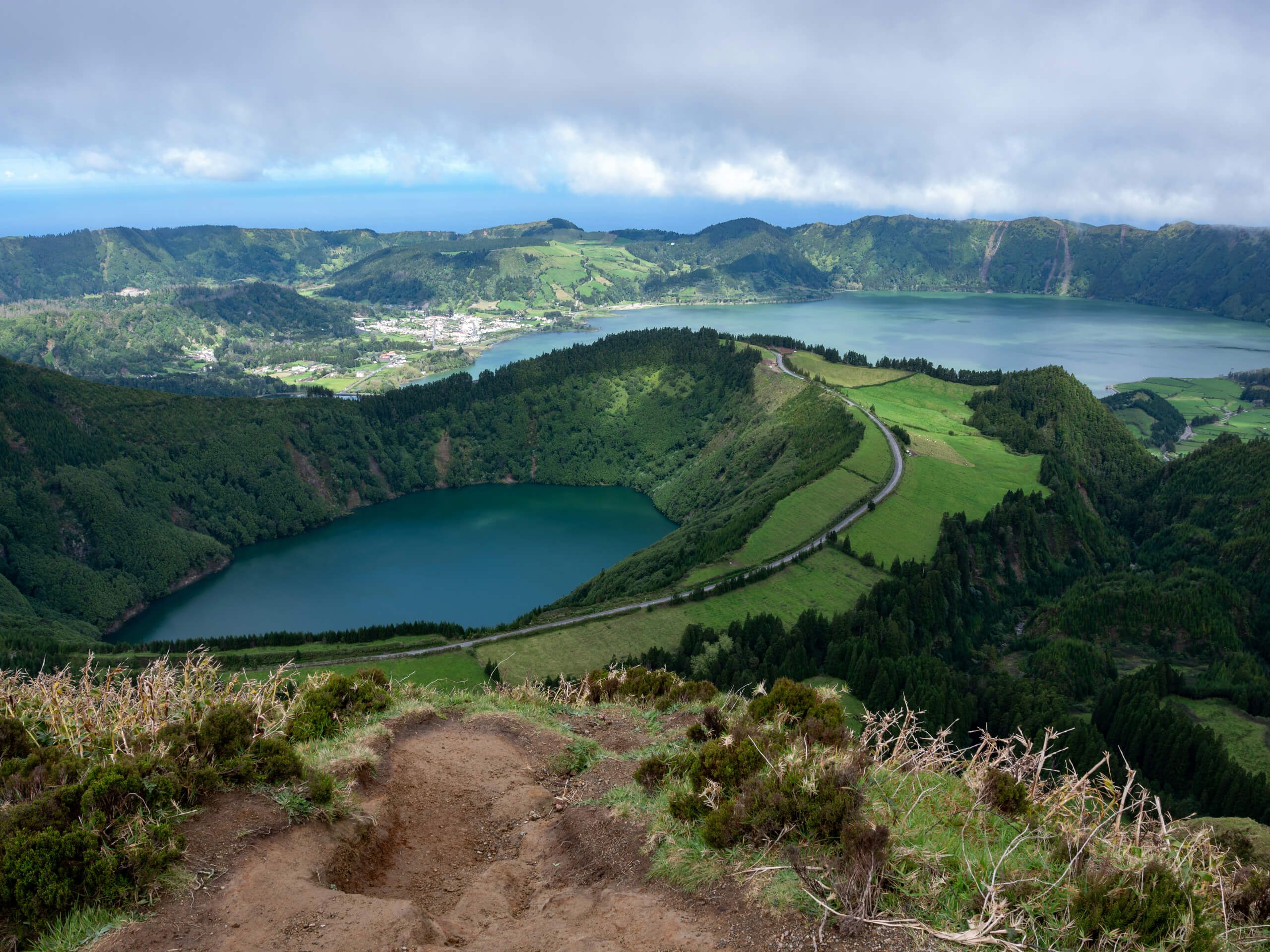
The Azores bring volcanic terrain into the mix. Walking routes cross crater rims, green pastures, forests, lava landscapes, and coastal fajãs, the flat areas formed at the base of steep cliffs. Each island has its own character, so a longer trip can combine several different landscapes rather than staying on a single trail.
Pico gives views of Portugal’s highest mountain, São Jorge is known for steep coastal descents to fajãs, and Faial adds volcanic craters around Capelinhos. Ferries connect the islands.
The Azores Triangle Walking Tour is a 10-day, moderately ranked (3/5) self-guided trip. It visits Pico, São Jorge, and Faial and includes daily walks ranging from shorter coastal routes to a seven-hour day on São Jorge.
The Azores
5. Peneda-Gerês National Park
Northern Portugal becomes greener and more mountainous in Peneda-Gerês National Park. Trails link granite hills, river valleys, old stone villages, forests, and traditional footpaths. Compared with the exposed Atlantic routes farther south, the scenery here feels more rural and enclosed, with many walks passing through settled mountain landscapes.
Elevation changes can still be substantial, but most routes combine mountain scenery with old paths, villages, and settled valleys rather than a high alpine environment.
The Hiking Peneda-Gerês National Park is an eight-day self-guided trip rated Moderate (3/5) and operates from March to November.
6. Douro Valley
The Douro Valley is a walking destination where the landscape has been shaped as much by people as by geology. Vineyard terraces climb steep hills above the river, and routes connect wine estates, villages, viewpoints, and sections of countryside away from the main roads.
Days on foot can be paired with winery visits, local meals, and stays in small towns, giving the Douro a strong food and wine component alongside the walking.
The Douro Wine Region Hiking Tour is an eight-day self-guided trip rated Moderate (3/5) and runs from March to November.
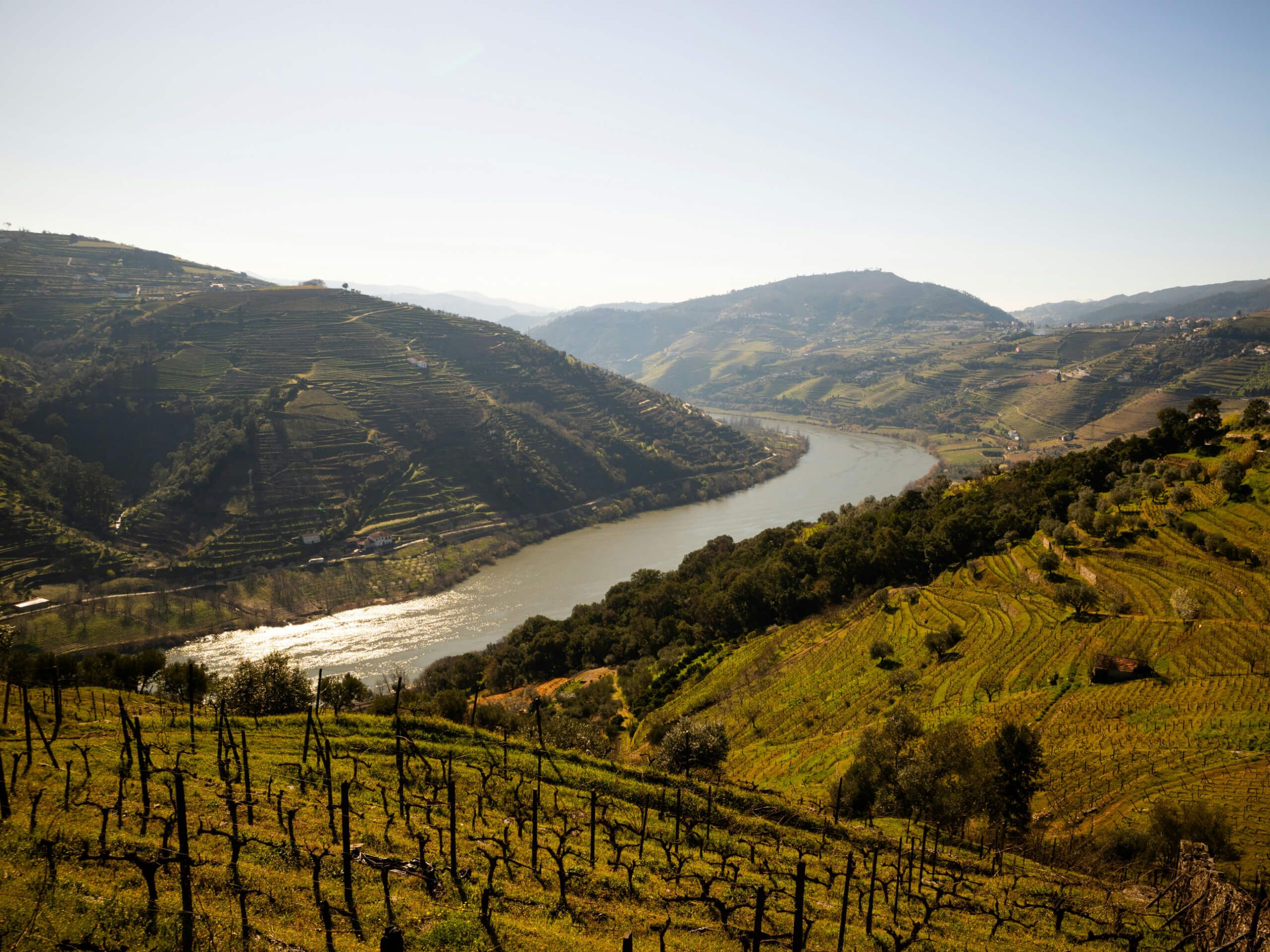
Douro Valley
7. Serra da Estrela
Serra da Estrela is Portugal’s highest mountain range and offers the most sustained mountain walking on the mainland. Trails cross granite ridges, glacial valleys, forests, pastures, and villages such as Manteigas and Loriga. The landscape is open and rugged in places, with longer daily walks than many of Portugal’s coastal itineraries.
Routes can include the Zêzere glacial valley, waterfalls, old Roman roads, and La Torre, the highest point in mainland Portugal, while overnight stays remain in villages and country accommodation.
The Serra da Estrela Walking Tour is an eight-day self-guided trip also rated Moderate (3/5). Daily walks can reach six to seven hours, with departures from May to October.
8. Sintra and Cascais
Sintra offers a very different kind of walking close to Lisbon. Forest paths, palace grounds, old estates, hilltop castles, and coastal trails can all fit into the same trip. The route toward Cascais gradually leaves Sintra’s wooded hills behind and reaches beaches, cliffs, vineyards, and fishing villages on the Atlantic coast.
The area is well connected and can work as a shorter walking trip or an active extension to a stay in Lisbon.
The Sintra to Cascais Walking Tour is an eight-day self-guided trip rated Easy (2/5) and available year-round.
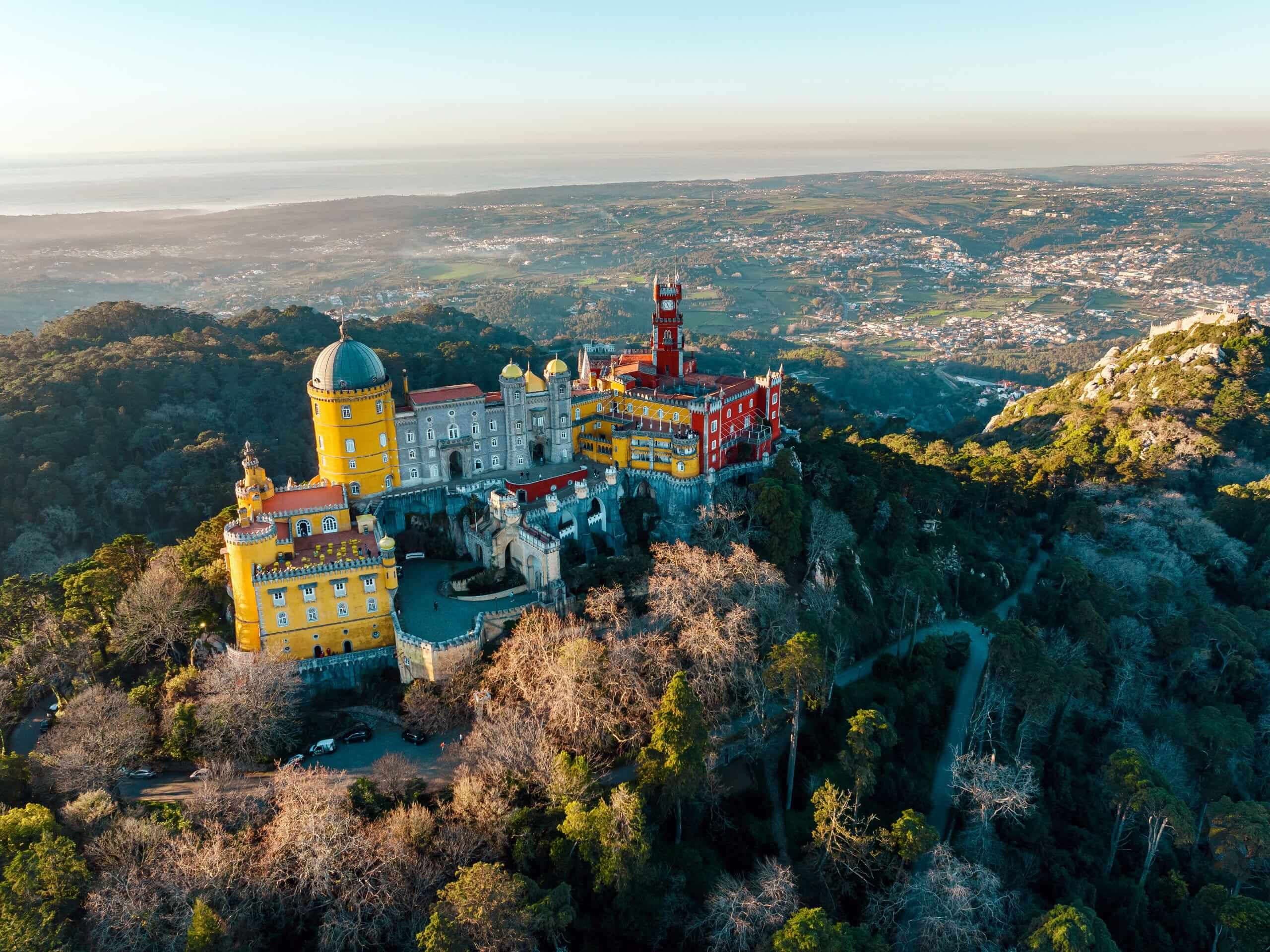
Sintra and Cascais
What About the Portuguese Camino?
The Portuguese Camino is one of the country’s major long-distance walking routes, but it has a different character from the regional trips above. The route continues north toward Santiago de Compostela in Spain and combines pilgrimage history with towns, villages, rural tracks, and long consecutive walking days.
There are several Portuguese Camino variants, including the Central and Coastal routes. Route, starting point, and number of stages shape the experience, so Camino planning is best treated separately from a regional walking holiday.
See Self-Guided Portuguese Camino Trips for route-specific itineraries from Portugal toward Santiago de Compostela.
When Is the Best Time for Walking in Portugal?
Spring and autumn are the most versatile seasons for walking on the Portuguese mainland. Temperatures are generally easier for longer days on foot, and coastal and inland regions are often more comfortable than during the hottest part of summer. Northern and mountain regions can be cooler and wetter, while southern Portugal stays milder for more of the year.
The exact season depends on the route. The Algarve, Sintra, Fisherman’s Trail, and many Madeira itineraries operate across most or all of the year. Peneda-Gerês runs from March to November, Douro itineraries from March to November, and Serra da Estrela from May to October. Island weather in Madeira and the Azores can change quickly, so waterproof layers remain useful even outside winter.
How Difficult Are Walking Trips in Portugal?
Portugal has a broad range of walking difficulty. Sintra and some island or coastal itineraries can be relatively gentle, while Serra da Estrela, Madeira, and longer stages on the Fisherman’s Trail require more endurance. Sand, stone steps, heat, and repeated climbs can matter just as much as total distance.
Before booking a multi-day route, check the longest walking day, daily ascent, terrain underfoot, and how many consecutive days you will be walking. A traveller comfortable with 15 km on flat pavement may find the same distance much harder on sand, steep coastal paths, or mountain trails.
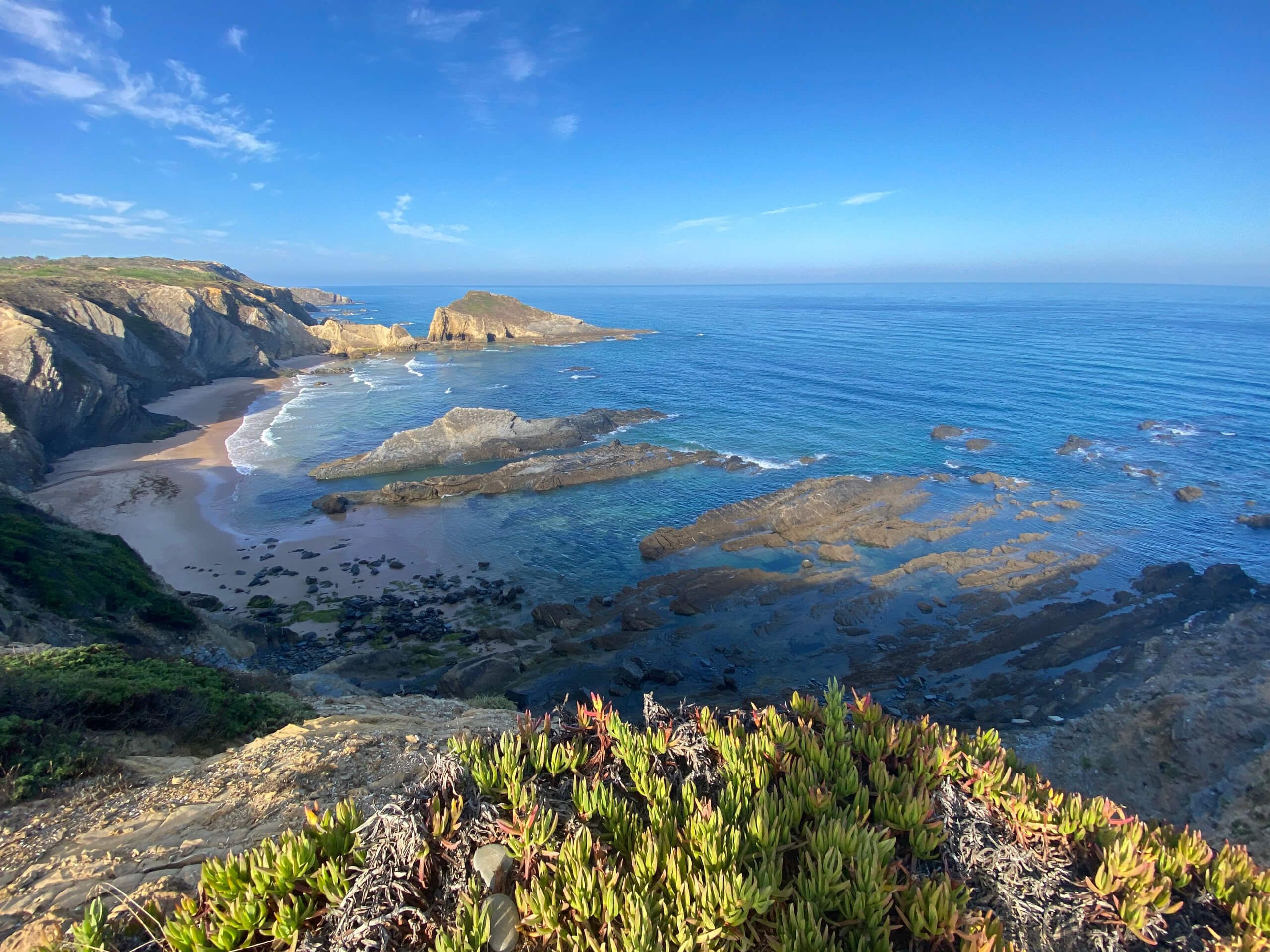
Rota Vicentina and the Fisherman’s Trail
Self-Guided or Guided Walking in Portugal?
Portugal is particularly well suited to self-guided walking because many established routes connect towns, villages, and accommodation. On organised self-guided trips, luggage transfers and route information can remove much of the planning while leaving the walking day flexible.
Guided travel can make more sense for travellers who want interpretation, a fixed group, or additional support in less familiar terrain. Whichever format you choose, check current trail conditions, weather, transport, and any local access restrictions before setting out.
Frequently Asked Questions
What is a good first walking trip in Portugal?
Sintra and Cascais is one of the easier options, with established infrastructure, cultural stops, and an Easy (2/5) self-guided itinerary. The Algarve also offers accessible coastal walking with towns and beaches close to the route.
Where is the best coastal walking in Portugal?
The Fisherman’s Trail and wider Rota Vicentina are the best-known long-distance coastal options in southwest Portugal. The Algarve adds shorter cliff and beach walks, while Madeira and the Azores provide island coastlines with steeper volcanic terrain.
Is Madeira good for a walking holiday?
Yes! Madeira combines levada walks, laurel forest, old island paths, mountain viewpoints, and coastal scenery. Routes range from easier canal-side walks to harder mountain days, so itinerary choice matters.
Can I walk in Portugal year-round?
Some areas can be walked throughout the year, especially the Algarve, Sintra, Madeira, and parts of the southwest coast. Mountain routes and hotter inland areas have narrower comfortable seasons, so timing should be matched to the specific region.
Nadine Gravis
Oct 5, 2026
Whether exploring Algonquin Provincial Park by canoe, or hiking Torres del Paine, Nadine loves spending time outdoors and sharing about her experiences.
Recent stories
Destinations
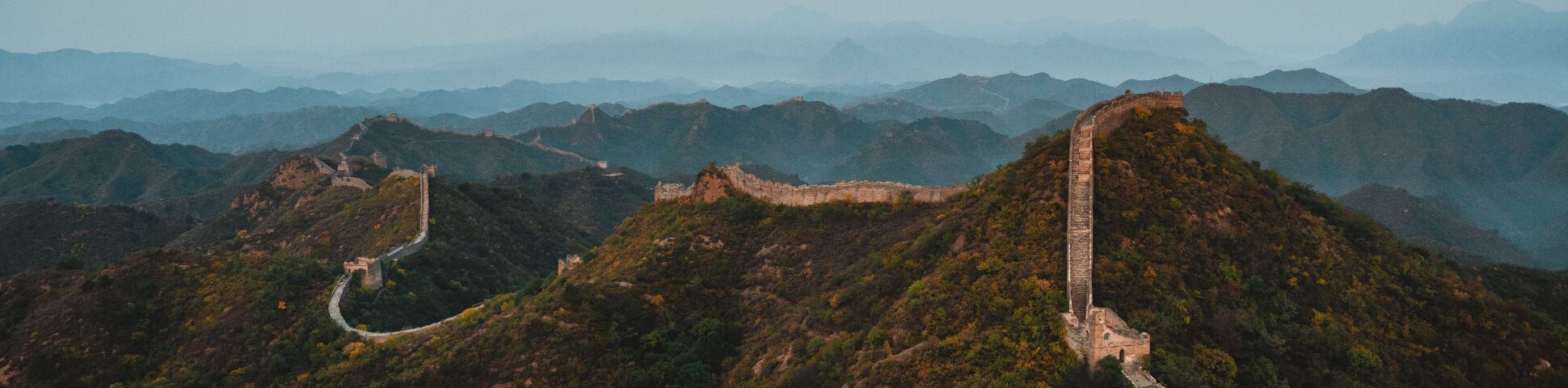
Walking in China: Best Walking Trips and Routes
China offers walking experiences that range from historic routes to high mountain treks.
Kelsey Krahn
Oct 2, 2026
Destinations
Tour du Mont Blanc Map: Route, Variations and Key Stops
The Tour du Mont Blanc is a long-distance hiking circuit around the Mont Blanc massif, passing through France, Italy and Switzerland.
Lynn Campbell
Sep 28, 2026
Destinations
Trekking in Pakistan: Best Hikes and Walking Routes
Walking in northern Pakistan means high-altitude trekking through glacier valleys, alpine meadows, high passes, and remote settlements beneath some of the world’s highest mountains.
Richard Campbell
Sep 28, 2026