
BlogDestinationsHiking the Alpine Crossing: A Complete Guide
Hiking the Alpine Crossing: A Complete Guide
Table of contents

Lynn Campbell
Sep 1, 2026
Lynn is the co-Founder of 10Adventures. She had never slept outside until she was 28 years old, and now is an ardent hiker, backpacker, traveller, and bike tourer!
The Alpine Crossing is a four-stage hiking journey from Munich to Venice, crossing Germany, Austria, and northern Italy. It links Bavarian lakes, Tyrolean valleys, South Tyrol, the Dolomites, Lake Garda, and the Veneto. Talk about diverse scenery! Rather than following one uninterrupted high-alpine trail every day, the route combines established walking paths with occasional transfers, cable cars, trains, and valley connections. That makes it possible to cross a remarkable range of landscapes without carrying everything on your back or spending every night in a mountain hut.
This journey is divided into four self-guided stages that can be completed separately or combined into a 29-day trip. The first stage begins in Munich, the second crosses from Bavaria through Austria into South Tyrol, the third continues through Trentino to Lake Garda, and the final stage reaches Venice. Hikers who want extra time in the northern Alps can add another walking trip in Bavaria through Self-Guided Germany Hiking Tours or in Tyrol through Self-Guided Austria Hiking Tours.
What Is the Alpine Crossing?
Like we mentioned above, the Alpine Crossing is a hiking adventure from Munich to Venice. It crosses Germany, Austria, and northern Italy. The scenically diverse route should not be confused with New Zealand's Tongariro Alpine Crossing or with the E5 route from Oberstdorf to Meran. The Munich-to-Venice journey begins in the Bavarian foothills, crosses the central Alps, and gradually descends toward the warmer landscapes of northern Italy and the Venetian lagoon.
The full series takes 29 days when the four stages are linked together. Each individual stage is eight days, but combining them removes some repeated arrival and departure days. Hotels are used throughout, and luggage transfers are included on the stage tours. Digital route information, GPS navigation, and support are also provided, so hikers carry only what they need during the day.
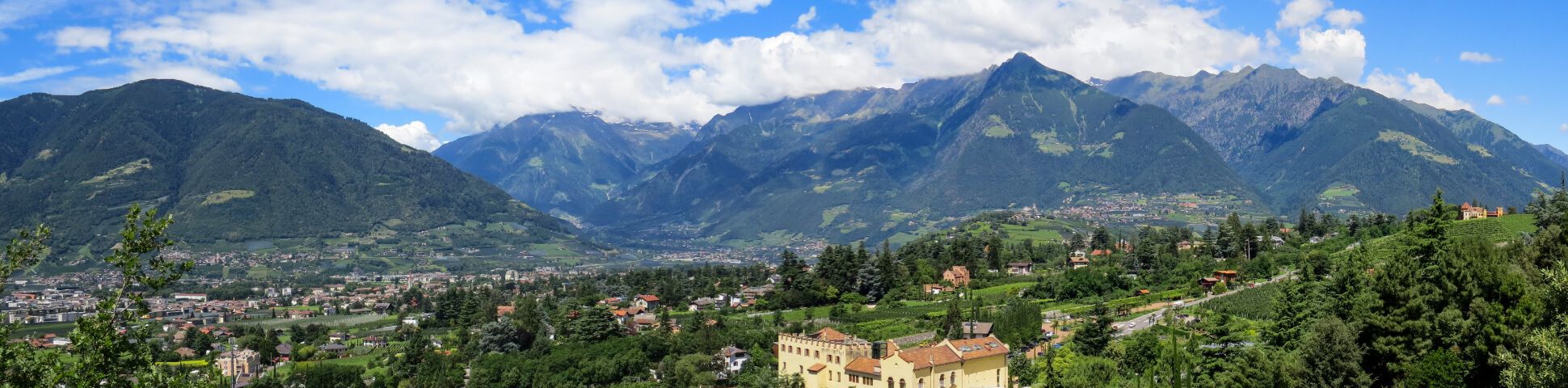
Stage 1
The Four Stages of the Munich to Venice Alpine Crossing
Stage 1: Munich to Garmisch
The first stage starts gently. The Self-Guided Alpine Crossing 1: Munich to Garmisch is an eight-day moderate trip that moves from Munich through the Bavarian lake district toward Garmisch-Partenkirchen. Early days follow the Isar, Lake Starnberg, gorges, forests, and lakeside paths before the walking becomes more mountainous near Kochel and Garmisch.
This stage is a good introduction for hikers who want to build into the crossing rather than begin immediately with demanding Alpine terrain. The most strenuous days include climbs around Herzogstand and Mount Wank, but cable-car descents help reduce the impact of the longer mountain stages. It also gives the whole journey a clear sense of progression, from city and foothills into the high mountains.
Stage 2: Garmisch to Meran
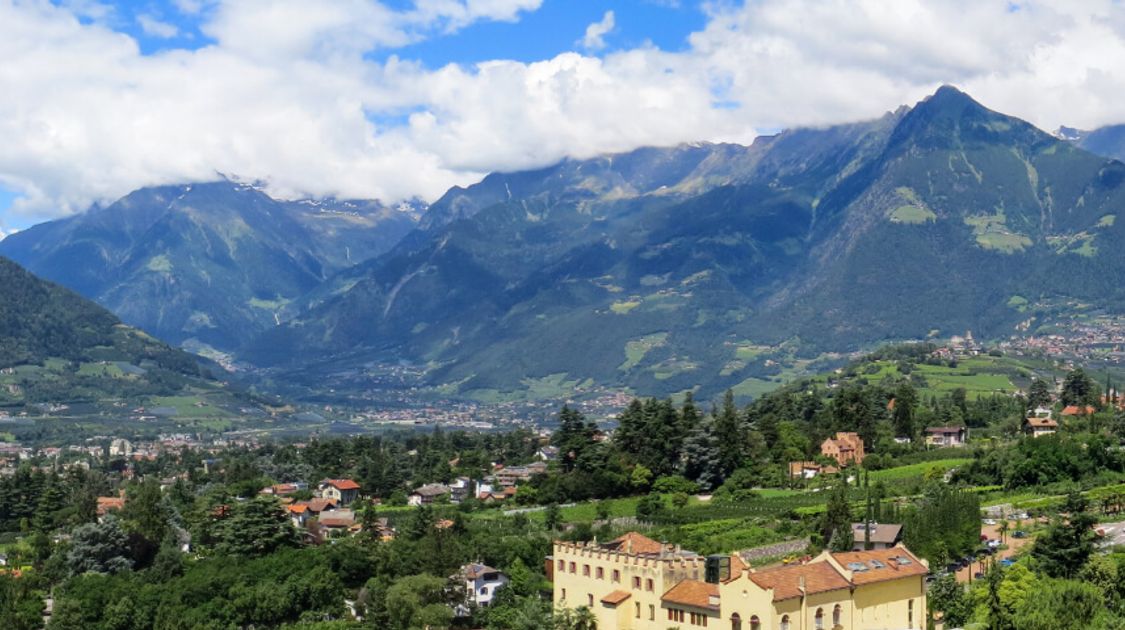
Self-Guided Alpine Crossing 2: Garmisch to Meran is where the journey becomes a true cross-border mountain trek. The eight-day route is rated hard and runs from Garmisch-Partenkirchen through Mittenwald and the Tyrol before reaching South Tyrol in Italy.
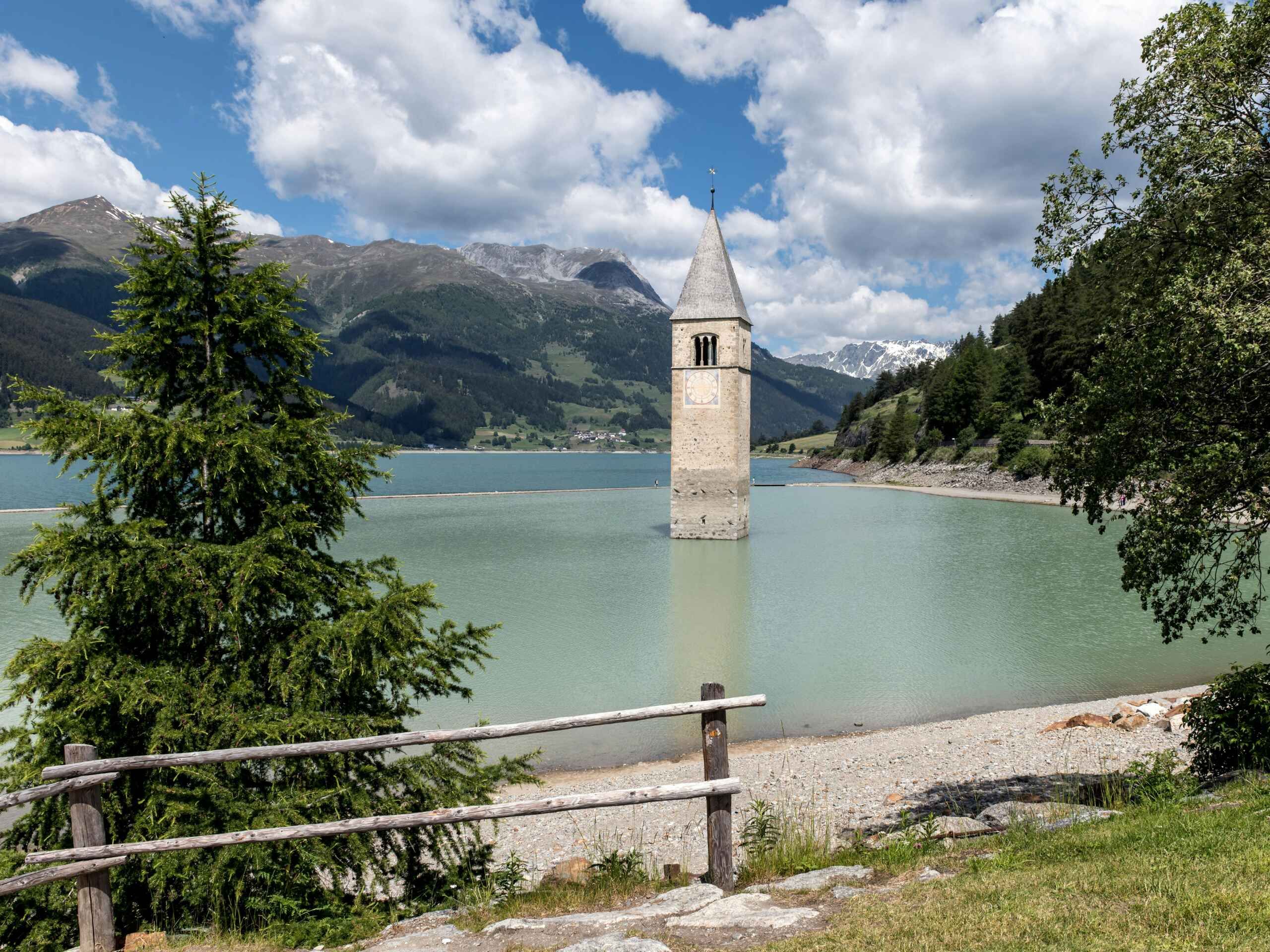
Highlights include the Partnach Gorge, Leutasch, the Inn Valley, Reschen Pass, Reschensee with its submerged church tower, and the walking paths around Naturns and Meran. Daily hikes can reach about five hours, and some sections require surefootedness. Short transfers and public transport are used where they make the route more practical, so this is not a continuous high-pass traverse in the style of a hut-to-hut mountaineering route.
Stage 2
Stage 3: Meran to Lake Garda
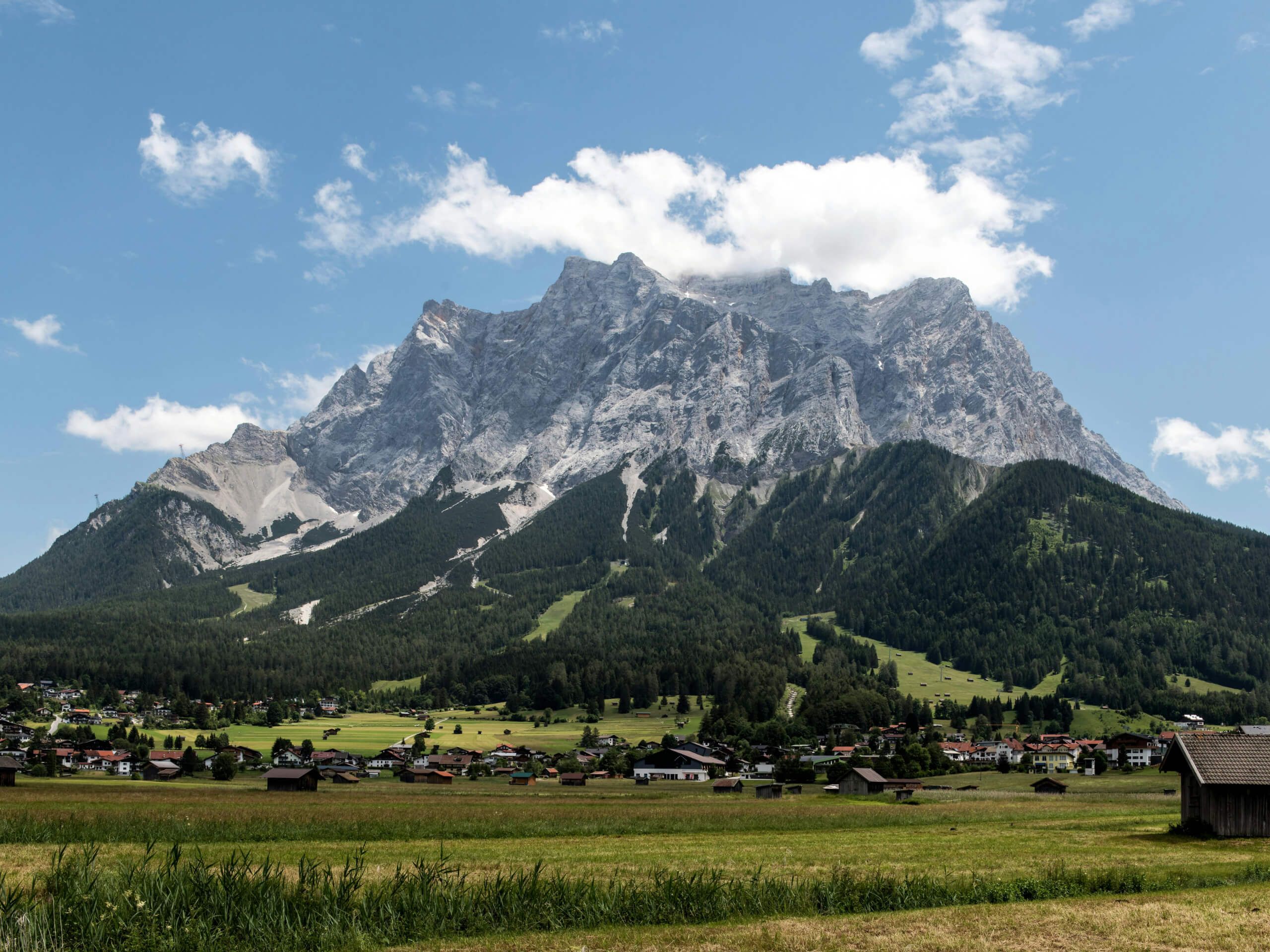
South of Meran, the scenery changes again. The Self-Guided Alpine Crossing 3: Meran to Lake Garda is another eight-day hard stage, passing vineyards, orchards, castles, high plateaus, the Brenta Dolomites, and Trentino before finishing beside Lake Garda.
The route includes walking through South Tyrol's wine country, Lake Kaltern, Coredo, Molveno, and a day hike in the Brenta Dolomites. Typical hiking days run for three to six hours, with several longer ascents and descents. By the time the route reaches Riva del Garda, alpine forest and rock begin to give way to olive groves, cypress trees, and a distinctly Mediterranean atmosphere.
Stage 4: Lake Garda to Venice
The Self-Guided Alpine Crossing 4: Lake Garda to Venice completes the journey in eight days. It is rated moderate and follows trails from the northern end of Lake Garda through Trento, Valsugana, the Brenta Valley, Bassano del Grappa, and the Sile river landscape before reaching Venice.
This final section is less consistently high-alpine than stages two and three, but it still includes mountain paths, steep sections, and days of around four to five hours on foot. The route moves from the Lake Garda mountains into vineyards, historic towns, river paths, and finally the lowlands around the Venetian lagoon.
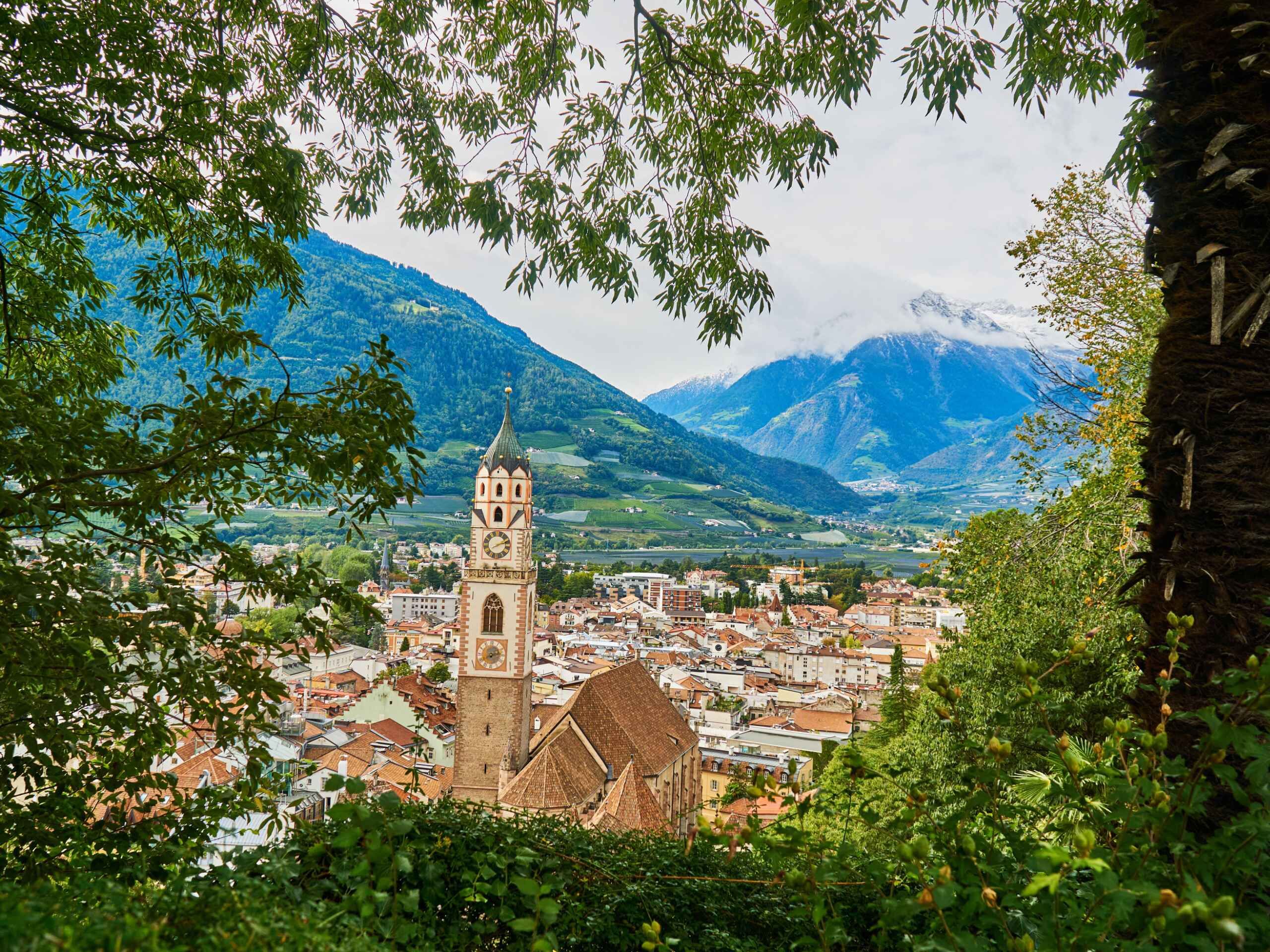
Stage 3
How Difficult Is the Alpine Crossing?
Difficulty varies considerably across the four stages:
- Munich to Garmisch is rated moderate
- Garmisch to Meran and Meran to Lake Garda are rated hard
- Lake Garda to Venice returns to moderate
The hardest parts are not about technical climbing. They come from repeated hiking days, long ascents and descents, narrow or steep mountain paths, and the need to stay comfortable on uneven terrain.
For the middle stages, good basic fitness and surefootedness are important. Hikers should prepare for consecutive days of several hours on foot and be comfortable with sustained climbs. Training with regular hill walks, stairs, and back-to-back hiking days is more useful than focusing only on speed or single-day distance.
How Long Does the Full Alpine Crossing Take?
The four 10Adventures stages can be combined into a 29-day Munich-to-Venice journey. That is much longer than shorter Alpine crossings such as the E5 because this route begins in Munich, continues through several different mountain regions, reaches Lake Garda, and then keeps going to Venice.
You do not need to complete all four parts at once. Each stage works as its own eight-day walking holiday. Hikers with limited time can choose the section that best matches their interests, then return for another stage later. Stages two and three provide the most sustained mountain walking, while stages one and four show the transition from the Bavarian foothills to the Venetian lagoon.
Best Time to Hike the Alpine Crossing in 2027
May to October covers the usual hiking window for all four stages, although conditions vary considerably between the Bavarian Alps, Tyrol, South Tyrol, and the lower Italian sections. Conditions can vary from year to year, especially early and late in the hiking season.
June and September are strong choices for hikers who want a balance of longer daylight and more comfortable temperatures. July and August can bring excellent high-mountain conditions but also warmer valleys and busier destinations. May and October can work on selected stages, though weather at elevation is less predictable and early or late snow can affect mountain paths.
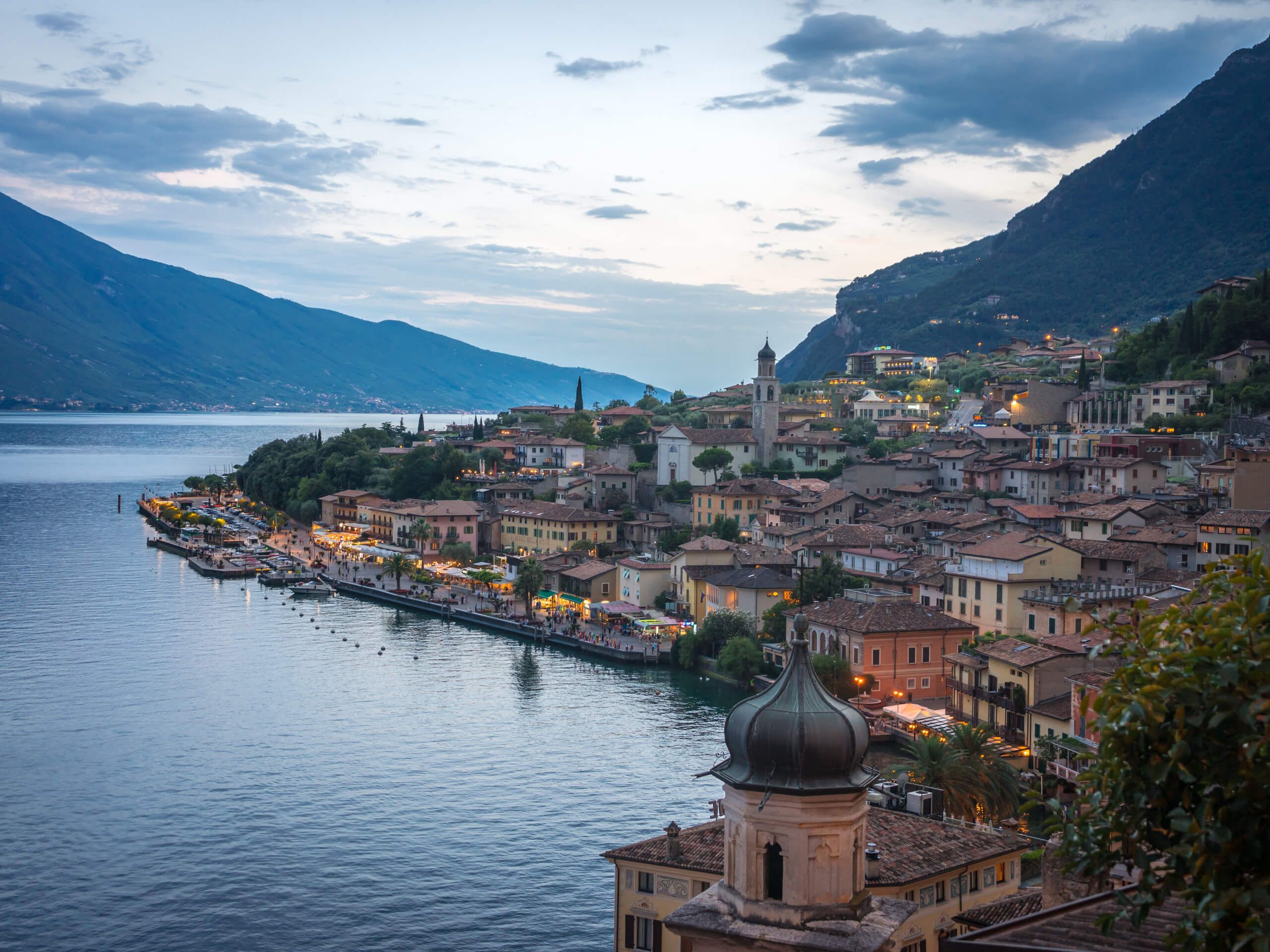
Stage 4
Why Choose a Self-Guided Alpine Crossing?
A self-guided format gives hikers control over the pace of the day while removing much of the logistical work. On the Alpine Crossing stage tours, accommodation, luggage transfers, digital route information, GPS navigation, and support are arranged. This setup is especially practical on a three-country journey that combines mountain paths, valley trails, transport connections, and hotel stays.
For hikers who prefer independent walking without a fully hut-based expedition, the hotel-based format allows time for lunch in a village, a longer stop around Meran or Lake Garda, and walking with a light daypack instead of carrying a full multi-week load. Hikers who want more time in South Tyrol or the Dolomites can continue with one of the Self-Guided Italian Alps Hiking Tours.
Alpine Crossing vs the E5
The E5 is another famous way to cross the Alps, but it is a different trip. The Self-Guided E5: Oberstdorf to Meran Trek runs for eight days from Bavaria through Tyrol to South Tyrol and is rated very hard. It includes high-Alpine terrain, major ascents and descents, and requires surefootedness and a head for heights.
The Munich-to-Venice Alpine Crossing is longer and more varied. It begins with gentler Bavarian foothills, includes two harder central stages, then continues beyond Meran through the Dolomites, Lake Garda, and Venice. Choose the E5 if you want a shorter and more concentrated high-Alpine challenge or head out on the four-stage Alpine Crossing if the appeal is a longer journey through changing landscapes and cultures.
Accommodation, Luggage Transfers, and What to Pack
The four stages are hotel-based rather than traditional hut-to-hut treks. Luggage transfers allow you to hike with a daypack, though some public transport or local transfers are required along the route. The stage itineraries also use cable cars or trains in places to connect walking sections or avoid impractical valley mileage.
Pack broken-in hiking shoes or boots, moisture-wicking layers, a waterproof shell, a warm mid-layer, sun protection, a refillable water bottle, trekking poles if you use them, and a small first-aid kit. Even in summer, mountain weather can change quickly. A light pair of gloves and a warm layer are worthwhile on the higher days, while the later Italian stages can be much warmer.
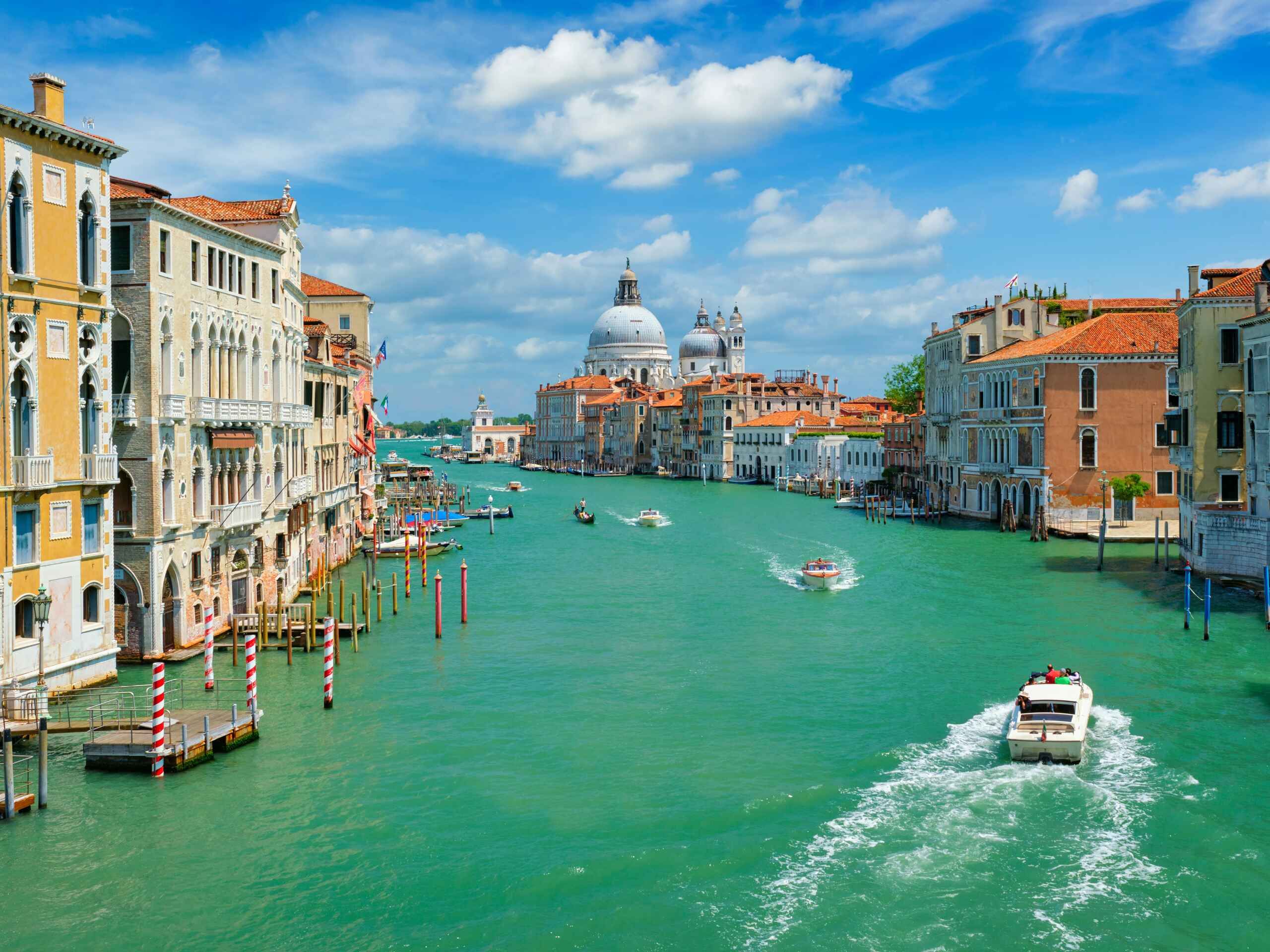
Venice
Frequently Asked Questions About the Alpine Crossing
Is the Alpine Crossing a single continuous trail?
No. The Munich-to-Venice Alpine Crossing links walking routes across Germany, Austria, and Italy, with some transfers, cable cars, trains, and public transport between sections. The focus is a long-distance hiking journey rather than walking every kilometre on one marked trail.
How long is the Munich to Venice Alpine Crossing?
The four-stage series can be combined into a 29-day trip from Munich to Venice. Each stage is also available as a separate eight-day walking holiday.
Which Alpine Crossing stage is the hardest?
Stages two and three are rated hard at 4/5. They include the most demanding mountain walking, with longer ascents and descents and sections where surefootedness is useful.
Can beginners hike the Alpine Crossing?
The full route is better suited to hikers with multi-day walking experience. Stage one is the most approachable introduction, while stages two and three require stronger fitness and confidence on mountain paths.
Does the Alpine Crossing include luggage transfers?
Yes. If you book a tour, luggage transfers are included along the four stages, so hikers can carry a daypack while their main luggage is moved between accommodations.
Where does the Alpine Crossing start and finish?
The full journey starts in Munich, Germany, and finishes in Venice, Italy. Along the way it crosses Bavaria, Austria's Tyrol, South Tyrol, Trentino, Lake Garda, and the Veneto.
Lynn Campbell
Sep 1, 2026
Lynn is the co-Founder of 10Adventures. She had never slept outside until she was 28 years old, and now is an ardent hiker, backpacker, traveller, and bike tourer!
Recent stories
Destinations
Elbe Cycle Route (Elberadweg): A Complete Guide to Cycling the Elbe
The Elbe Cycle Route is one of Central Europe's great river rides, following the Elbe from the Czech mountains through Saxony and northern Germany to the North Sea.
Kelsey Krahn
Aug 27, 2026
Destinations
Danube Cycle Path: A Complete Guide to Cycling the Danube
The Danube Cycle Path is one of Europe's classic long-distance cycling routes, combining riverside riding with historic towns.
Nadine Gravis
Aug 25, 2026
Destinations
ViaRhôna Cycle Route: A Complete Guide to Cycling the Rhône
The ViaRhôna cycle route follows the Rhône from the shores of Lake Geneva through vineyards, historic cities, small towns, and the landscapes of southern France before reaching the Mediterranean.
Richard Campbell
Aug 25, 2026