
BlogDestinationsCamping on the Tour du Mont Blanc: Where You Can Pitch a Tent
Camping on the Tour du Mont Blanc: Where You Can Pitch a Tent

Lynn Campbell
Oct 28, 2026
Lynn is the co-Founder of 10Adventures. She had never slept outside until she was 28 years old, and now is an ardent hiker, backpacker, traveller, and bike tourer!
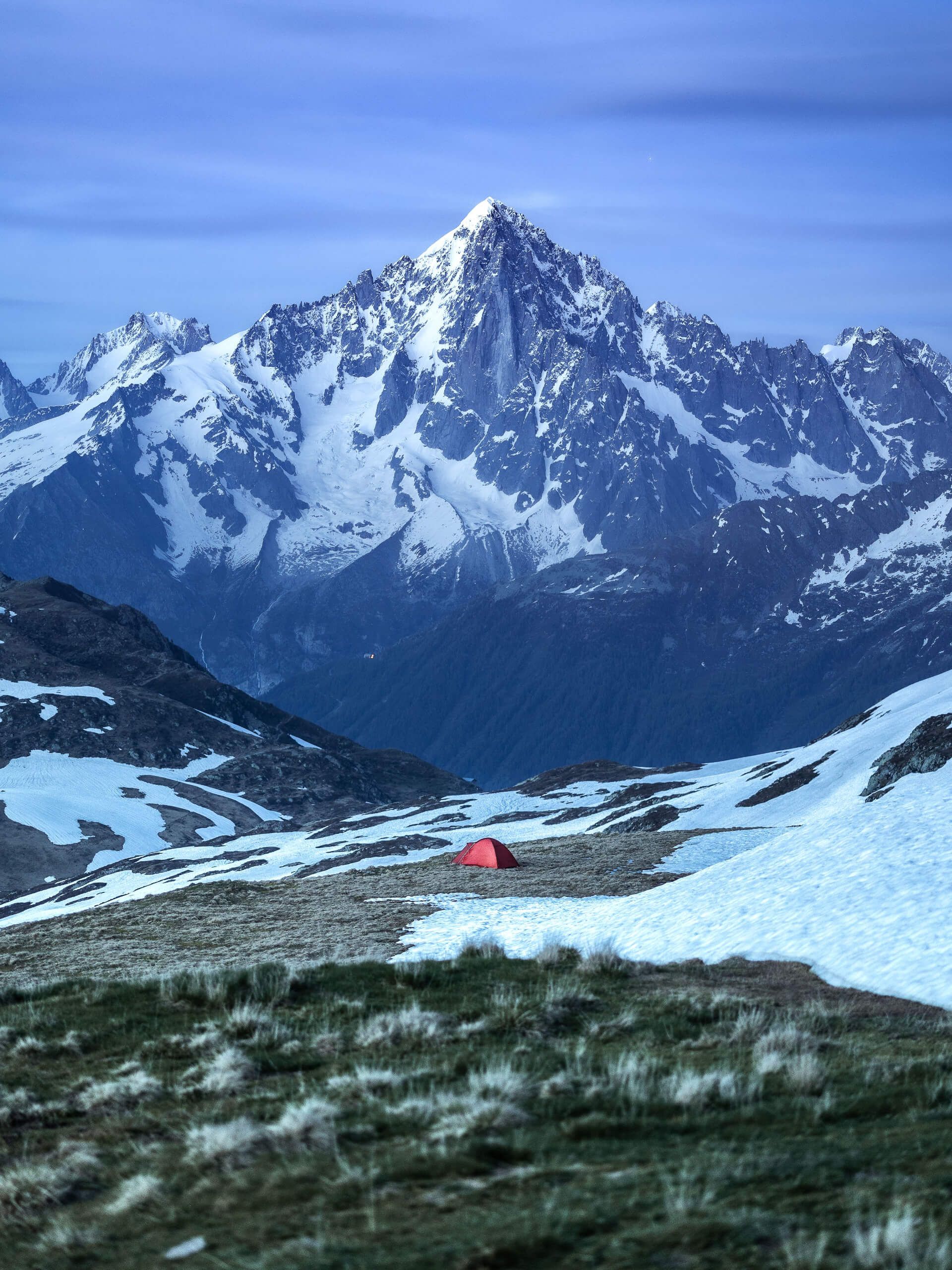
You can camp on the Tour du Mont Blanc (TMB), but you cannot simply pitch a tent at the end of each walking day. The trail crosses France, Italy and Switzerland, and the rules change by country, municipality and protected area. Some campsites are off the walking route, while the stretch around the French-Italian border leaves little room for an unplanned overnight stop.
Choose your overnight stops before deciding how far to walk each day or where you might need a bus. Our Tour du Mont Blanc map shows how Les Houches, Les Chapieux, Courmayeur, La Fouly and Trient fit around the loop.
Can you camp all the way around the Tour du Mont Blanc?
Yes, a tent-based trip is possible if you use a mix of campsites and authorised bivouac areas, and are prepared to leave the main trail for some nights. A route made entirely of legal pitches immediately beside the path is much harder to arrange. The Italian Val Veny and Val Ferret campsites, for example, sit away from the main TMB path. On some stages, a hut or other indoor stay may be the simpler choice.
Camping and bivouacking are different. A campsite is a designated place to pitch a tent, often with toilets or showers. A bivouac is a temporary overnight setup subject to local conditions, sometimes beside a refuge or within a marked area. One night in a tent does not automatically make a spot legal. Check the rules for each place where you intend to stay.
Where can you pitch a tent along the route?
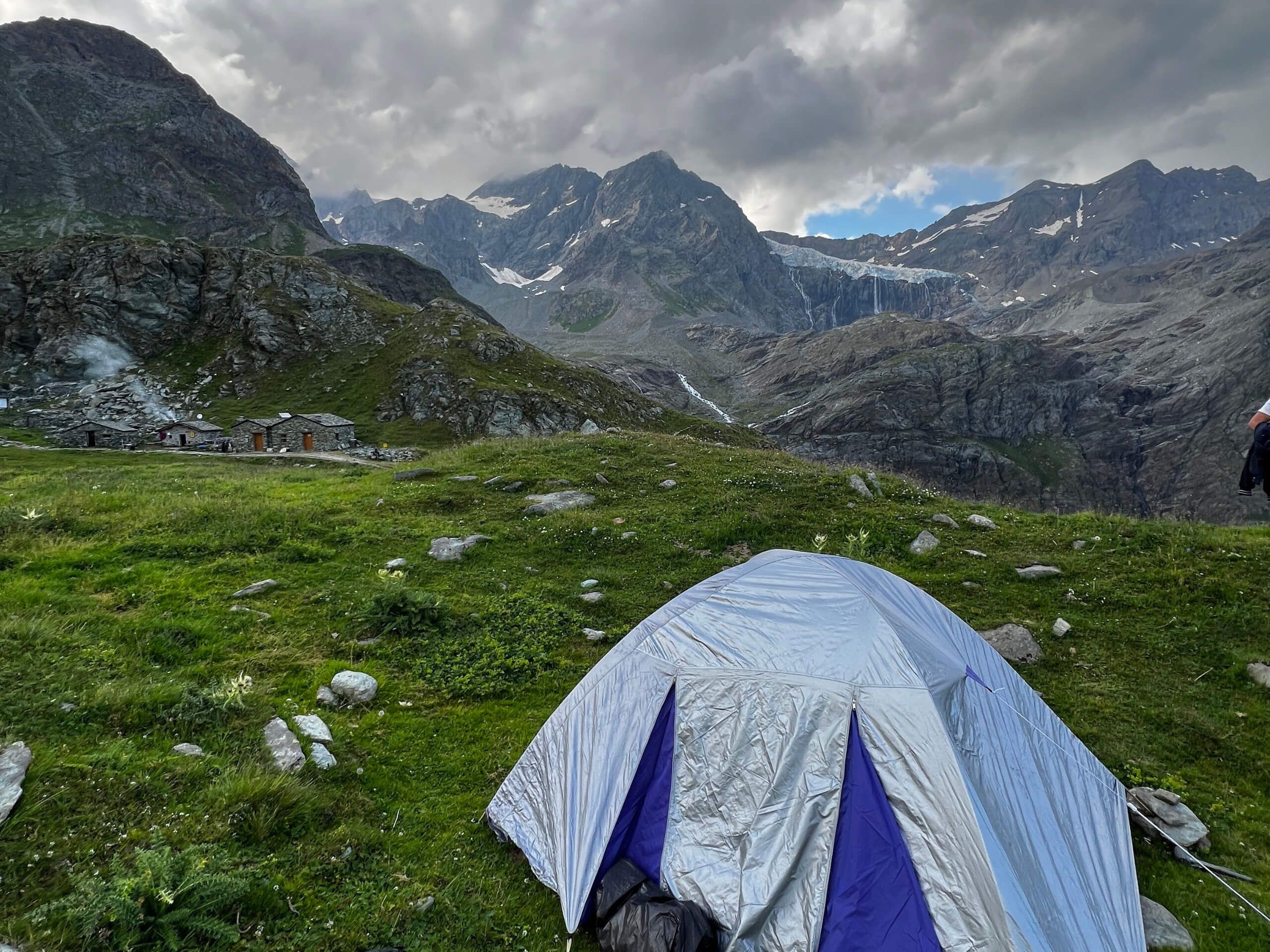
These stops follow a counterclockwise circuit from Les Houches. Check opening dates, booking requirements, access and the rules for your exact location before setting off.
Les Houches and Les Contamines
Les Houches has Camping Bellevue near the traditional start. Around Les Contamines, Camping du Pontet is an established option. Farther along the valley, the designated bivouac areas at Pont de la Rollaz and near Refuge de la Balme may suit a different first or second day. Register for the La Balme area before arrival, and check the boundaries of the permitted sites within the nature reserve.
Les Chapieux and the approach to Italy
Les Chapieux has a communal bivouac area, a useful stop before the climb toward the Col de la Seigne. The Vallée des Glaciers beyond it is not an open camping area. On the Italian side, there is no convenient sanctioned tent pitch beside Rifugio Elisabetta on the main route. Plan this gap before choosing your stage lengths: a night in a refuge, a longer day, or a detour toward an established Val Veny campsite will change the walk.
Val Veny, Courmayeur and Italian Val Ferret
Camping Aiguille Noire, Camping Monte Bianco and Camping Hobo are in Val Veny, away from the main TMB path. Camping Grandes Jorasses and Camping Tronchey are in Italian Val Ferret, also off the route. Check the footpath or local bus connection between each campsite and the point where you leave and rejoin the TMB. Courmayeur is a good place to buy supplies; for an overnight stay, arrange a campsite outside town or book a bed.
La Fouly, Champex and Trient
For La Fouly, look at Camping des Glaciers. Around Champex-Lac, options include Camping Les Rocailles, Gîte Bon Abri and the Relais d’Arpette site on the variant route. Trient has a communal campsite and the Le Peuty camping area. Near Col de la Forclaz, arrange a pitch at Camping de l’Arpille with the Hôtel du Col de la Forclaz. Camp at designated sites in these Swiss valleys.
Our Tour du Mont Blanc accommodation guide also covers huts and hotels for stages where you would prefer a bed.
What are the camping rules in France, Italy and Switzerland?
France: check the exact commune and protected area
Rules on the French side vary considerably. In Les Houches, a one-night bivouac is generally tolerated between sunset and sunrise outside restricted areas. Around Les Contamines there are designated places, and some nature reserve zones have time and booking conditions. Bivouacking is prohibited in the Vallée des Glaciers; the Lac Blanc area is another clear exclusion.
Italy: use established campsites or another form of accommodation
In the Aosta Valley, camping outside authorised sites is prohibited, and bivouacking below 2,500 m is banned. That covers nearly all the Italian terrain used by the TMB. The campsites in Val Veny and Val Ferret are the practical tent options, but you may need to descend or travel away from the trail to reach them. Do not plan an unbooked tent night around Rifugio Elisabetta or Courmayeur.
Switzerland: use a designated pitch
In Valais, use a campsite or designated pitch. Wild camping and bivouacking are prohibited in several communes, with narrow exceptions that are not a basis for planning a holiday. La Fouly, Champex and Trient have established sites, so confirm the places that fit your stages. Check the local rules for your exact route, especially if you take a variant.
How to turn campsites into a walking plan
- Mark every overnight stop on the route map, including any walk or bus ride between the trail and the campsite.
- Check the hard gaps first: Les Chapieux to Val Veny, the crossing through Courmayeur, and the Italian Val Ferret approach to Switzerland.
- Ask each campsite about its season, tent capacity, reservation policy, arrival time and facilities. A refuge meal or shower is not guaranteed to a camper.
- Plan how you will return to the trail the next morning. Bus services and lifts can have seasonal timetables, and an off-route campsite can add walking distance.
- Book a hut or guesthouse where reaching a legal campsite would make the day too long, or if the weather makes camping a poor choice.
A tent, sleeping kit and cooking gear add weight, while an off-route campsite can lengthen a walking day. Our Tour du Mont Blanc packing list covers the general trekking essentials; add a shelter and sleep system suited to alpine nights. Our Tour du Mont Blanc cost guide can help you account for food and transport as well as accommodation.
Many campsites operate seasonally, and conditions on high passes can differ from the weather in the valley. Before settling your dates, read our guide to the best time to hike the Tour du Mont Blanc and confirm that the places you intend to use are open.
What if camping does not fit every stage?
You can camp on the valley stages and book a hut or guesthouse where reaching a campsite would require a long detour. Reserve those indoor nights well ahead, especially if your route depends on a specific stop.
If carrying a tent and arranging off-route nights does not appeal, our self-guided Tour du Mont Blanc trek in huts includes booked indoor stays along the circuit.
Frequently asked questions
Can I pitch a tent beside a mountain refuge?
Only if the refuge has an authorised tent area and the manager accepts campers. Staying near a refuge does not give you permission to use the surrounding land. Ask about the pitch, meals and facilities before relying on that stop.
Do I need to book TMB campsites in advance?
Ask each campsite about availability and reservations for your dates. Some bivouac areas require registration even if they are not commercial campsites. Confirm the pitch and your expected arrival time before planning a walking day around that stop.
Lynn Campbell
Oct 28, 2026
Lynn is the co-Founder of 10Adventures. She had never slept outside until she was 28 years old, and now is an ardent hiker, backpacker, traveller, and bike tourer!
Recent stories
Destinations
Tour du Mont Blanc Starting Point: How to Get to the Trail
Most hikers begin the Tour du Mont Blanc in Les Houches, a village in the Chamonix Valley in France.
Kelsey Krahn
Oct 25, 2026
Destinations
Most Popular Camino de Santiago Tours
You can walk the Portuguese Coastal Camino from Baiona in about a week, begin on the coast in Porto for a longer journey, or take the Camino Francés from Sarria at a slower pace.
Richard Campbell
Oct 23, 2026
Destinations
Walking Trips in Tanzania: Kilimanjaro, Mount Meru and Beyond
Tanzania boasts an exciting collection of walking adventures.
Nadine Gravis
Oct 20, 2026