

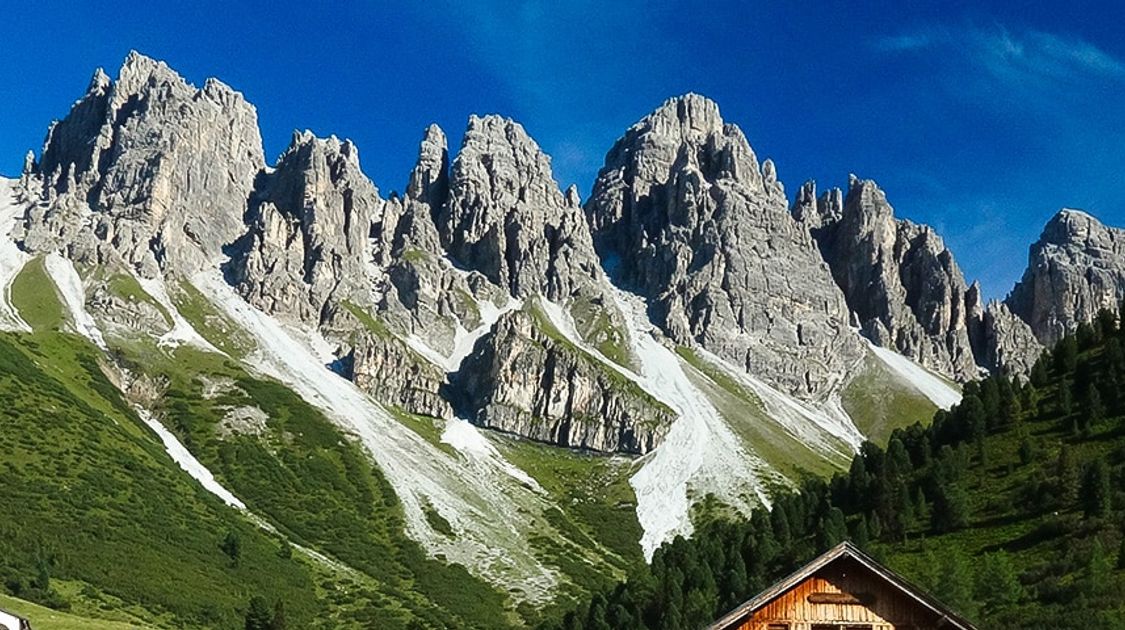
BlogDestinationsHiking in the Austrian Alps in 2026
Hiking in the Austrian Alps in 2026

Richard Campbell
May 8, 2026
Richard is the Founder of 10Adventures, and as a writer shares his experience from 30+ years exploring the world by foot, bike, ski, and boat.
For many people in North America, the Austrian Alps isn’t the first destination to come to mind when planning a hiking holiday in Europe. We think that is a real shame. With a 77,220 sq. mile share of the famous mountain range, Austria has enough Alps to have formed its own rich culture surrounding them.
We’re here to give you a crash course in self-guided Austria hiking tours. First, we’ll explain just how amazing the Austrian Alps are, and give you a quick background on the history of hiking in Austria. Next, we’ve put together a list of some of our favourite places to stay while hiking there, and finally, we can’t not talk about Austria’s most epic multi-day hike: The Eagle. Browse all self-guided Austria tours for the full range of options.
The Austrian Alps have so much to offer, and we consider a trekking trip in the Austrian Alps as one of the Best Bucket List Adventures. Whether that is strudel, hiking, biking, strudel, climbing, wine, cheese, or strudel, this is one destination you won’t want to pass up.
What to Expect on an Austrian Alps Hiking Trip in 2026
Planning a hiking trip to the Austrian Alps for 2026? Here is what to know before you go:
- Best season: Summer (late June to mid-September) is the prime hiking season, with clear trails and open mountain huts. July and August are peak season; expect busier trails and higher accommodation prices. Late September and early October offer quieter trails and spectacular autumn colour. Many higher routes are closed or snow-affected before mid-June.
- Self-guided infrastructure: Austria has some of the best-marked hiking trails in Europe. Trails are colour-coded and waymarked throughout; detailed maps and digital GPS routes are widely available. Most popular multi-day routes include hut-to-hut accommodation and luggage transfers. A guide is generally not required on marked trails.
- Hut system: Austria’s Hütten (mountain huts) are a highlight of Alpine hiking. Run by the Austrian Alpine Club, huts provide overnight accommodation, hot meals, and a warm atmosphere at altitude. Booking in advance is essential in July and August. Membership of an Alpine Club (Austrian, German, or affiliated) gives discounted hut rates.
- Fitness and difficulty: Routes range from gentle valley walks suitable for families to demanding high-alpine crossings. The self-guided tours on 10Adventures are designed for active adults with moderate fitness; daily distances are typically 15–25 km with 500–1,500 m elevation. Allow several weeks of regular walking to prepare for any multi-day route.
- Entry requirements: Austria is in the Schengen Area. No visa required for EU, UK, US, Canadian and most Western passport holders for stays under 90 days. The Euro is the currency. Austria borders Germany, Switzerland, Italy, Liechtenstein, Slovenia, Slovakia, Hungary and the Czech Republic; many multi-day routes cross into neighbouring countries.

Hiking in Austrian Alps rewards with beautiful views

Famous Hallstatt mountain village and alpine lake should be included in your hiking trip to Austrian Alps
Austrian Alps
The spectacular Austrian Alps stretch throughout the whole country. Not many people know it, but Austria holds the biggest territory of the Alps of all the eight Alpine countries – a whopping 28.7% of the total mountain range. It is full of spectacular peaks, vast green meadows, and magnificent valleys that were formed during the last Ice Age.
The Austrian Alps is a popular destination for nature lovers. The lowlands of the Alps are home to deer, stags, foxes, badgers, and martens. The highlands create a perfect habitat for chamois, groundhogs, eagles and mountain jackdaws. Recently, the Austrian mountains have once again become home to a small bear population.
The Austrian Alps are popular all year round. During the summer, it becomes one of the most popular hiking destinations in Europe. With over 26,000.0 km of trails, it’s a great place to explore the mountains and creates a lot of options for hikers of any experience level. During the winter, the Austrian mountains are perfect for skiing, snowboarding, snowshoeing and other amazing winter activities.
Hiking in the Austrian Alps
Hiking in Austria is a great way to experience nature and beautiful landscapes, a fact that people have known for millennia. One of the Alps’ most famous and ancient inhabitants is Ötzi the Iceman. While not a recreational hiker per se, Ötzi did live in the Alps some 5,300 years ago. There are also alpine routes in Austria that date back to the Bronze Age. The Romans also left their mark on the mountains, creating many roads that criss-crossed the range, and some of the old mule tracks, known as “Saumpfade”, are also now used as hiking trails.
The modern culture of organized hiking in the Alps can be dated back to the creation of the Austrian Alpine Club. The Club was founded in Vienna in 1862. Although it drew inspiration from the London Alpine Club, it was the first Alpine Club of its type that existed on the European continent and certainly the first organisation of its kind to exist in the Alps.
Best Hiking Tours in Austria
There are so many great walks in Austria, it's hard to chose just one. So below we list some of the most popular walks in Austria.
- Self-guided Dachstein High Altitude Circular Trek. This self-guided trekking tour gets you into a world heritage region with stunning views!
- Self-guided Kitzbühel to Tre Cime hike. This self-guided walking tour connects the incredible alpine town of Kitzbuhel with the stunning Tre Cime mountain in Italy's Dolomites.
- Self-guided Lechweg Trail trek. Another great self-guided walking tour on the 125km Lechweg trail that starts in Lech am Arlberg and goes through the Tyrol to Germany.
- Self-guided E5 Trek Oberstdorf to Meran. Often referred to as the most beautiful of all crossings of the Alps, this 8-day self-guided walking tour is a classic.

Zillertal is a must-visit place in Austrian Alps

Hiking in Austrian Alps rewards with stunning panoramic views in summer
Best cities or towns to be based at for an Austrian Hiking Holiday
Austria has many wonderful villages that are great as a base for a hiking holiday. Below we list some of the most popular.
Alpbach
Alpbach is a great village. In fact, it’s such a great village it won “Austria’s most beautiful village” and “Europe’s most beautiful flower village”. Residents have stuck to a strict building code since the 1950’s so their village has a homogenous charming appeal. On top of that, there are some gorgeous mountains with plenty of hikes all around Alpbach. There’s a six-seat gondola that takes people up to the Wiedersbergerhorn. From there you can find a playground, Alpine coaster, and many hiking routes.
Hallstatt
This charming Austrian village sits on the edge of a lake of the same name. On top of having some of the oldest salt mines in the world, this adorable town has lots of great hiking in the area. You’ll love the hikes around the lake, and don’t miss the opportunity to go boating, swimming or kayaking out on the water. Oddly enough, this beautiful town is so well loved it has been copied brick by brick (or at least most of the main streets) in the Guangdong Province in China.
Innsbruck
Innsbruck hiking guide is the capital of Austria’s western state of Tyrol. This larger city has more to offer than the smaller villages, but also more people. There are cable cars up to the mountaintops and an abundance of fantastic hiking routes. One thing that really sets this city apart is their free hiking program. You can get a guide and rent boots and bags for free (with limited availability). If you want to walk to Innsbruck, this self-guided Garmisch to Innsbruck walking tour is certainly a wonderful way to arrive!
Zell am See
Zell am See hiking guide is a great location for nature enthusiasts and families with children seeking adventures. It’s a great place, no matter the season – in fact, if you time your visit right, you might be able to experience all seasonal adventures in one trip.
During almost all months, Zell am See is an ideal destination for hiking, biking, swimming, sailing, and even skiing! The Kitzsteinhorn Glacier offers the unique experience of being able to take a combination of gondolas and lifts directly from the neighboring town of Kaprun to the top of the glacier at over 3000m above sea level. This self-guided Zell am See walking tour comes with Deluxe Hotels!
Mayrhofen
Mayrhofen hiking guide is a wonderful mountain town in Austria, which sits near the end of the beautiful Ziller Valley, also known as Zillertal. Mayrhofen is a great base for exploring the valley, as the town has excellent services and a lively ambiance.
The key reason people are drawn to Mayrhofen is the great outdoors. In winter you can experience world-class skiing here, with numerous resorts accessed from the valley floor. During the summer months, the hiking is spectacular, and the opportunities for biking, climbing, and trekking are second to none. This article has all the information you need for Mayrhofen Austria travel guide.

Gosausee Lake in Gosau is a must-see place in Austrian Alps

Hiking in Austrian Alps include the village of Inneralpbach in Alpbach Valley
The Alpine Crossing Trek
The Alpine Crossing is an epic long-distance walk from Munich to Venice, taking you through the Alps all the way to the Adriatic. While only part is in Austria, it is a classic part. The Alpine Crossing can be walked in approximately 4 weeks, many trekkers break up this epic journey into shorter one-week itineraries. You can find more below:
- Stage 1: self-guided Munich to Garmisch
- Stage 2: self-guided Garmisch to Meran
- Stage 3: self-guided Meran to Lake Garda
- Stage 4: self-guided Lake Garda to Venice
For a complete breakdown of the Munich-to-Venice route, read our Alpine Crossing guide, which covers the four stages, difficulty, best time to hike, luggage transfers, and self-guided options.

View of the Hochkoenig Mountains from a hiking trip to Austrian Alps

Hochkoenig Mountains can be seen on a hike in Austrian Alps
Frequently Asked Questions About Austrian Alps
Which are nicer: Bavarian Alps or Austrian Alps
Wherever you go in the Alps, you’ll be guaranteed spectacular scenery, epic peaks, pristine alpine lakes and sweeping meadows, making it one of the finest regions in the world for hiking. The Bavarian Alps have their own particular charms, with picturesque, historic villages, spectacular views, and lots of opportunities for outdoor activities and adventure sports. However, for their drama, diversity, and stunning wildflowers, we think that the Austrian Alps might have the edge.
How were the Austrian Alps formed
Like the rest of the Alps, the Austrian Alps have formed tens of millions of years ago following the collision of the African and Eurasian tectonic plates.
How is the driving in Austrian Alps
The Austrian Alps are easily accessed by car, and most confident drivers should find it relatively straightforward to drive in this region in summer. There are fewer steep mountain roads and high altitude passes compared to other Alpine regions. However, if you are travelling in winter, you should be prepared for some roads to be closed, and remember that winter tires are mandatory. You’ll also need to purchase a pre-paid toll sticker in order to use some roads.
What are the countries that border with the Austrian Alps
Austria is bordered by eight countries: Switzerland, Germany, Italy, Liechtenstein, Slovenia, Hungary, Slovakia and the Czech Republic. Only the last three (Hungary, Slovakia and the Czech Republic) are not considered to be part of the Alps.
Which airport is the closest to Austrian Alps
Innsbruck Airport is the closest airport to the Austrian Alps. As the capital of the Tyrolean Alps, Innsbruck offers excellent connections to many of the resorts and hiking trails in the Austrian Alps.
How high are the Austrian Alps
The highest mountain in the Austria Alps is Grossglockner, which stands at 3798m above sea level. this is the highest alpine peak east of the Brenner Pass.
Can you see the Alps from Vienna?
While Vienna makes a good stopping off point on the way to the Austrian Alps (and has plenty of attractions to recommend it), it’s not possible to see the Alps from the city. You’ll need to get closer to the mountains to have an alpine view from your city hotel room – we’d recommend heading for Innsbruck.
Is Austria expensive to visit?
Austria is one of the more expensive places to visit in Europe, as the cost of hotels can be very high. Daily living costs, including food and drink, are slightly more expensive than neighboring Italy or Germany.
Is Austria cheaper than Switzerland?
Switzerland is one of the most expensive places to visit in the Alps, due to the relatively high cost of accommodation, food and drink. Austria is significantly cheaper, so this could be a good option if you want to see some spectacular alpine scenery, but don’t want to break the bank!
Hiking in the Austrian Alps is truly an amazing experience. For broader trip planning, read our Austria travel guide. For more European hiking inspiration, explore the best multi-day hikes in Europe. Looking for adventures in warmer regions of Europe? Check out hiking in Greece!
European Hiking Guides
Explore more of our hiking guides across the Alps and Europe:
Richard Campbell
May 8, 2026
Richard is the Founder of 10Adventures, and as a writer shares his experience from 30+ years exploring the world by foot, bike, ski, and boat.
Recent stories
Destinations
Tour du Mont Blanc Map: Route, Variations and Key Stops
The Tour du Mont Blanc is a long-distance hiking circuit around the Mont Blanc massif, passing through France, Italy and Switzerland.
Lynn Campbell
Sep 28, 2026
Destinations
Trekking in Pakistan: Best Hikes and Walking Routes
Walking in northern Pakistan means high-altitude trekking through glacier valleys, alpine meadows, high passes, and remote settlements beneath some of the world’s highest mountains.
Richard Campbell
Sep 28, 2026
Destinations
Top Walking and Cycling Tours with Luggage Transfer
A point-to-point walking or cycling trip is easier to manage when you only carry what you need during the day.
Nadine Gravis
Sep 22, 2026