
BlogDestinationsJapan Walking Tours: Best Regions, Hiking Trails and Trips for 2026
Japan Walking Tours: Best Regions, Hiking Trails and Trips for 2026
Table of contents

Richard Campbell
May 13, 2026
Richard is the Founder of 10Adventures, and as a writer shares his experience from 30+ years exploring the world by foot, bike, ski, and boat.
Japan is one of the best countries in Asia for travellers who want to combine walking, culture, food, history, and scenery in one trip. A Japan walking tour grants the chance to get to know the intricacies of the country on a deeper, more intimate level. Explore temple paths in Kyoto, go coastal hiking in Tohoku, embark on pilgrimage trails on the Kumano Kodo, and the range of opportunities goes on. If you’re researching hikes in Japan, you’ve come to a one-stop article on the best walking routes in the country. Overall, walking in Japan is a wonderful way to experience both the striking landscapes and vibrant culture.
This blog dives into the best regions for Japan walking tours, when to go, when to avoid certain seasons, and which 10Adventures trips are most relevant for hikers, walkers, and active travellers.
Why Choose a Walking Tour in Japan?
Japan is especially rewarding on foot because it allows travellers to truly marvel at the flanking beauty, ranging from shrine gates, cedar forests, teahouses, fishing villages, and volcanic landscapes. Followed by carefully prepared meals to replenish the calories you just burned. Japan is one of those fascinating countries where the cities and rural areas both brim with captivating details.
The strongest walking experiences in Japan usually combine scenery with culture. That is why pilgrimage routes, coastal paths, mountain villages, and guided nature walks are so appealing. On top of everything, the country also has excellent rail and local transport infrastructure, easing the stressful woes that often accompany multi-region walking trips. You won’t have to worry much about how to go from place to place in Japan!
Why Book a Guided Tour in Japan?
For first-time visitors, a guided tour can make Japan easier to understand and navigate. Arriving in a new country can be daunting, especially one as vast and sweeping as Japan. But a guided tour eliminates dim-lit evenings plotting train connections, pondering which hotels to book, and losing hair over how to organize luggage transfers.
On top of everything, a guide also helps explain the culture of Japan, bringing more richness to the journey. This can make temples, shrines, regional food, rural inns, and local customs feel more meaningful rather than just beautiful things you pass along the route.
A guided trip often means you get a deeper cultural experience. Guides and local teams can help connect you with harder-to-reach towns, select accommodations that match your trip style, and give you the confidence to try different culinary experiences along the way.
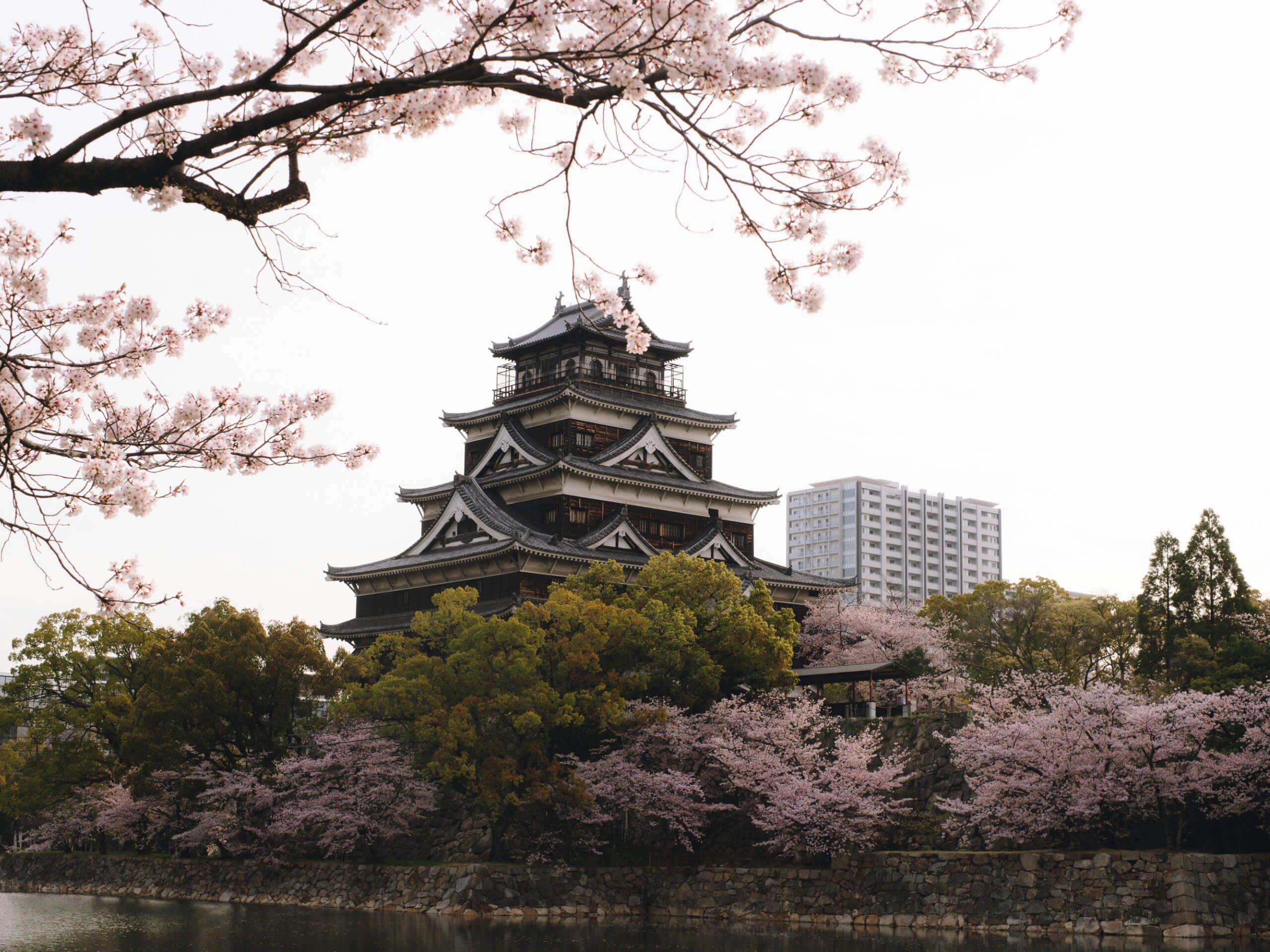
Hiroshima Castle surrounded by cherry blossoms in spring
Best Time for Walking Tours in Japan
For most Japan walking tours, spring and autumn are the best seasons. Spring brings mild weather and cherry blossoms in many parts of the country (do yourself a favour and look up cherry blossoms in Japan!), while autumn offers cooler walking temperatures and stunning foliage.
Summer can be uncomfortably hot and humid across much of Japan, especially in Honshu, Kyushu, Shikoku, and Okinawa. One exception is Hokkaido, thanks to the cooler summer climate. So, if you’re going to hike in Japan when temperatures spike, you might want to put Hokkaido at the top of your list!
Winter depends heavily on the region. Mountain areas and northern Japan can be snowy, while some lower-elevation and coastal routes can still be enjoyable with the right itinerary. For coastal and southern trips, winter can sometimes be a comfortable alternative to summer heat, though conditions should always be checked before travel.
Best Islands and Regions for Walking Tours in Japan
For travel planning, it is useful to think of Japan through five major island regions: Honshu, Hokkaido, Kyushu, Shikoku, and Okinawa. Each offers a different style of walking tour, and the best season varies by region. Not sure where to begin when it comes to research? Use the following information below as a stepping stone!
Honshu: Classic Culture, Pilgrimage Trails and Coastal Hiking
Honshu is Japan’s largest island and the best fit for many first-time walking tours in Japan. It includes Tokyo, Kyoto, Osaka, the Mount Fuji area, the Kii Peninsula, and the Tohoku coast. Travellers can explore Guided Honshu tours for a mix of cultural, hiking, and active Japan itineraries.
Honshu is especially strong for Honshu hiking tours, including coastal hikes, Kumano Kodo pilgrimage routes, Hakone walks, and multi-activity routes through Japan’s Golden Route.
For most first-time visitors, Honshu is a great starting point because it combines major airports, rail access, historic cities, and several of Japan’s most recognizable walking experiences.
Best time to go: Spring and autumn are the safest choices for comfortable walking.
When not to go: Mid-summer can be hot and humid in many areas, while winter can bring snow to higher mountains and northern regions.
Hokkaido: Cooler Summer Hiking and Wild Northern Landscapes
Hokkaido is Japan’s northern island and the best summer walking option when other parts of Japan feel too hot. Guided Hokkaido tours keep travellers well entertained with wide-open landscapes, mountains, national parks, hot springs, and outdoor adventure.
Best time to go: Summer and early autumn are ideal for hiking and active travel.
When not to go: Winter is excellent for snow sports, but it is not the best season for a standard walking tour unless the itinerary is designed for snow and cold conditions.
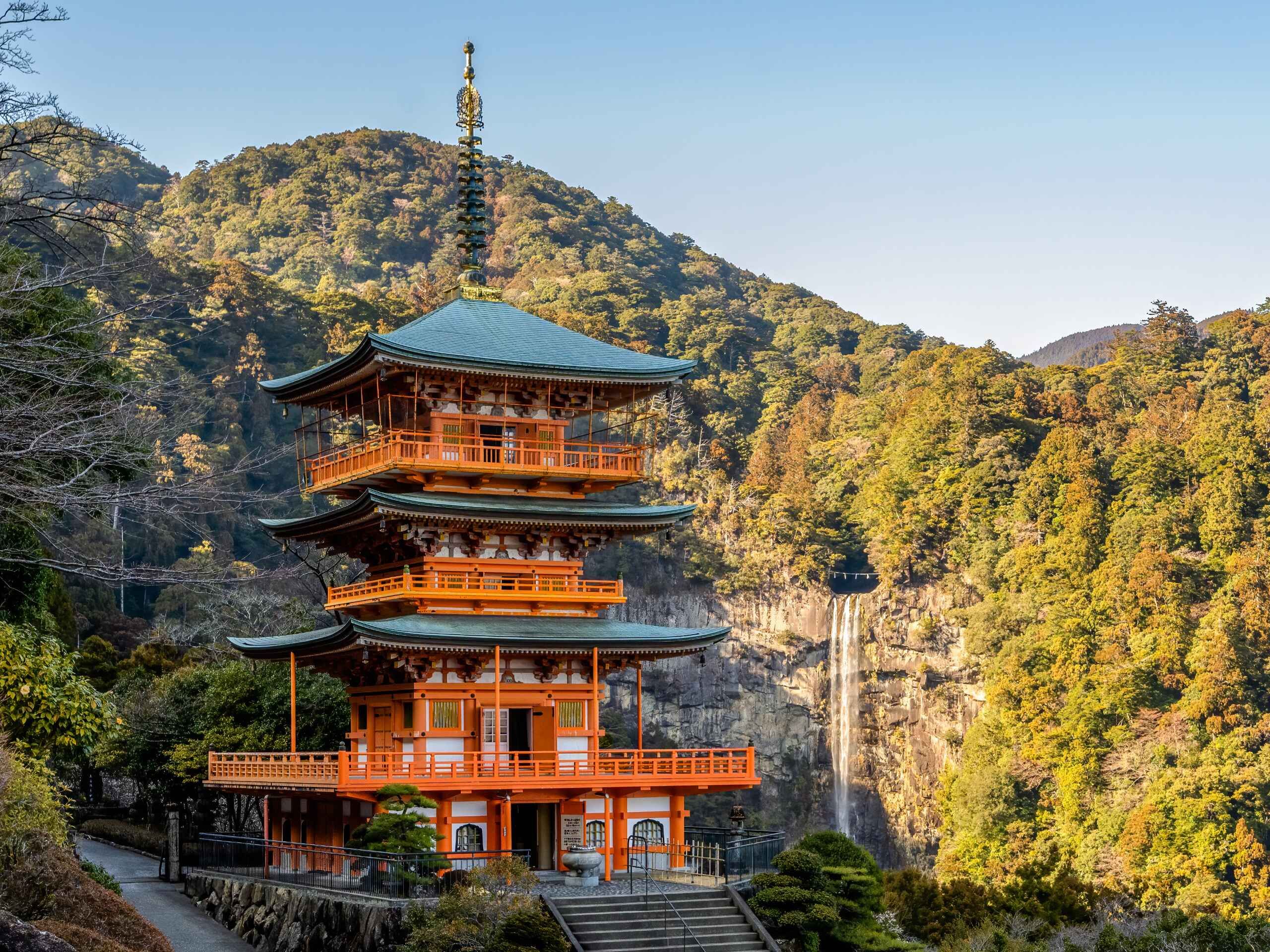
Seiganto-ji pagoda with Nachi Falls in Nachisan, Japan
Kyushu: Volcanoes, Hot Springs and Rural Active Travel
Kyushu is ideal for travellers who want volcanic scenery, hot springs, rural landscapes, and food-focused active travel. Guided Kyushu tours include hiking and cycling experiences around places such as Mount Aso and Aso-Kuju National Park.
For more regional background, listen to the 10Adventures podcast episode KYUSHU UNCOVERED: Cycling, Onsens & Local Japan with Max Wall, where our CEO and founder, Richard Campbell and Max Wall, a cycling guide living in Kyushu, unravel the marvels that make this island the ultimate destination for adventure travellers.
Best time to go: Spring and autumn are generally the most comfortable seasons for walking and cycling.
When not to go: Summer can be hot, humid, and rainy, which can make longer walking days less pleasant.
Shikoku: Quiet Villages, Island Culture and E-Bike Routes
Shikoku is a quieter, less crowded choice for travellers who want island scenery, rural villages, pilgrimage culture, and active touring away from Japan’s busiest travel corridors. Guided Shikoku tours are especially useful for travellers interested in e-bike exploration, local food, and cultural immersion.
Best time to go: Spring and autumn are the best all-around seasons.
When not to go: Summer can be hot and humid, especially for long walking or cycling days.
Okinawa: Coastal Cycling, Island Culture and Winter Sun
Okinawa offers a subtropical island experience, with beaches, coral reefs, mangroves, and a relaxed coastal pace. It is stronger for cycling and soft adventure than classic mountain trekking. Guided Okinawa tours are a good fit for travellers who want an active island trip with cycling, culture, and coast.
Learn more about Okinawa by checking out another episode of the 10Adventures podcast: OKINAWA UNCOVERED: Cycling, Snorkeling, and Culture. In this episode, Richard explores the beauty of Okinawa with local adventure guide, Yuki Tanimura.
Best time to go: Winter, spring, and autumn are usually better than peak summer for active travel.
When not to go: High summer can feel very hot and humid, and travellers should be aware that storms or typhoon-season disruptions can affect island travel.
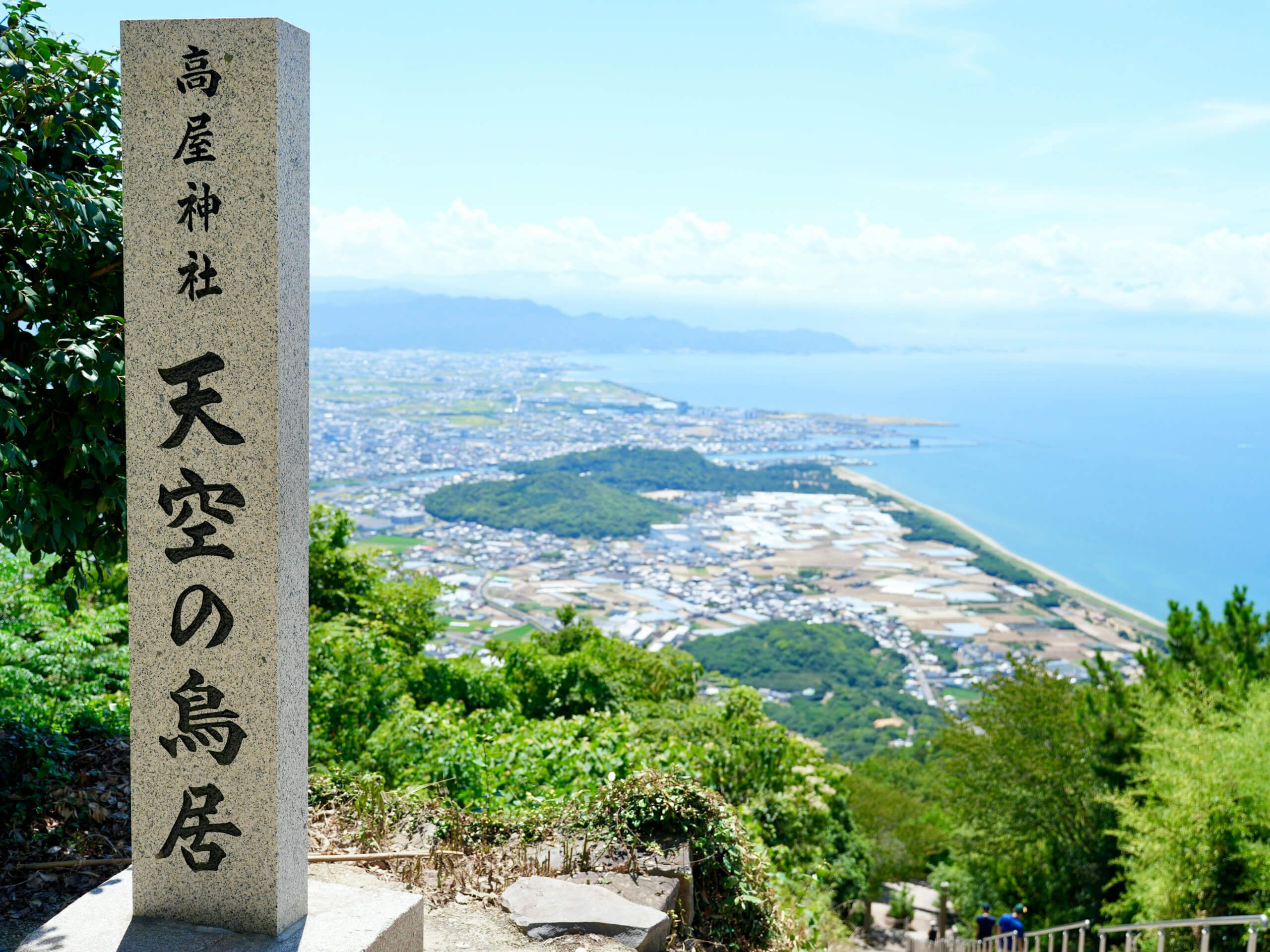
Scenic view from Takaya Shrine over the Japanese coastline
Legendary Hiking Tours in Japan: Michinoku Coastal Trail and Kumano Kodo
Japan’s most memorable walking tours are often the ones with a strong sense of story. The Michinoku Coastal Trail and Kumana Kodo intertwine a collection of must-haves that elevate a trail from awesome to legendary: jaw-dropping landscapes, coastal history, local food, shrines, and traditional accommodation.
Michinoku Coastal Trail
The Michinoku Coastal Trail Hiking Tour follows dramatic sections of Japan’s northeastern Pacific coastline, with rugged sea cliffs, fishing villages, forested headlands, ocean viewpoints, and hot spring stays.
This is a strong choice for travellers who want a coastal Japan hiking experience rather than a temple-focused pilgrimage. It is also a good example of how walking tours in Japan can reveal regions many first-time visitors miss. For a deeper look at the route, highlights, difficulty, seasons, and self-guided options, read our Michinoku Coastal Trail guide.
For a quick look at the wider Tohoku region, watch our short Exploring Tohoku, Japan's undiscovered Northern Land.
Kumano Kodo: Iseji Route
The 5-Day Iseji Kumano Kodo Hiking Tour focuses on the Iseji, the eastern route of the Kumano Kodo. This is a shorter self-guided option for travellers who want a spiritual walking route through Japan’s historic pilgrimage landscape.
For a longer pilgrimage-style itinerary, the Saba Kaido & Iseji Kumano Kodo Hiking Tour fuses ancient routes, mountain passes, shrines, and cultural history in a deeper multi-day hiking experience.
For a closer look at routes, itinerary options, seasons, and tour ideas, read our Kumano Kodo trail guide.
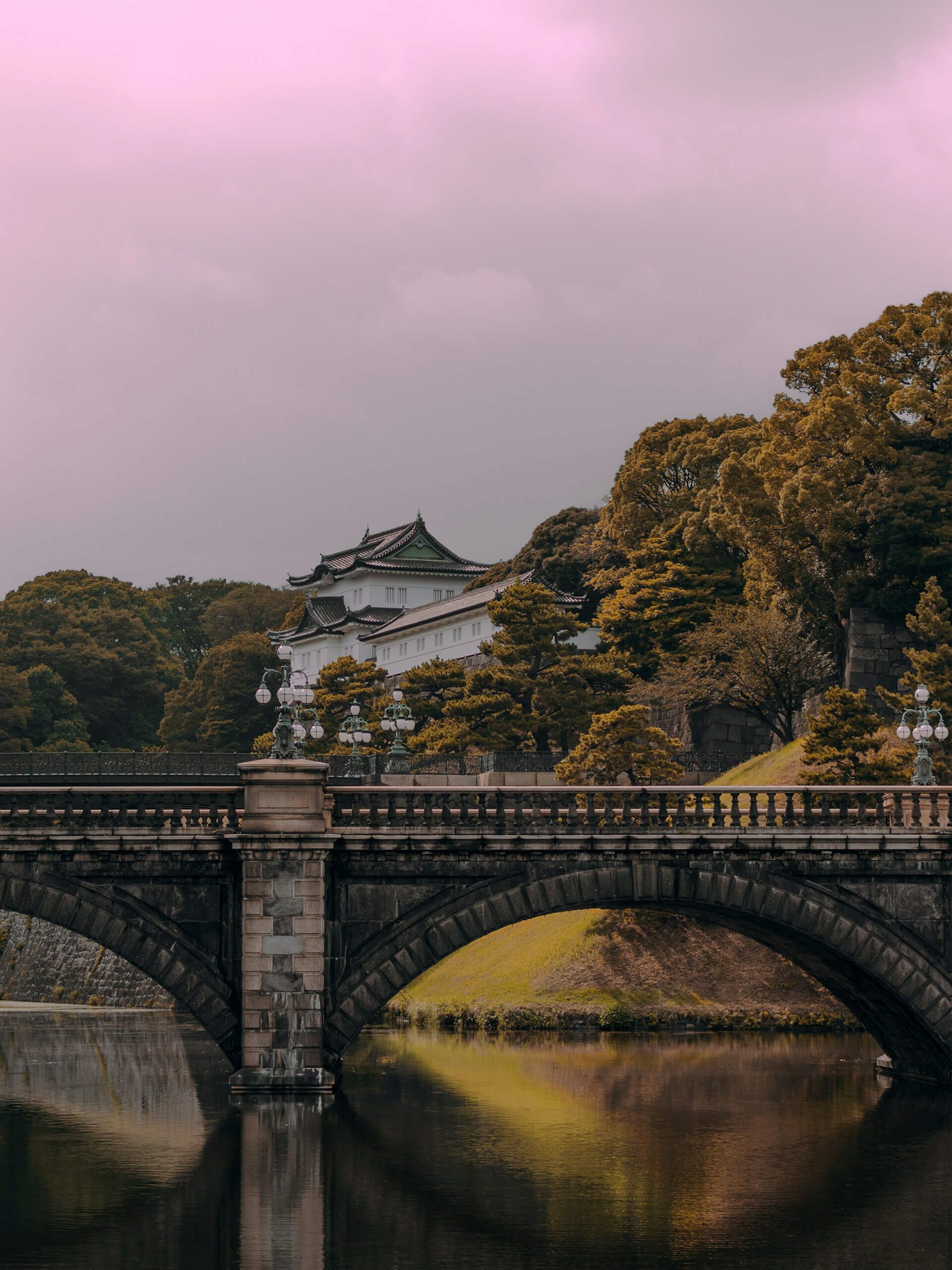
Japanese Bridge over a River
Hiking Tours in Japan
We suggest that travellers looking specifically for walking, trekking, and pilgrimage-style trips should take a look at Japan hiking tours. This tour category includes short guided walks, self-guided pilgrimage options, coastal hiking, and multi-day active itineraries.
Good hiking options to highlight include:
- Atami and Hakone Hiking and Culture Tour: a short guided walking and culture trip close to Tokyo.
- Hakone Hiking and Culture Tour: an easy three-day hiking and culture add-on for travellers who want nature near Tokyo.
- 4-Day Daisetsuzan National Park Hike: a guided Hokkaido walking option focused on Japan’s largest national park.
- National Parks of Hokkaido Adventure: a more demanding Hokkaido hiking adventure for travellers who want wilderness, national parks, and Ainu cultural context.
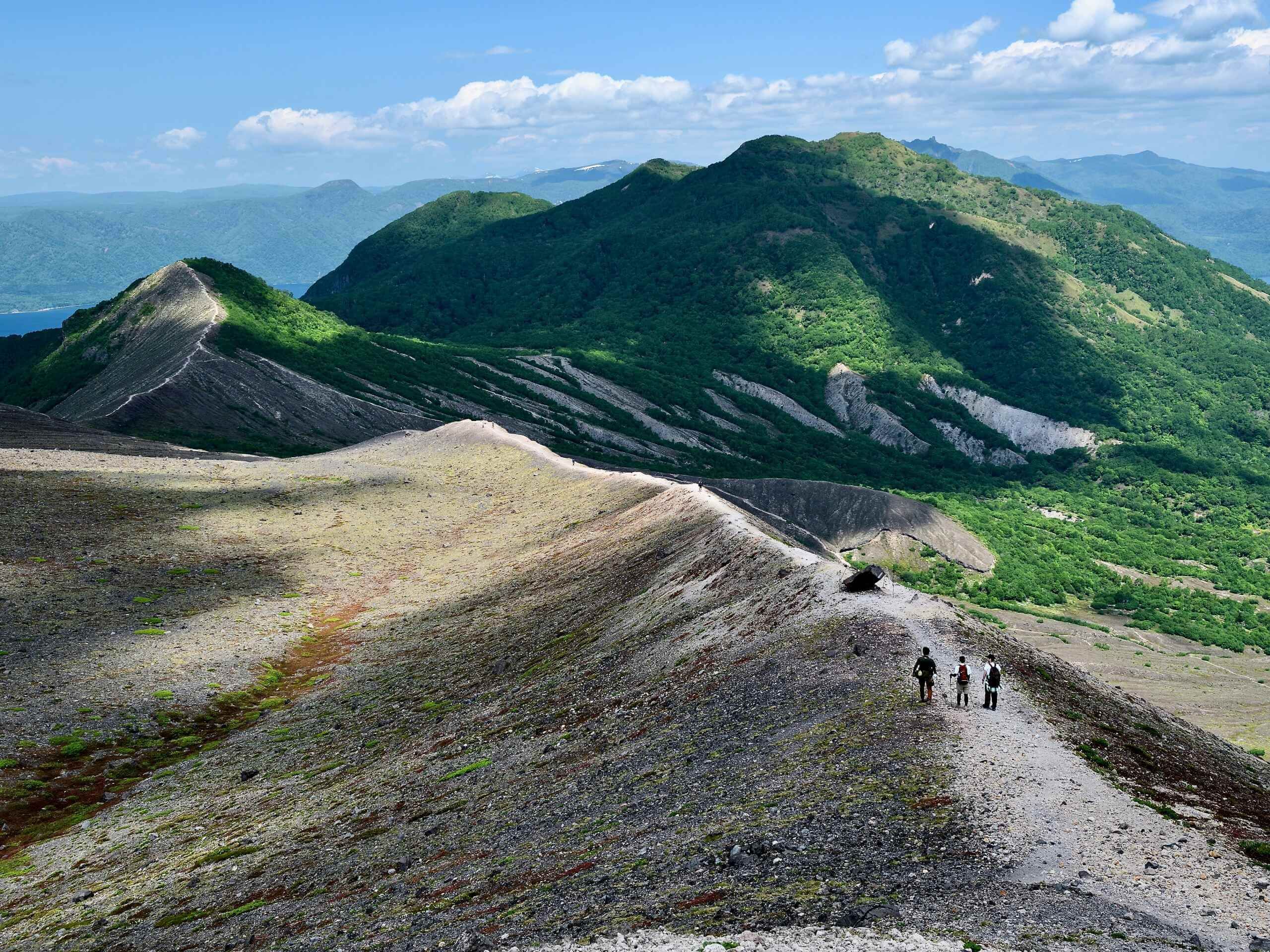
Hikers walking along a ridge toward green mountains in Japan
Cycling Tours in Japan
Want to keep things slow enough to bask in the scenery while covering more ground? Japan is an excellent spot for cycling, especially on island and countryside routes where e-bikes make the terrain more accessible. Travellers interested in active trips beyond walking can browse Japan cycling tours, which include guided and e-bike itineraries across Kyushu, Shikoku, Okinawa, Hokkaido, and Honshu.
For travellers comparing walking with bike-based Japan itineraries, our Japan cycling tours guide covers Shikoku, Kyushu, Okinawa, Honshu, Hokkaido, e-bikes, seasons, and guided trip options.
A few strong cycling and multi-activity options include:
- Kyushu Hiking and Cycling Tour: a guided trip combining hiking and cycling around Mount Aso and central Kyushu.
- Rural Kyushu Bike & Gourmet Tour: an e-bike and food-focused tour in the Aso-Kuju National Park area.
- Shikoku Island Discovery E-Bike Tour: an e-bike tour through rural Shikoku, combining village scenery, rivers, mountains, and culture.
- Okinawa 4-day E-bike Tour: a short guided e-bike trip to Okinawa.
- Okinawa Circumnavigation Cycling Tour: a longer cycling trip around the main island of Okinawa.
- Hike & Bike Japan’s Golden Route: a multi-activity route linking Tokyo, Mount Fuji, Kyoto, Himeji, and Osaka through hikes, cycling, and guided walks.
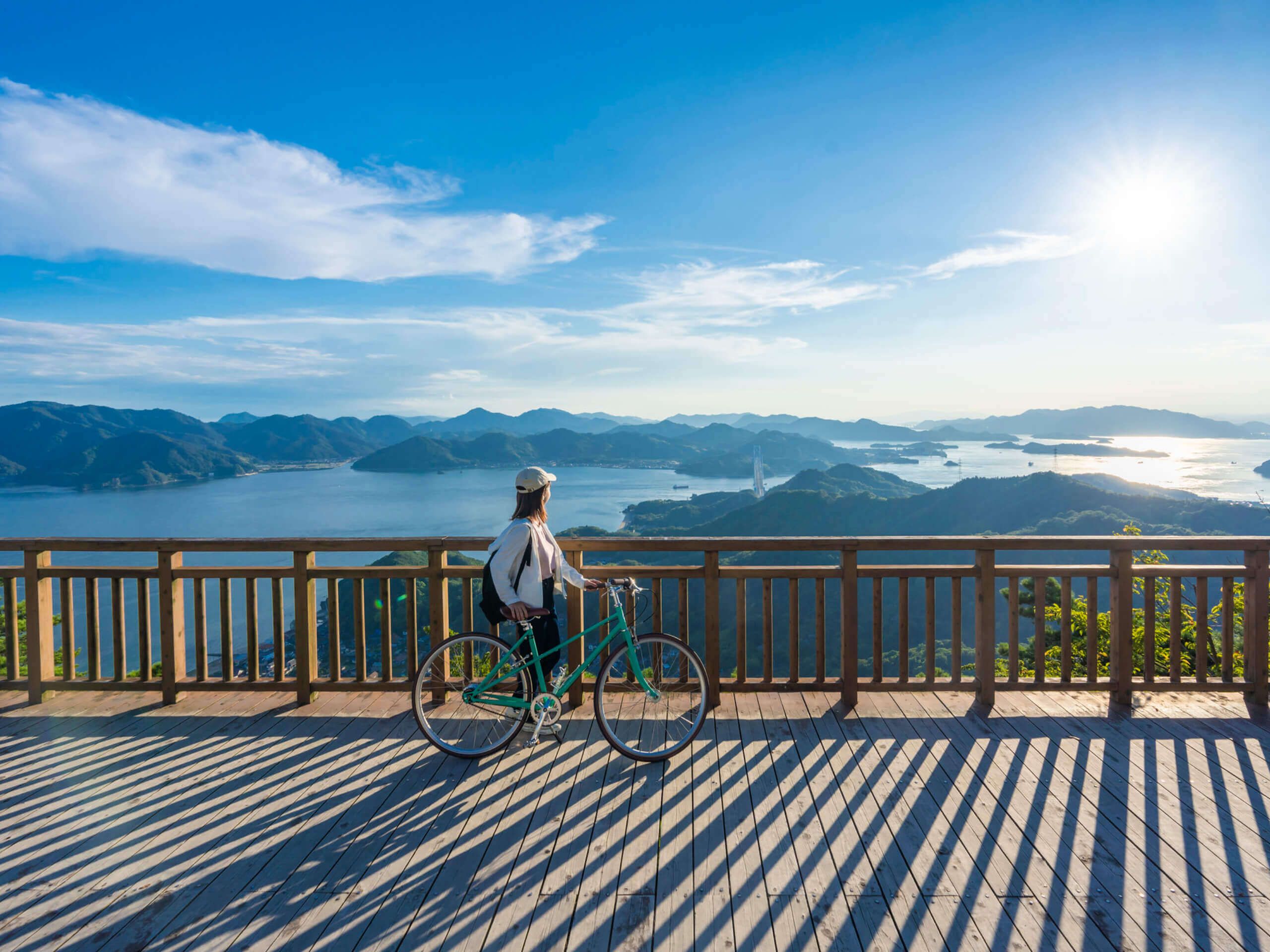
Cyclist enjoying panoramic coastal views in Japan
Final Tips for Planning Walking Tours in Japan
Consider which season you can go and then check to see if it’s worthwhile to fly to Japan then! For most walking tours in Japan, spring and autumn are the best choices. Summer can be difficult for active travel outside Hokkaido, while winter is highly regional. Pack for humidity, rain, and temperature changes, especially if your trip includes mountains or coast.
Think carefully about your preferred support level. Guided tours are helpful for cultural context, language support, and rural logistics, while self-guided tours can work well on established pilgrimage routes. For travellers who want both scenery and culture, Japan is one of the strongest walking destinations in Asia.
Frequently Asked Questions About Walking Tours in Japan
What is the best time for walking tours in Japan?
Spring and autumn are usually the best seasons for walking tours in Japan because the weather is generally more comfortable for active travel. Summer can be hot and humid outside Hokkaido, while winter conditions vary by region.
Is summer a good time for walking tours in Japan?
Summer is possible, but it can be uncomfortably hot and humid across much of Japan. Hokkaido is the main exception and is often a better summer choice for hiking and active touring.
What are the best regions for walking tours in Japan?
Honshu is the best all-around region for first-time walking tours because it includes classic cultural destinations and pilgrimage routes. Hokkaido is best for cooler summer hiking, Kyushu for volcanoes and hot springs, Shikoku for rural island culture, and Okinawa for coastal active travel.
What are the most famous hiking routes in Japan?
The Kumano Kodo and Michinoku Coastal Trail are two of the standout long-distance walking experiences to consider. Travellers may also look at Mount Fuji area hikes, Hakone walks, and Hokkaido national park routes depending on season and fitness.
Are walking tours in Japan guided or self-guided?
Both options exist. Guided tours are useful for cultural interpretation, language support, and local logistics, while self-guided tours can work well on established walking routes where accommodation and route notes are arranged in advance.
Can you combine hiking and cycling in Japan?
Yes. Several Japan tours combine hiking, guided walks, e-bike rides, and cultural sightseeing. This can be a good option for travellers who want an active trip but do not want to walk every day.
Richard Campbell
May 13, 2026
Richard is the Founder of 10Adventures, and as a writer shares his experience from 30+ years exploring the world by foot, bike, ski, and boat.
Recent stories
Destinations
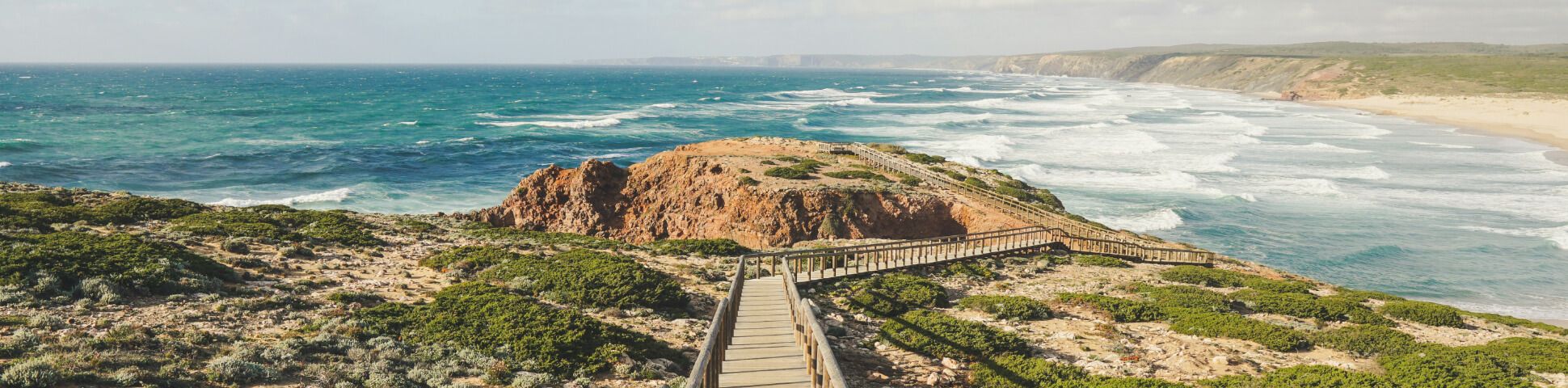
Walking in Portugal: Best Walking Trips and Routes
Portugal packs an unusual amount of variety into a relatively small country.
Nadine Gravis
Oct 5, 2026
Destinations
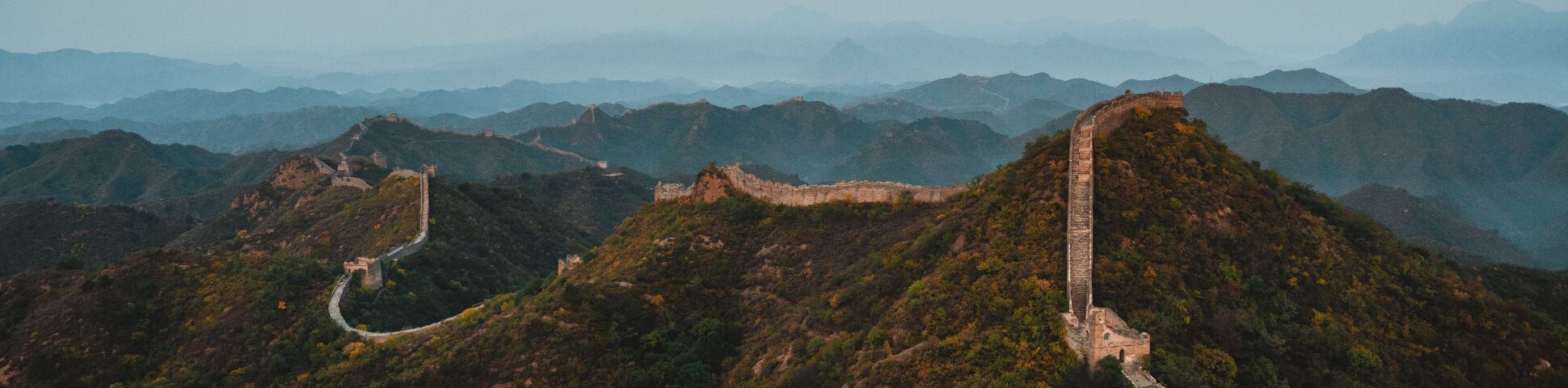
Walking in China: Best Walking Trips and Routes
China offers walking experiences that range from historic routes to high mountain treks.
Kelsey Krahn
Oct 2, 2026
Destinations
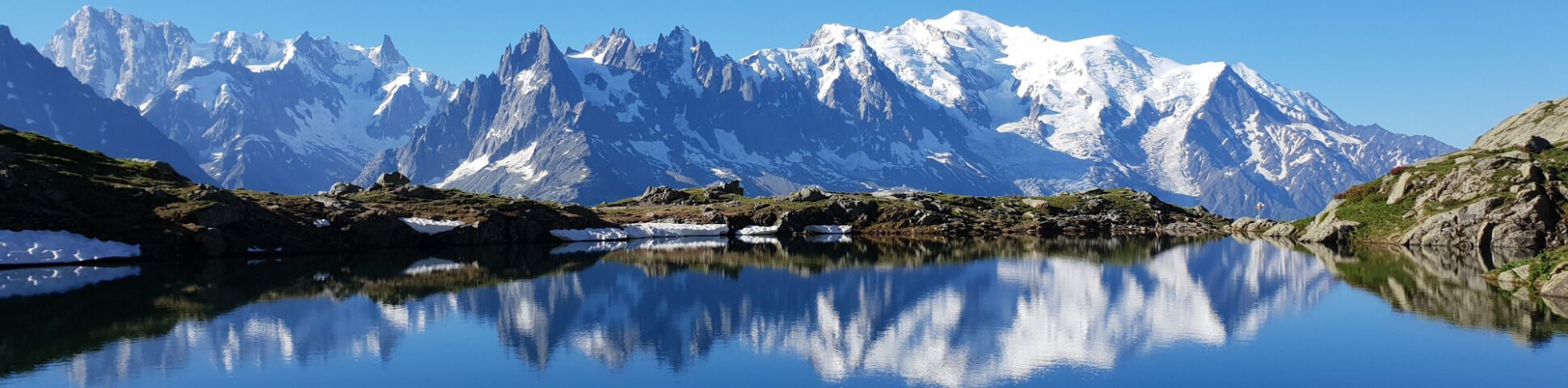
Tour du Mont Blanc Map: Route, Variations and Key Stops
The Tour du Mont Blanc is a long-distance hiking circuit around the Mont Blanc massif, passing through France, Italy and Switzerland.
Lynn Campbell
Sep 28, 2026