
BlogDestinationsAlta Via 1 (AV1) in the Dolomites: Complete Hiking Guide for 2026
Alta Via 1 (AV1) in the Dolomites: Complete Hiking Guide for 2026
Table of contents

Nadine Gravis
May 15, 2026
Whether exploring Algonquin Provincial Park by canoe, or hiking Torres del Paine, Nadine loves spending time outdoors and sharing about her experiences.
Italy feels like a highlight reel of some of the best European wonders: crumbling Roman ruins, lip-smacking wine and cuisine, storybook canals flanked by historic architecture, and, of course, a mountainous backdrop tailor-made for rugged explorations. Take a moment and envision yourself hiking amongst limestone peaks, alpine meadows, turquoise lakes, and panoramic ridgelines, as you travel from hut-to-hut. Sound appealing? The Alta Via 1, often shortened to AV1, might be worth adding to your bucket list! Touted as one of the best long-distance hiking experiences in the Dolomites, the AV1 combines high-mountain scenery with the comfort and culture of classic European hut-to-hut trekking.
For many hikers, “the Alta Via” usually means Alta Via 1, the best-known and most accessible of the Dolomites’ high routes. Want to know more? We’ve got you. This blog post will give you a foundation of information on hiking the Alta Via 1. In short, the classic AV1 route runs roughly 120 km through the eastern Dolomites, traditionally from Lago di Braies in the north toward Belluno in the south, and is often completed in about 8 to 10 days depending on the itinerary, pace, and chosen variants.
If you want to walk other areas of Italy's diverse scenery, you may want to check out other self-guided walking tours in Italy. Secondly, if you prefer to pair trekking the AV1 with another adventure, such as cycling, you can glance at our self-guided tours in the Italian Alps.
What Makes the Alta Via So Special?
The Alta Via is special because it offers the feeling of a remote alpine expedition without requiring technical mountaineering skills. The Alta Via 1, or AV1, belongs on the same shortlist as Europe’s classic treks, including the Tour du Mont Blanc and the Walker’s Haute Route from Chamonix to Zermatt.
On AV1, hikers move through a landscape of pale limestone towers, steep valleys, World War I history, flower-filled meadows, and high passes, with each day ending at a rifugio, mountain lodge, guesthouse, or hotel. The ever-changing scenery makes every day, every turned corner feel that much more special. One day might begin beside a still alpine lake, climb into a rocky amphitheatre, cross an open plateau, and finish with dinner in a cozy hut. Another might bring views of famous Dolomite landmarks such as Lagazuoi, Cinque Torri, Pelmo, or Civetta.
It is also a highly practical trek for travellers. The Dolomites have excellent mountain infrastructure, well-established trails, and a strong hut-to-hut hiking culture. That makes the Alta Via appealing for experienced trekkers, but also for fit first-time hut-to-hut hikers who want a structured route with built-in accommodation.
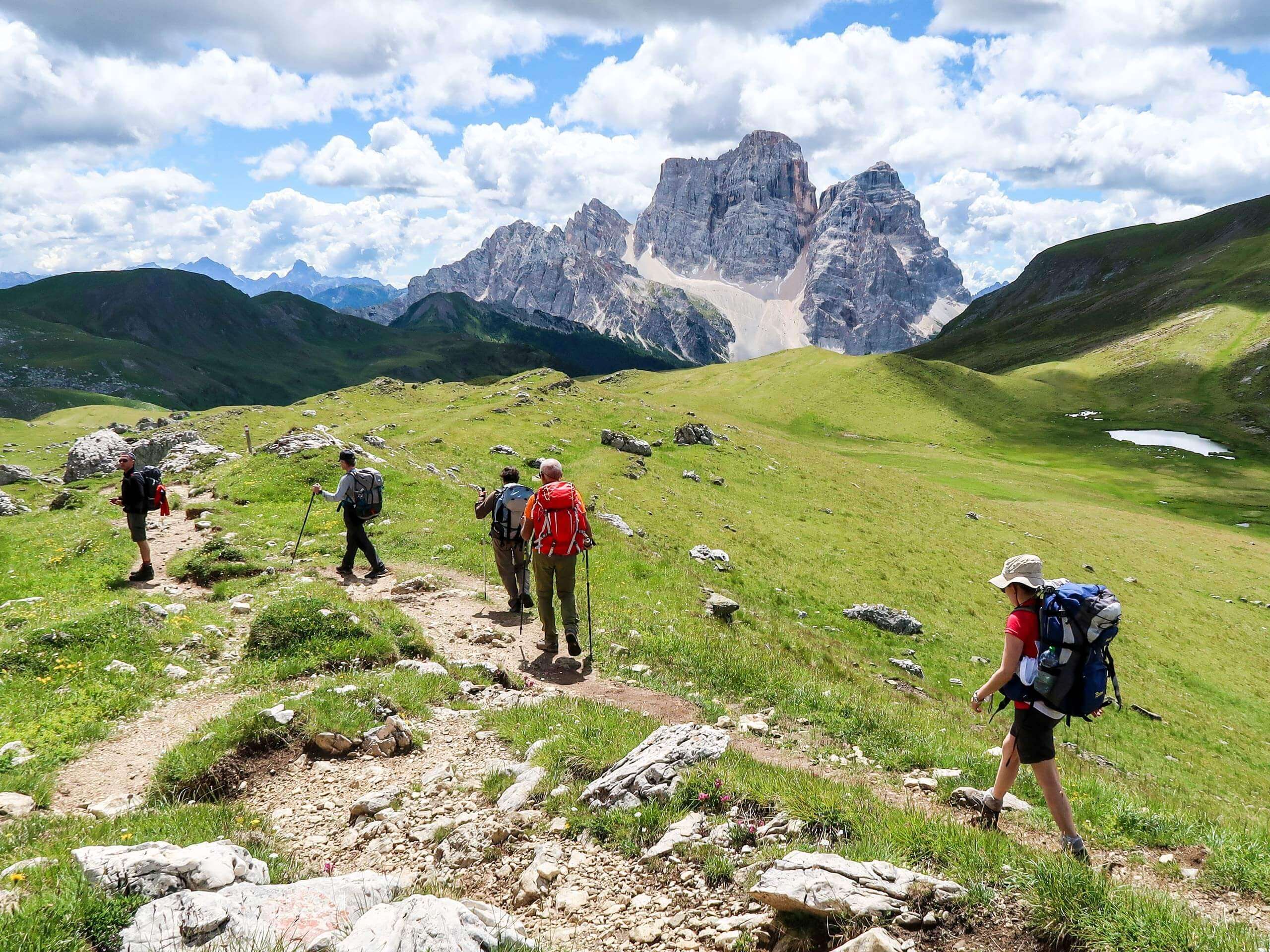
Hiking Toward Monte Pelmo on Alta Via 1
Alta Via 1: The Classic Route
As mentioned above (but worth reiterating), the Alta Via 1 is the most famous Alta Via route in the Dolomites. The classic route begins near Lago di Braies, one of the most photographed lakes in the region, and travels south through some of the Dolomites’ most impressive scenery.
Most hikers complete the full Alta Via 1 in around 8 to 10 days, though shorter and longer itineraries are common. The route is approximately 120 km, with significant cumulative ascent and descent, so even though it is not usually considered technical, it is still a serious mountain trek.
For a full self-guided AV1 trek, 10Adventures offers the Self-Guided Alta Via 1 Trek: Dobbiaco to Rifugio Capanna Trieste, an 8-day itinerary through the Dolomites with accommodation in rifugios and lodges. Just looking at the spread of photos attached to the tour, where green pastures and bright blue skies highlight the starkness of the looming grey peaks, might be enough to convince you to add the AV1 to your bucket list.
Shorter Alta Via Highlights Routes
In some cases, work, kids, and already-booked flights might hinder travellers from completing the full AV1. Fortunately, there are shorter Alta Via itineraries that focus on some of the best sections of AV1.
An itinerary with just the highlights is ideal if you want to experience the drama of the Dolomites, walk memorable sections of the Alta Via, and stay in excellent mountain locations without committing to the entire route.
One of our guest’s favourite tours at 10Adventures is the Alta Via Highlights in Hotel Hiking Tour, a 7-day self-guided walking holiday from Hochpustertal to Cortina d’Ampezzo. This version is especially appealing if you want the Alta Via experience but prefer hotels and guesthouses over a more rustic hut-to-hut format.
For travellers craving the more traditional mountain-hut experience, the Alta Via Highlights in Rifugios itinerary might suit your style a bit more!
Alta Via 1 vs Alta Via 2: Which Route Should You Choose?
Although Alta Via 1 is the best-known Dolomites high route, Alta Via 2 is another popular long-distance trek in the region. Both routes showcase dramatic mountain scenery, rifugio stays, and classic Dolomites landscapes, but they are not the same experience.
AV1 is generally considered the more accessible option and is the better choice for many first-time Dolomites trekkers. It still requires good fitness, sure-footedness, and comfort with long mountain days, but it is usually less demanding than Alta Via 2.
Alta Via 2 has longer stages, more rugged terrain, and sections that may feel more exposed. Experienced mountain hikers who crave steep, rocky adventures along a demanding route will fall in love with Alta Via 2!
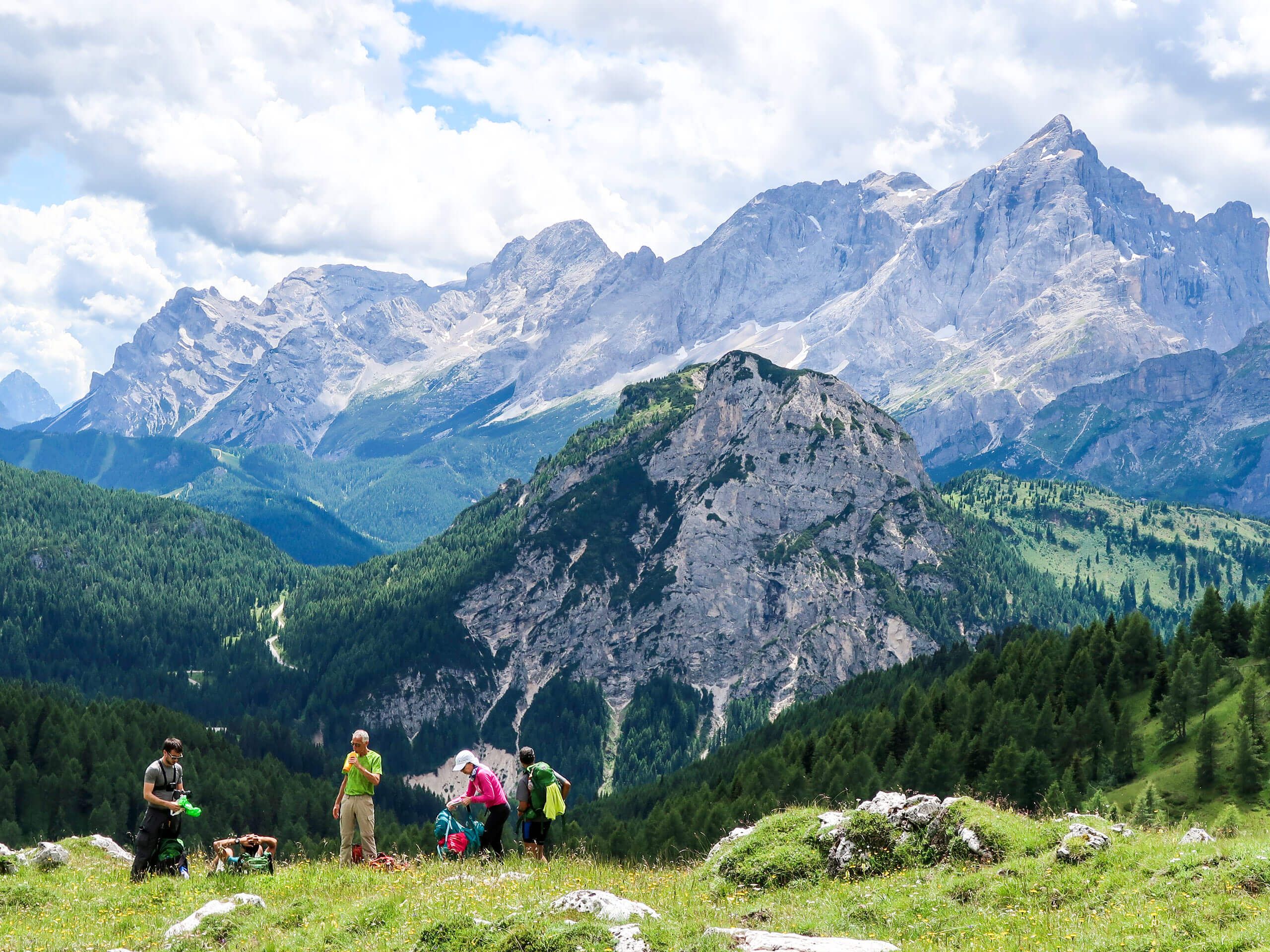
Alpine Meadows and Dolomite Mountains on Alta Via 1
How Difficult Is the Alta Via?
As you’ve probably guessed, Alta Via is not a casual walking holiday. Even if you book AV1, you shouldn’t go into thinking, “ah, yes, this route is easier than Alta Via 2, so it must be a pretty relaxing time.” Overall, expect long days, significant elevation gain and loss, rocky trails, high passes, and changing mountain weather.
That said, Alta Via 1 is often considered a moderate-to-challenging trek rather than a technical climb. The main requirements are good cardiovascular fitness, experience hiking several hours per day, comfort with uneven rocky trails, ability to handle steep ascents and descents, and preparedness for weather changes.
Many fit hikers with previous day-hiking experience can complete a well-planned Alta Via itinerary, especially if choosing a supported self-guided tour. However, it is important not to underestimate the Dolomites. Storms, snow patches early in the season, full huts, and fatigue can all affect the experience.
When Is the Best Time to Hike the Alta Via?
The main Alta Via hiking season runs from approximately mid-June to mid-September, with July and August being the busiest and most reliable months for open huts and snow-free trails.
Late June can be beautiful, with early-season energy, wildflowers, and fewer crowds than peak summer. However, some higher passes may still have snow depending on the winter and spring conditions.
July and August are the classic Alta Via months. Trails are usually in their best condition, rifugios are open, and the days are long. The trade-off is popularity. Accommodation can book out well in advance, especially on the most famous AV1 stages.
Early September is one of the best times to hike the Alta Via. Crowds often begin to thin, the weather can be stable, and the mountain light is beautiful. On the flip side, nights are cooler, and hikers should be prepared for shorter days and the possibility of early cold snaps.
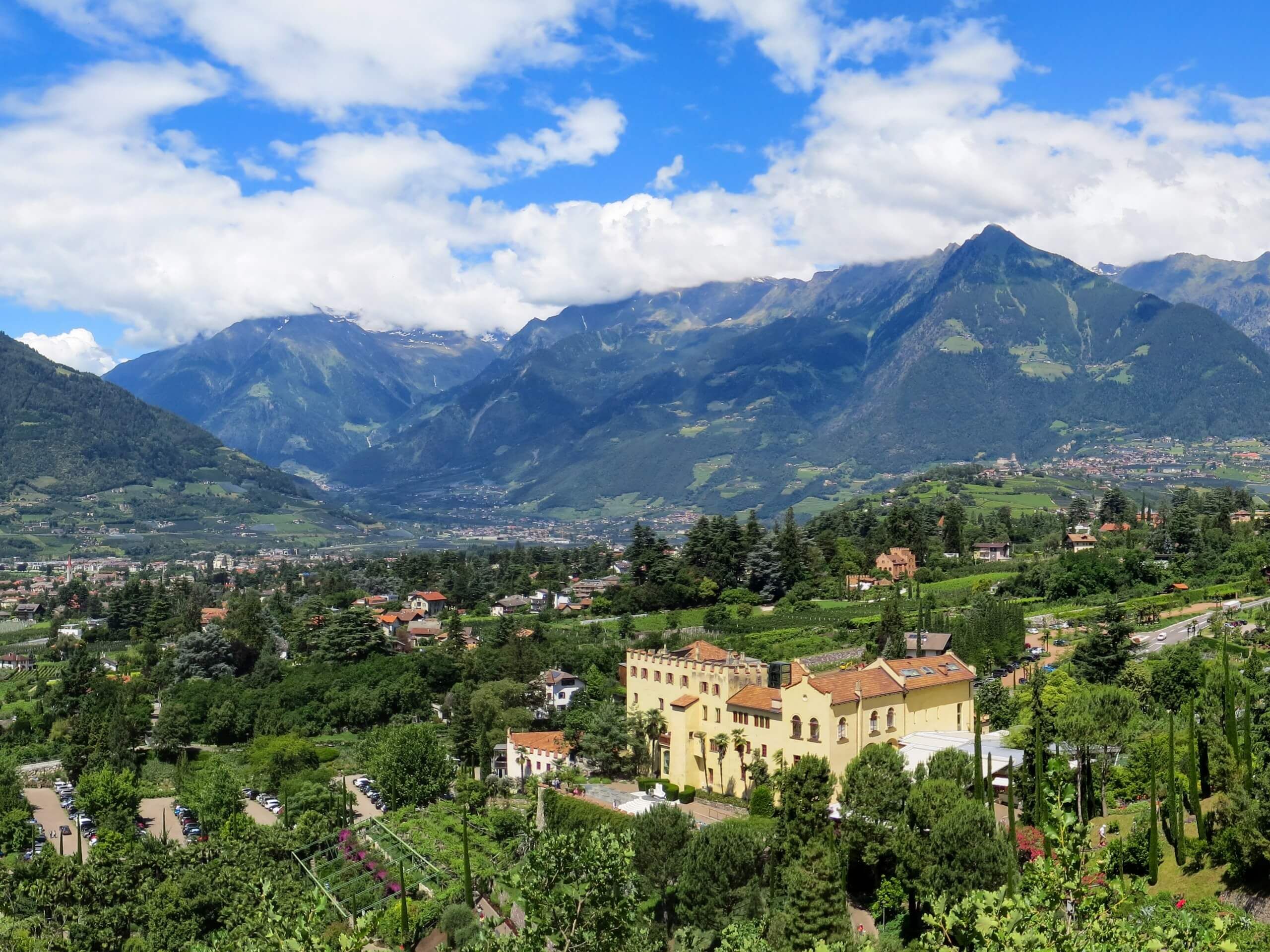
Mountain Views Above the Italian Dolomites
Weather on the Alta Via 1
During the main summer hiking season, the Alta Via 1 can still bring a mix of mild daytime conditions, cool mountain mornings, rain, wind, and colder temperatures on higher passes. As a practical peak-season weather snapshot, expect roughly:
Avg High Temperature: 18.1°C/64.6°F
Avg Low Temperature: 6.5°C/43.7°F
Avg Precipitation: 124mm/4.88in
Avg Rainfall Days: 22.8 days
Avg Humidity: 83%
These figures should be treated as planning guidance, not a guarantee for every stage. Weather can change quickly by elevation, pass, and time of day, so check current mountain forecasts and trail conditions before setting out each day.
Where Do You Stay on the Alta Via?
Rifugios vary widely. Some are rustic and remote, with shared dormitories and basic facilities. Others are surprisingly comfortable, with private rooms, hot showers, hearty dinners, and spectacular terraces. Along the Alta Via 1, accommodation can include rifugios, lodges, hotels, guesthouses, and B&Bs depending on the route and itinerary.
Because the Alta Via 1 is so popular, rifugios can sell out very quickly, often almost as soon as they open for booking. This makes AV1 a hard trip to book independently, especially if you are trying to line up several consecutive hut nights in July or August.
This is one of the major advantages of booking a self-guided tour: your route, overnights, and key logistics are arranged in advance. If preferred rifugios are already full, a shorter highlights itinerary, a hotel-based option, or another Dolomites hut-to-hut route may be a better fit.
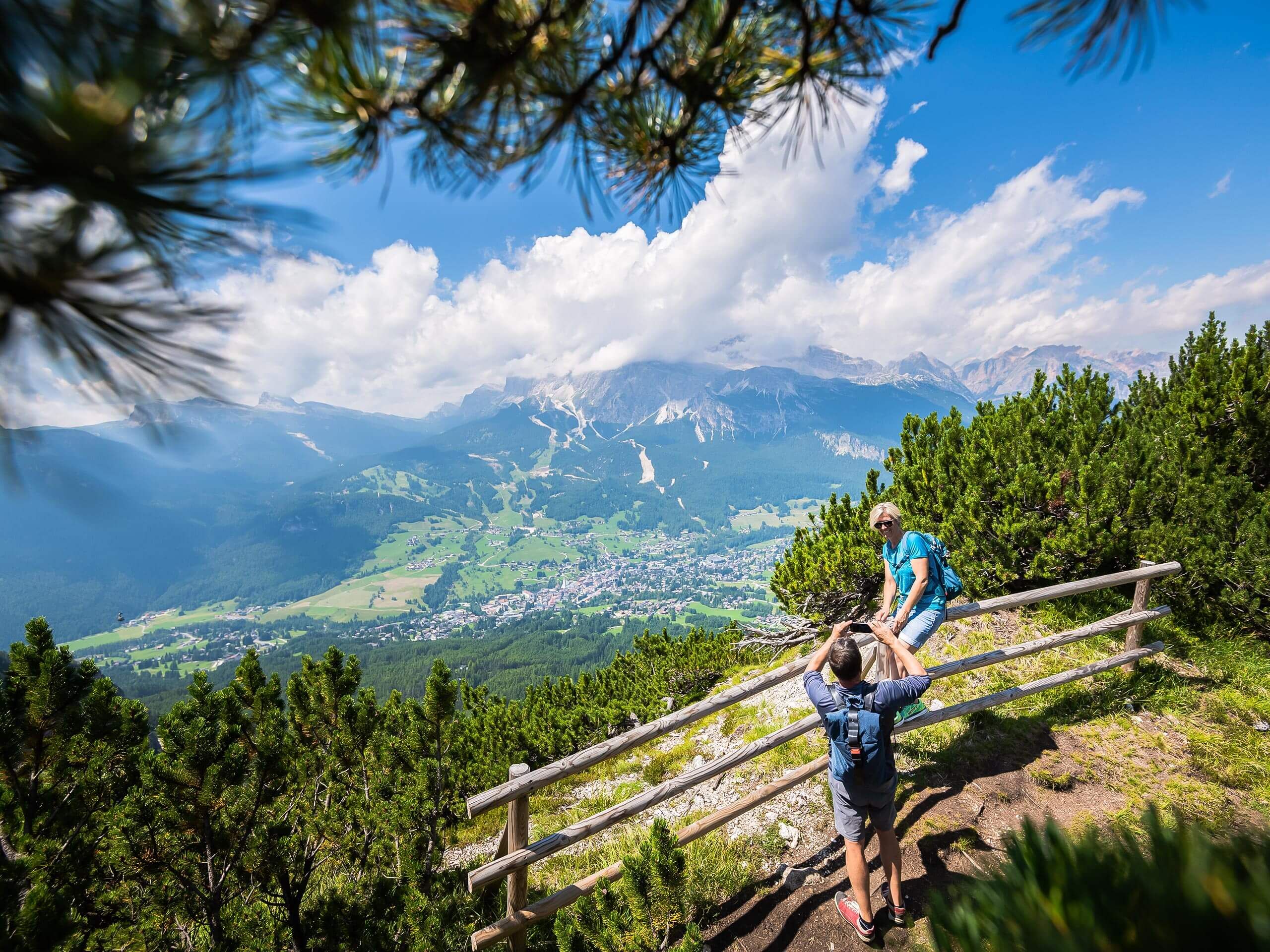
Hikers Overlooking the Dolomites on Alta Via 1
How to Get to the Alta Via
Alta Via 1 is usually accessed from northern Italy, with the classic starting area near Lago di Braies/Pragser Wildsee and Dobbiaco/Toblach. The best airport options are Venice Marco Polo Airport (VCE), Verona Valerio Catullo Airport (VRN), Innsbruck Airport (INN), and Munich Airport (MUC). All are also great places to pause and explore for a couple of days before or after your trip. Bonus!
If travelling by public transport, plan your route around Dobbiaco/Toblach, Villabassa/Niederdorf, Lago di Braies/Pragser Wildsee, Cortina d’Ampezzo, and Belluno depending on your itinerary. Use südtirolmobil for South Tyrol train and bus schedules, and check the official Pragser Wildsee access information before travelling to Lago di Braies, as summer shuttle, parking, and access rules can change by season.
For the southern Dolomites, Cortina, and Belluno side of the route, check seasonal bus connections before finalizing your itinerary. If renting a car, remember that Alta Via 1 is a point-to-point trek, so you will still need a plan for parking, transfers, or returning to your start point after the hike.
What to Pack for the Alta Via
Packing for the Alta Via is about balancing comfort, safety, and weight. Even if you are staying in rifugios or hotels, you still need to be prepared for mountain conditions.
A good Alta Via packing list should include broken-in hiking boots or trail shoes with good grip, a lightweight waterproof jacket, warm layers, sun protection, water bottles or a hydration system, trekking poles, a first-aid kit, a headlamp, cash for rifugios, a sleeping bag liner for hut stays, and offline maps or route notes.
Don’t overpack (which is easier said than done). The Alta Via involves long climbs and descents, and every extra kilogram matters. If your itinerary includes luggage transfers for some stages, that can make the experience more comfortable, but you should still carry the essentials every day.
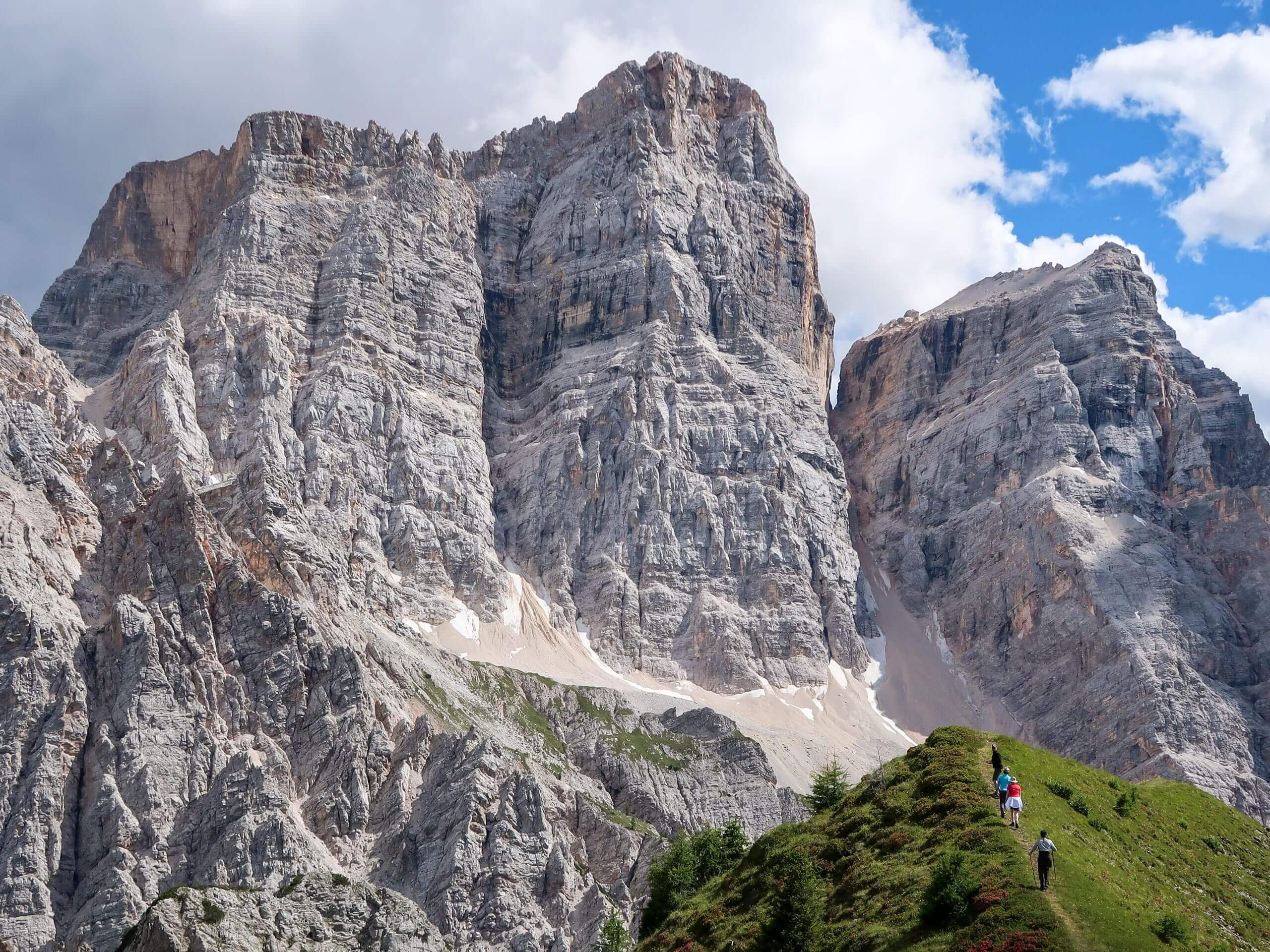
Towering Dolomite Cliffs on Alta Via 1
Should You Hike the Alta Via Independently or Book a Self-Guided Tour?
Independent hikers can plan and book the Alta Via themselves, but it requires time, flexibility, and careful coordination. You need to choose daily stages, contact huts, manage deposits, understand route variants, check transport, and prepare backup plans.
A self-guided Alta Via tour is a better fit if you want independence on the trail but support behind the scenes. You still hike at your own pace, but the route, accommodation, trip notes, and many logistics are organized for you.
This is especially useful on AV1 because accommodation can fill quickly and route choices matter. A well-designed self-guided itinerary can help you avoid overlong days, unnecessary transfers, or mismatched difficulty.
Which Alta Via Tour Is Right for You?
Best for comfort: the Alta Via Highlights in Hotel Hiking Tour is ideal if you want to hike spectacular Alta Via sections but prefer hotels and guesthouses to a fully hut-based trek. This is also a strong option if availability is limited on traditional rifugio routes.
Best for the classic AV1 trek: the Self-Guided Alta Via 1 Trek: Dobbiaco to Rifugio Capanna Trieste is the best fit if you want a classic self-guided Alta Via 1 experience with mountain accommodations and a point-to-point trekking feel.
Best for a hut experience without the full route: the Alta Via Highlights in Rifugios itinerary is a good choice if you want the atmosphere of rifugios and mountain huts, but in a shorter itinerary focused on the eastern Dolomites.
Best alternative if AV1 rifugios are sold out: the Self-Guided Dolomites Hut to Hut Trekking Tour is another self-guided way to experience the Dolomites on foot, with mountain huts and classic alpine scenery. This is not the same as the full Alta Via 1, but it can be a strong Dolomites trekking alternative if AV1 availability is tight.
Is the Alta Via Worth It?
One hundred percent, yes. The AV1 is one of the most rewarding, otherworldly walking routes in Europe.
It seamlessly intertwines a rare combination of dramatic scenery, well-established trails, welcoming mountain accommodation, Italian food, alpine culture, and practical logistics. The route is challenging enough to feel like a real achievement, but accessible enough that well-prepared hikers can complete it without technical climbing experience.
If you are deciding whether this trek is right for you, this Alta Via tour testimonial gives a useful first-hand perspective on trekking the Alta Via Dolomites with 10Adventures.
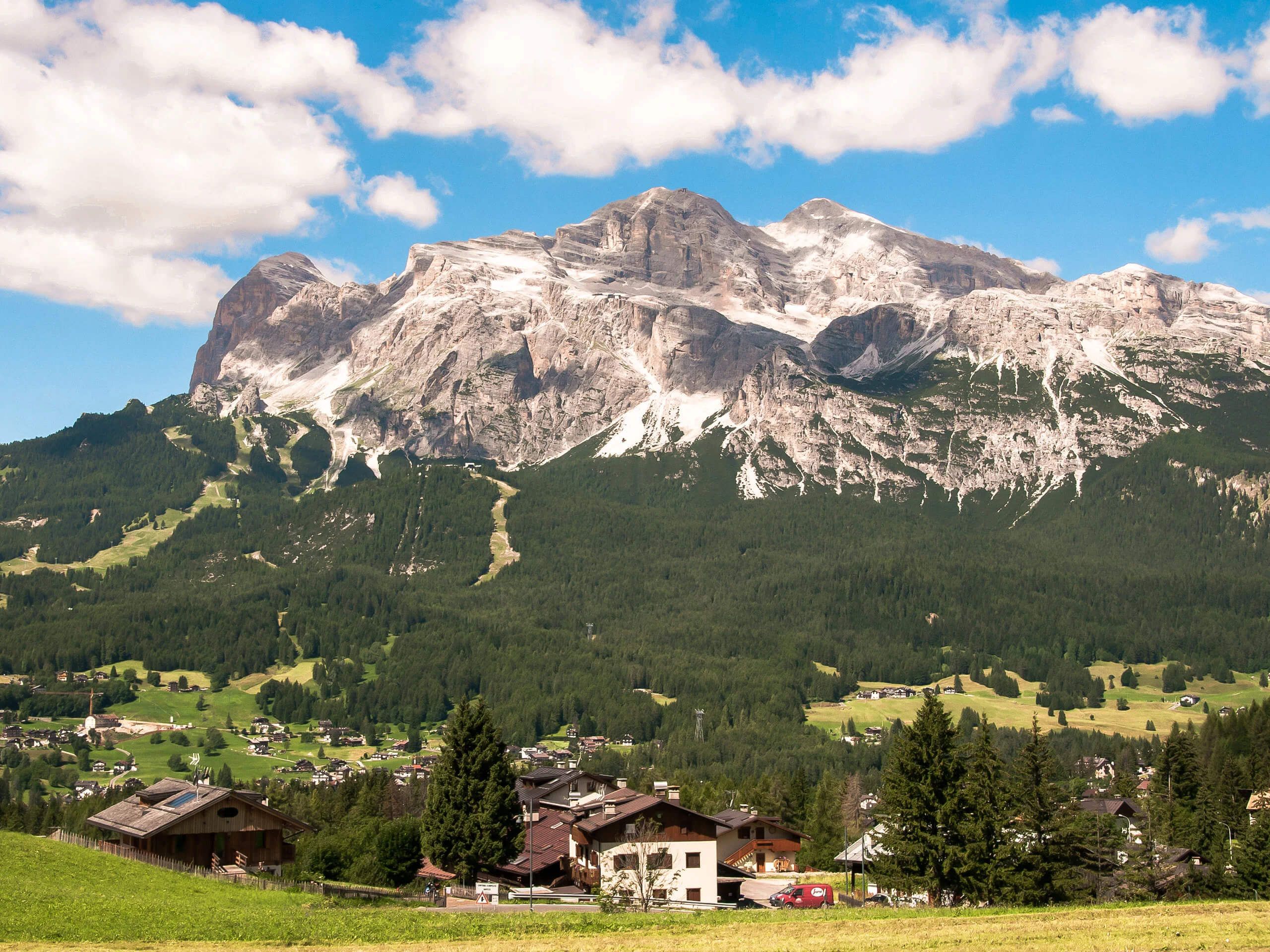
Cortina Mountain Views
Frequently Asked Questions About the Alta Via 1
Is Alta Via 1 the same as the Alta Via?
Not exactly. The Alta Via is a broader name for a group of high routes in the Dolomites. Alta Via 1 is the best-known route and the focus of this guide. Alta Via 2 is another popular option, but it is generally considered more demanding.
How long does it take to hike Alta Via 1?
Many hikers complete Alta Via 1 in about 8 to 10 days, depending on the itinerary, walking pace, accommodation availability, and any route variants. Shorter highlights itineraries are also possible for travellers who do not have time for the full route.
Is Alta Via 1 suitable for beginners?
Alta Via 1 is not a casual beginner walk, but it can be suitable for fit hikers with previous mountain hiking experience. You should be comfortable with long walking days, rocky trails, steep ascents and descents, and changing weather.
Do you need a guide for Alta Via 1?
You do not necessarily need a guide if you are confident with route planning, mountain navigation, accommodation booking, and weather decisions. A self-guided tour can be a good middle option because you still hike independently, but the route notes, accommodation, and key logistics are arranged in advance.
What is the best time to hike Alta Via 1?
The main hiking season is generally from mid-June to mid-September, with July, August, and early September often being the most practical months for open huts and clearer trail access. Conditions vary by year, so always check current weather, snow, and accommodation availability before finalizing plans.
Can you stay in hotels on the Alta Via 1?
Some AV1 itineraries use rifugios and mountain huts, while highlights-style versions may use hotels or guesthouses where the route allows. If you prefer more comfort, a hotel-based Alta Via highlights tour may be a better fit than a full hut-to-hut route.
Final Tips for Planning the Alta Via
Consider the following tips when booking your Alta Via trek:
- Book accommodation early, especially if travelling in July or August, because AV1 rifugios can sell out quickly.
- Choose your itinerary based on fitness and comfort, not just scenery.
- Pack light, but prepare for cold, rain, sun, and long days.
- Build in flexibility if travelling independently.
And, most importantly, give yourself enough time to enjoy the Dolomites rather than rushing through them. Alta Via 1 is not just a hike from one place to another, but a journey through one of Europe’s most beautiful mountain landscapes.
Nadine Gravis
May 15, 2026
Whether exploring Algonquin Provincial Park by canoe, or hiking Torres del Paine, Nadine loves spending time outdoors and sharing about her experiences.
Recent stories
Destinations
Walking in Portugal: Best Walking Trips and Routes
Portugal packs an unusual amount of variety into a relatively small country.
Nadine Gravis
Oct 5, 2026
Destinations
Walking in China: Best Walking Trips and Routes
China offers walking experiences that range from historic routes to high mountain treks.
Kelsey Krahn
Oct 2, 2026
Destinations
Tour du Mont Blanc Map: Route, Variations and Key Stops
The Tour du Mont Blanc is a long-distance hiking circuit around the Mont Blanc massif, passing through France, Italy and Switzerland.
Lynn Campbell
Sep 28, 2026