
BlogDestinationsElbe Cycle Route (Elberadweg): A Complete Guide to Cycling the Elbe
Elbe Cycle Route (Elberadweg): A Complete Guide to Cycling the Elbe
Table of contents

Kelsey Krahn
Aug 27, 2026
Kelsey hated hiking when she was a kid. Her parents would always force her to venture up mountains with them, and she would always complain about how pointless it was to wind along a path to a "stupid view." But now, you can find Kelsey happily weaving to a collage of stunning views cloaking mountains across the globe!
The Elbe Cycle Route is one of Central Europe's great river rides, following the Elbe from the Czech mountains through Saxony and northern Germany to the North Sea. If you’re curious why Elberadweg is placed between brackets in our header, it’s because in English you will see it called both the Elbe Cycle Route and Elbe Cycle Path, but in German, it is the Elberadweg.
Most cyclists tackle a section rather than the entire route. Self-Guided Germany Cycling Holidays include several Elbe itineraries, and the Germany Cycling Tours Guide covers how the Elbe fits into a wider cycling trip through Germany.
What Is the Elbe Cycle Route?
The full Elberadweg is about 1,300 km from the Giant Mountains in Czechia to the North Sea. The route follows the Elbe closely for much of the journey, with a Czech branch that uses the Vltava to connect Prague with the Elbe at Mělník.
The landscapes change steadily as you travel north. Czech stages pass wine country, castles, and the Elbe Sandstone Mountains. In Germany, the route continues through Dresden, Meissen, Wittenberg, Dessau, Magdeburg, broad floodplains, Hamburg, and the North Sea.
At the southern end, the route begins near the Elbe headwaters in the Giant Mountains before running through Czechia toward Prague and Mělník. Beyond Hamburg, it follows the lower Elbe toward the estuary and North Sea, with finishes around Cuxhaven or Brunsbüttel depending on the chosen variant.
For riders planning a self-guided trip, route notes, GPS navigation, luggage transfers, and pre-booked accommodation can simplify the logistics between stages.
Best Sections of the Elbe Cycle Route
Prague to Dresden
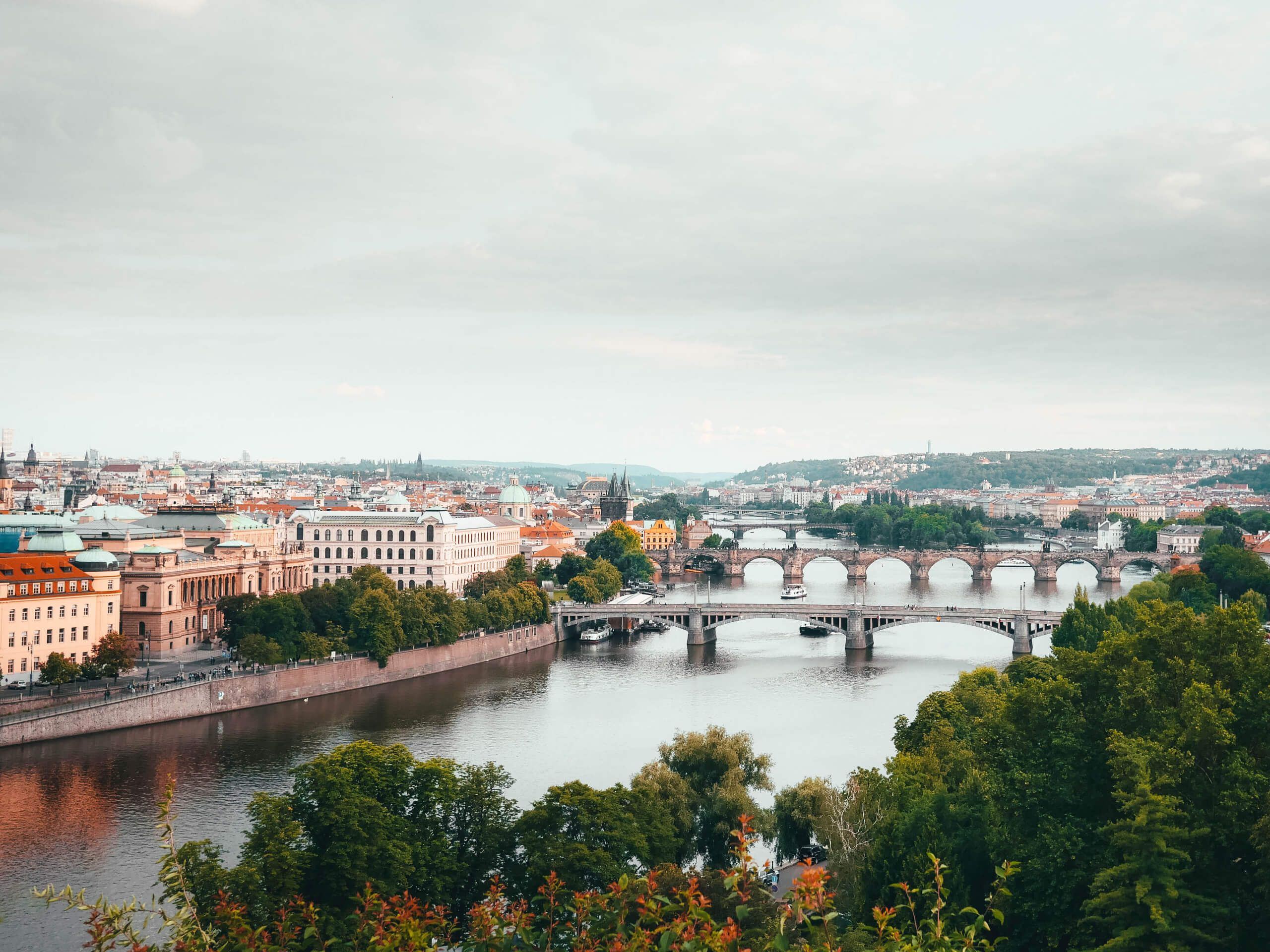
Prague to Dresden is one of the most appealing introductions to the route because it combines two major cities with the quieter Czech countryside. From Prague, cyclists first follow the Vltava toward Mělník, where it meets the Elbe, then continue past Litoměřice and Děčín before crossing into Germany through the Elbe Sandstone landscape.
The Self-Guided Prague to Dresden on the Elbe Cycle Path covers about 215 km in eight days and is rated moderate. Riding days range from roughly 20 to 55 km, with highlights including Bohemian wine country, Terezín, Děčín Castle, Königstein Fortress, the Bastei Bridge, and the approach to Dresden.
If you are spending extra time around Prague or Bohemia before the ride, Guided Czech Republic Tours include other active ways to explore the region.
Dresden, Meissen and Saxony
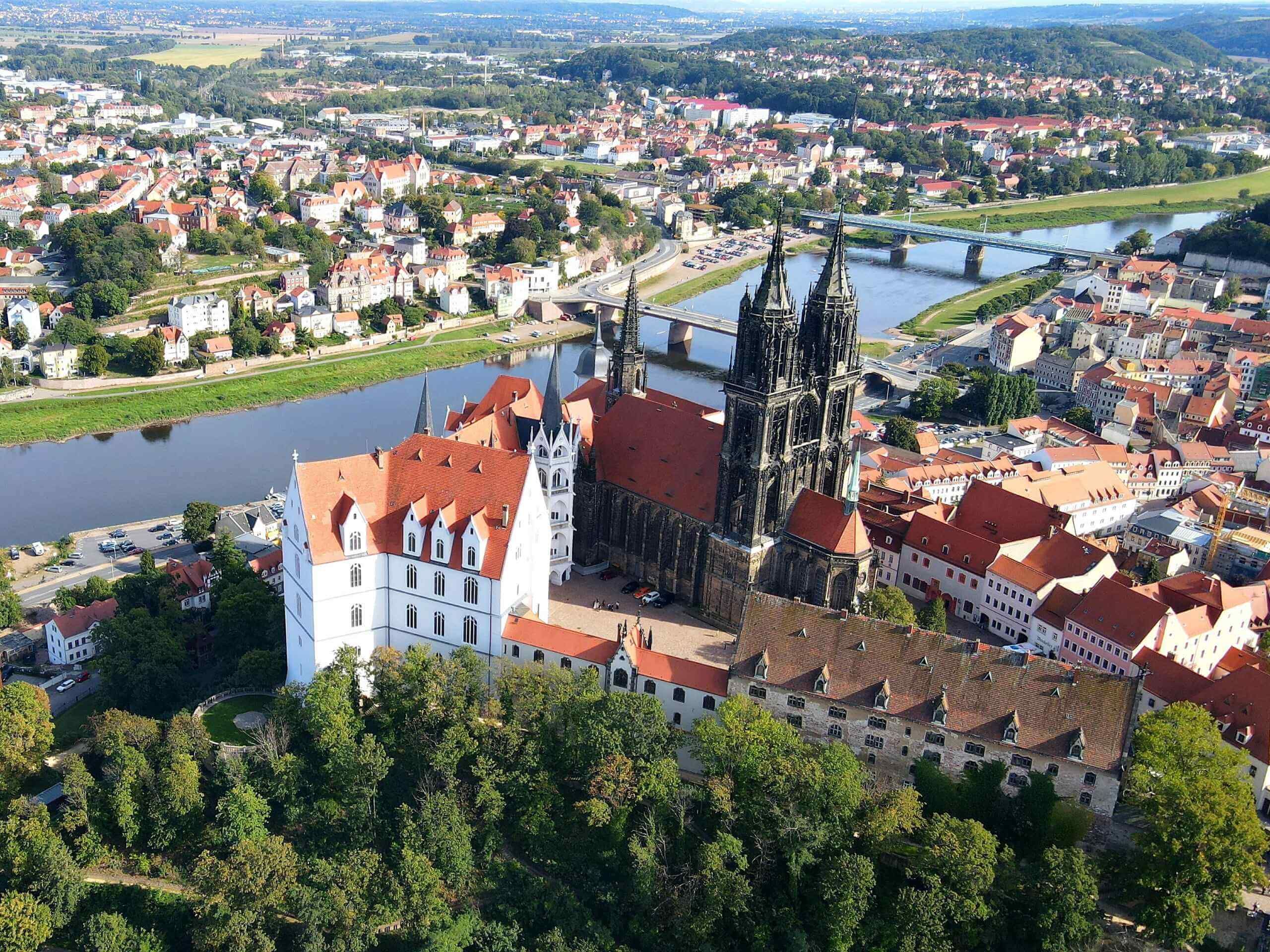
Dresden is a natural hub for shorter Elbe cycling holidays. South of the city, the river cuts through the sandstone scenery around Bad Schandau and Saxon Switzerland. North of Dresden, the riding becomes gentler as the path passes Radebeul vineyards, Meissen, Renaissance towns, and the cultural landscapes of Saxony-Anhalt.
The Self-Guided Dresden to Dessau by Bike is an eight-day moderate trip that includes a Bad Schandau day ride before continuing from Dresden through Meissen, Torgau, Wittenberg, and the Garden Kingdom of Dessau-Wörlitz. It keeps the focus on Saxony and the Middle Elbe rather than extending into the longer northern stages.
Meissen
Dresden to Magdeburg
Continuing farther north gives the route a stronger history-and-river character. The Elbe passes Meissen, Torgau, Lutherstadt Wittenberg, Dessau, protected floodplains, and eventually Magdeburg, with long stretches of relatively flat riding between the towns.
The Self-Guided Dresden to Magdeburg Biking Tour travels about 290 km over eight days. It is rated moderate, with riding days that can reach around 80 km. That makes it physically more demanding than the route profile alone might suggest, even though the Elbe Cycle Path itself is generally flat and well maintained.
Magdeburg to Hamburg
North of Magdeburg, the Elbe moves into broader floodplains and quieter countryside. Tangermünde, Havelberg, Wittenberge, the Wendland region, and Lauenburg break up the journey before the route reaches Hamburg. This section has less of Saxony's vineyard scenery and more wetlands, wildlife, brick towns, and northern German landscapes.
The Self-Guided Magdeburg to Hamburg Cycling Tour takes you across about 355 km in eight days and is rated moderate. The appeal here is the shift into nature reserves, small towns, wetlands, and northern German landscapes before the finish in Hamburg.
Longer Elbe Trips
Riders who want a much longer journey can combine several of these sections. We suggest checking out the Self-Guided Hamburg to Dresden Bike Tour on the Elbe Cycle Path, which stretches about 645 km in 13 days. Get ready for consecutive long riding days! The route is ranked hard because of the amount of ground you’ll cover each day, not because the ride is mountainous.
Another option is the Self-Guided Prague to Berlin on the Elbe Cycle Path. This 13-day trip covers more than 540 km, follows the Elbe from Prague through Dresden and Wittenberg, then leaves the river for Potsdam and Berlin. It combines a substantial Elbe section with a longer city-to-city journey.
How Difficult Is the Elbe Cycle Route?
The Elbe is generally one of the more approachable long-distance river routes in Germany. The German section is mainly flat, and many stretches use paved or well-maintained cycle paths away from heavy traffic. The terrain itself is rarely the main obstacle.
Distance is what changes the difficulty. A 40 km day around Dresden feels very different from an itinerary with repeated 70 to 80 km stages. Longer journeys also require more resilience in headwinds, rain, and changing surfaces. Riders should judge a trip by daily mileage and consecutive riding days as well as elevation.
Prague
Best Time to Cycle the Elbe in 2027
Late spring through early autumn is the main riding season. May, June, and September usually offer a good balance of daylight, comfortable temperatures, and open services. July and August provide the warmest conditions but can be busier in Prague, Dresden, Hamburg, and the most popular sightseeing areas.
Most cyclists plan the Elbe between April and October, with May, June, and September offering some of the most comfortable conditions. For a 2027 trip, confirm exact departure dates when booking and check river, ferry, and route notices shortly before departure, especially after periods of unusually high water.
Why Choose a Self-Guided Elbe Cycling Trip?
The Elbe works particularly well for self-guided travel because the route connects towns at regular intervals and many sections have established cycling infrastructure. On supported trips, accommodation, luggage transfers, route information, and navigation are arranged while you control the pace of each day.
That flexibility leaves time for Meissen, vineyards near Dresden, Wittenberg's Reformation sites, and the Elbe biosphere landscapes. If you are comparing the Elbe with other multi-day rides, Guided and Self-Guided Europe Bike Tours include river, coastal, and cross-country routes elsewhere in Europe.
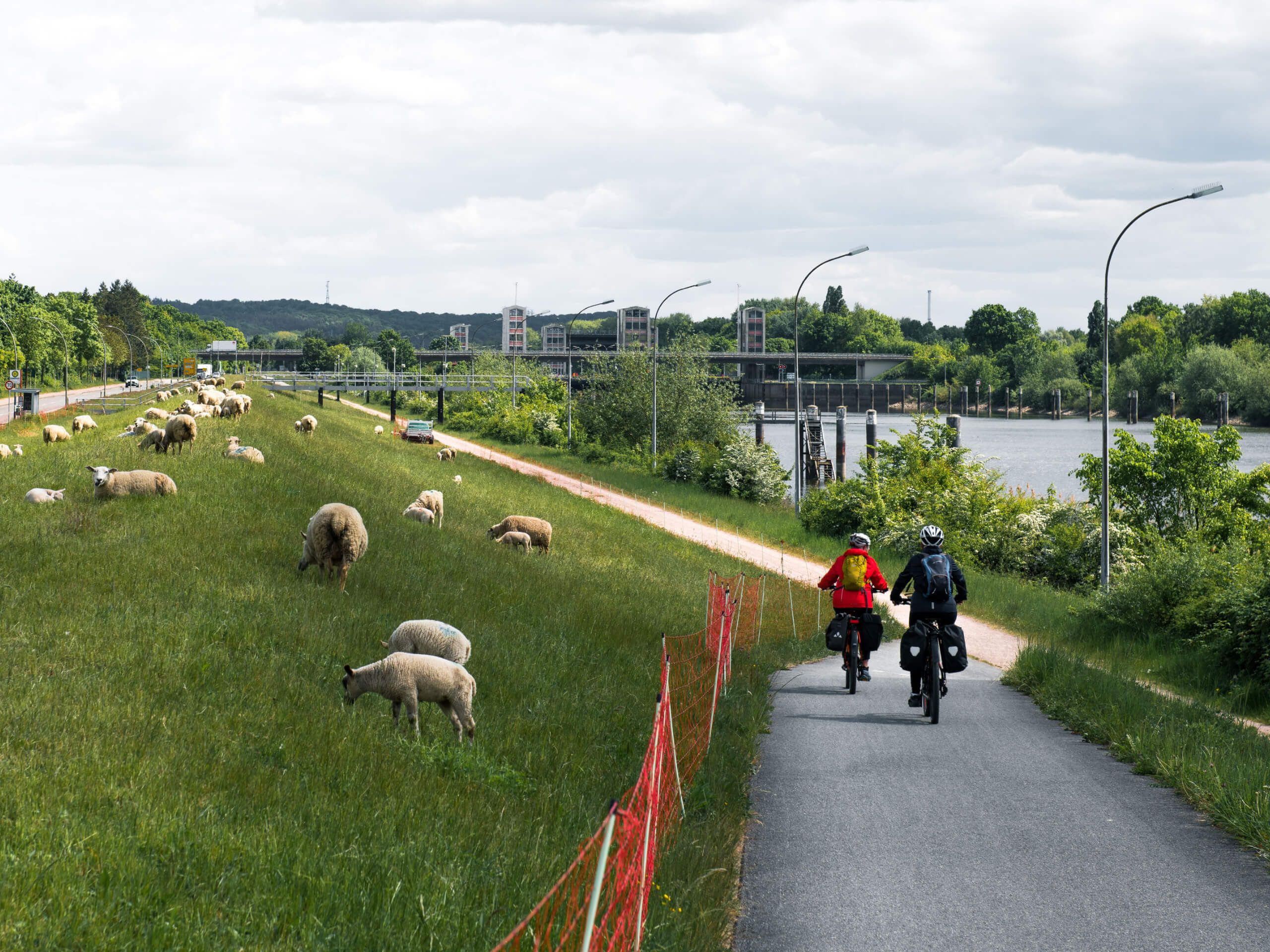
Elbe Cycle Route
Can You Ride the Elbe Cycle Route on an E-Bike?
Yes! An e-bike is not necessary for the mostly flat terrain, but it can make longer stages and headwinds easier to manage. E-bike rental is available on several 10Adventures Elbe itineraries, including Prague to Dresden, Dresden to Magdeburg, and Magdeburg to Hamburg.
If renting an e-bike, confirm battery range, charging arrangements, bike sizing, and what equipment is included. Riders on longer tours should also consider how much assistance they expect to use on 60 to 80 km days.
Elbe Cycle Route Maps and Practical Planning
For route planning, use the official Elbe Cycle Route map and GPS resources rather than relying only on a general road map. The full Elberadweg is long enough that surface, ferry, and service information can vary substantially between Czechia, Saxony, the Middle Elbe, and the northern river.
Pack padded cycling shorts, breathable layers, a waterproof jacket, sun protection, gloves, water, snacks, and offline navigation. Trains serve many major cities along the route, which makes section-based trips practical and provides flexibility if weather or fatigue changes your plans. A small repair kit and a backup charging cable are also useful on the longer, more rural stages between major cities.
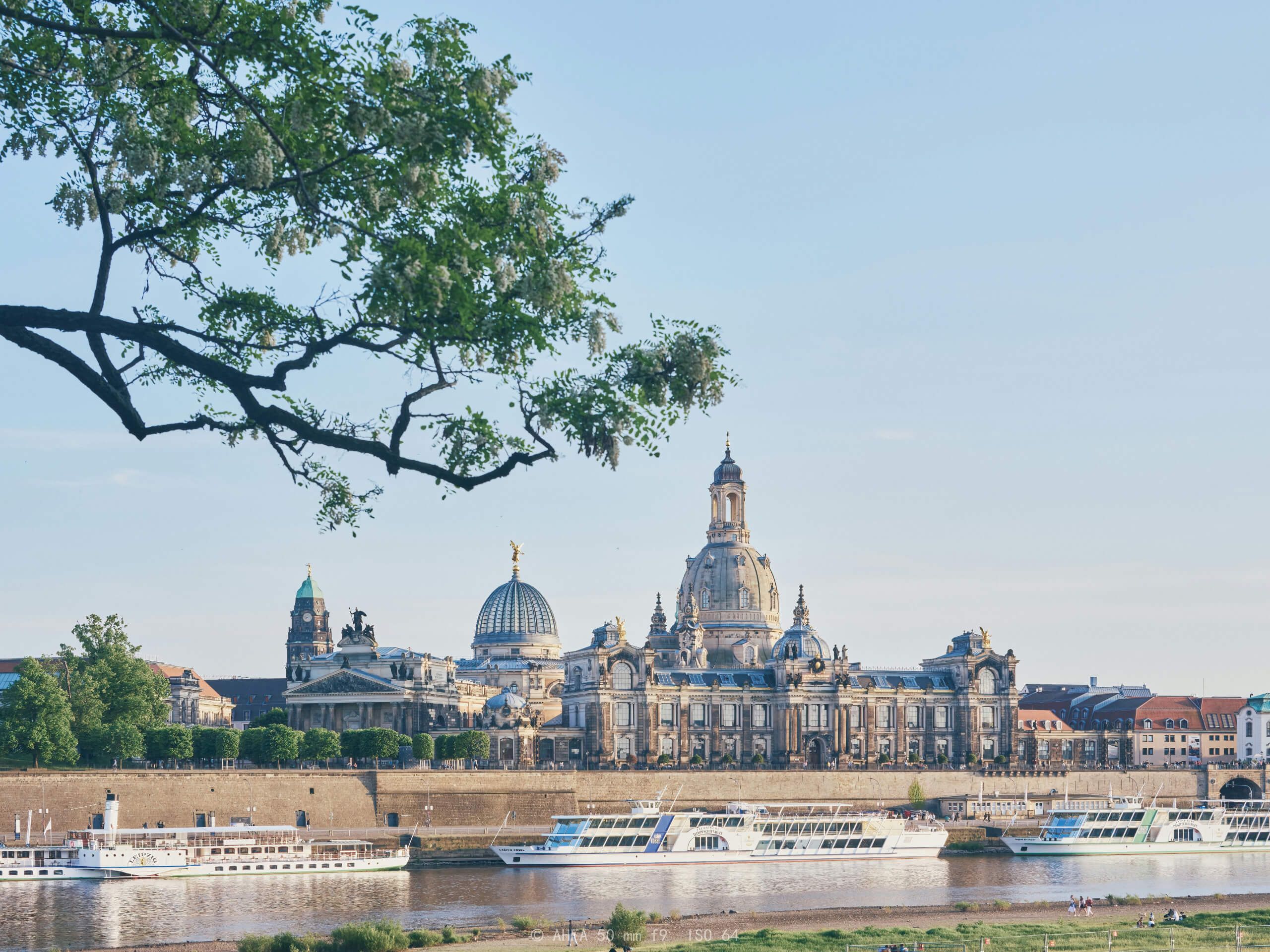
Dresden
Frequently Asked Questions About the Elbe Cycle Route
How long is the Elbe Cycle Route?
The full Elberadweg is about 1,300 km from the Giant Mountains in Czechia to the North Sea. The exact total varies slightly with the route variant and Prague branch used.
Is the Elbe Cycle Route suitable for beginners?
Many sections are suitable for beginners because the terrain is generally flat and much of the route uses cycle paths or quiet roads. First-time cycle tourists should choose a manageable daily distance rather than starting with one of the 600 km plus itineraries.
What is the best section of the Elbe Cycle Route?
Prague to Dresden is a strong choice for scenery and city stops, while Dresden to Dessau or Magdeburg gives a classic German Elbe experience with vineyards, historic towns, and cultural sites. Magdeburg to Hamburg is better for riders drawn to floodplains and northern landscapes.
How many days do you need to cycle the full Elberadweg?
Allow at least 14 days to cycle the entire route, although many leisure cyclists will prefer longer. Dividing the Elbe into two or three trips gives much more time for the cities and cultural stops along the way.
Can you cycle from Prague to Dresden on the Elbe?
You bet! From Prague, the route first follows the Vltava to Mělník and then joins the Elbe toward Litoměřice, Děčín, Saxon Switzerland, and Dresden. The supported 10Adventures itinerary covers about 215 km over eight days.
Where does the Elbe Cycle Route end?
The full route reaches the North Sea after passing Hamburg and the lower Elbe. Depending on the exact variant, riders finish around Cuxhaven or the Elbe estuary area near Brunsbüttel.
Kelsey Krahn
Aug 27, 2026
Kelsey hated hiking when she was a kid. Her parents would always force her to venture up mountains with them, and she would always complain about how pointless it was to wind along a path to a "stupid view." But now, you can find Kelsey happily weaving to a collage of stunning views cloaking mountains across the globe!
Recent stories
Destinations
Hiking the Alpine Crossing: A Complete Guide
The Alpine Crossing is a four-stage hiking journey from Munich to Venice, crossing Germany, Austria, and northern Italy.
Lynn Campbell
Sep 1, 2026
Destinations
Danube Cycle Path: A Complete Guide to Cycling the Danube
The Danube Cycle Path is one of Europe's classic long-distance cycling routes, combining riverside riding with historic towns.
Nadine Gravis
Aug 25, 2026
Destinations
ViaRhôna Cycle Route: A Complete Guide to Cycling the Rhône
The ViaRhôna cycle route follows the Rhône from the shores of Lake Geneva through vineyards, historic cities, small towns, and the landscapes of southern France before reaching the Mediterranean.
Richard Campbell
Aug 25, 2026