
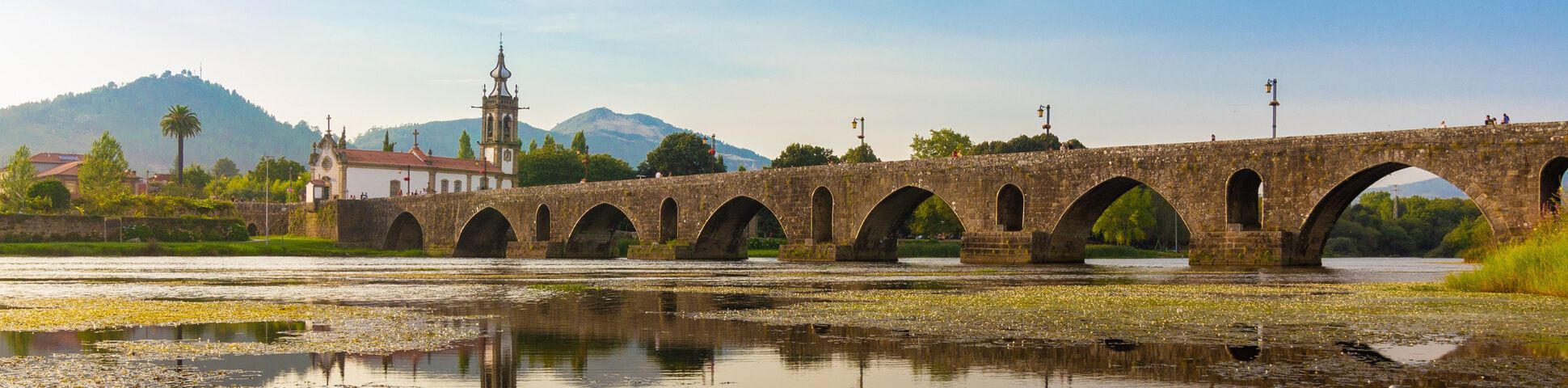
BlogDestinationsCamino Portugués 2026: A Pilgrim’s Guide to the Portuguese Way
Camino Portugués 2026: A Pilgrim’s Guide to the Portuguese Way

Claire Whitters
Apr 23, 2026
Claire shares her love of travel and has worked as a writer and editor at 10Adventures.
The Camino Portugués, otherwise known as the Portuguese Way, is the second most popular Camino de Santiago route to the Camino Francés. More rural, and arguably more picturesque than the French Way, the Camino Portugués is a great option for those seeking scenery without the strenuity of technical summit ascents. With two pilgrimage routes to choose from, this adventure caters to the needs and wants of all sorts of trekkers. Whether you are seeking a historical inland adventure or an exciting coastal trek—the Camino Portugués delivers.


Walked by thousands of intrepid pilgrims each year, this revered journey travels through ever-changing landscapes and exhibits the beauty and diversity of the topographies-from Portuguese fishing villages, lush vineyards, charming hamlets, and the prolific Galician countryside. Travelling over 260.0 km, both the Camino Portugués Central and The Camino Portugués Coastal provide ample time for pilgrims to disengage from the stressors of the real world and reconnect with themselves. Whichever route you choose, arriving at Santiago de Compostela at the end will undoubtedly provoke a strong sense of fulfillment and satisfaction.
Travellers searching for a Self-guided Portugal tour often want a seamless way to explore the country’s culture and landscapes. Our self-guided adventures provide detailed itineraries, curated routes, and logistical support while allowing you to travel independently.
If you’d rather focus on the walk and the pilgrim experience than day-to-day planning, Self-guided Camino Frances tours make the Camino Portugués feel much more manageable by keeping the route self-guided but arranging accommodations, luggage transfers, and many meals ahead of time.
What to Expect on the Camino Portugués in 2026
Key facts every pilgrim should know before walking the Camino Portugués in 2026:
- Two route options: The Central route (240 km inland through Porto, Barcelos, Ponte de Lima, Tui) and the Coastal route (260 km along the Atlantic via Vila do Conde, Viana do Castelo, Vigo). Both end in Santiago de Compostela.
- Duration: Central route is typically walked over 11 to 12 days; the Coastal route over 10 to 11 days. The two routes converge in Redondela.
- Starting point: Most pilgrims start from Porto, Portugal. Lisbon is an option for walkers with extra time who want to add an additional 380 km. The Caminha variant offers a one-week pilgrimage option.
- Best season: Central route: April, May, June, September (the shoulder months avoid summer heat). Coastal route: May through September, when the Atlantic weather is most reliable.
- Compostela qualifying: Yes. Both routes exceed the 100 km minimum required for the Compostela certificate.
- Daily budget: Approximately €25–40 per day in albergues with simple meals. Self-guided tours with pre-booked hotels, luggage transfers and support typically range from $100 to $200 per day.
- 2027 Holy Year: As a Holy Year on the Camino, you can expect prices to be higher compared to 2026. In addition, increased demand will mean that dates and accommodations will sell out much earlier than normal; it is suggested to book as early as possible, and up to 12 months in advance for the most popular dates and routes. Read more about the 2027 Holy Year on our comprehensive Camino de Santiago guide.
Camino Portugués Central vs. Coastal Route
The Camino Portugues is becoming a popular alternative pilgrimage route to Santiago de Compostela. For many pilgrims, they struggle to decide which route to do.
There are two main routes: The Camino Portugues and the Camino Coastal, and both routes are an incredible experience, and you almost can't go wrong. You will find serenity and joy, while finding physical and mental health. But there are differences. The Coastal Camino will take you along the Atlantic Coast, with stunning coastal scenery, while the classic Portugues route will take you through interior towns and the countryside of Portugal and Galicia.
There is also a Self-guided Portuguese Camino Caminha Variant tour, which is a shorter route, starting in the Northern town of Caminha, and allowing a one-week pilgrimage.
One thing to consider in choosing your Camino Portugues is the quality of accomodations. Many travellers love the option of walking the Self-guided Camino Portugues Deluxe Hotels tour. And don't worry, you can also walk the Self-guided Coastal Camino Deluxe Hotels tour as well!
Camino Portugués Itinerary Options
There is no question as to why the Portuguese Way routes have become some of the most popular pilgrimages—boasting breathtaking scenery, memorable cultural experiences, and let’s not forget amazing wine, these treks check all the boxes! Offering some of the best hospitality, food, pilgrim infrastructure, and panoramas, there is really no comparison. The only tough decision you will have to make when planning your pilgrimage along the Camino Portugués is determining which passage to venture—be it the inland or coastal trail, so let us help!
Organizing a pilgrimage, notably an extensive one like the Camino Portugués, can be a daunting task, we get it! Refer to our Camino de Santiago packing list and our guide to the Camino de Santiago to put your mind at ease! Though overwhelming, the spiritual and physical journey you are about to embark on warrants some time and consideration. If you would rather someone else handle the burden of planning instead, check out our Self-guided Portuguese Way tours, and let us manage the headache-inducing task. No matter the pilgrimage route or tour you choose, the adventure will be life-changing.

Camino Portugués - Portuguese Way routes have become some of the most popular pilgrimages
Standard Camino Portugués Itinerary: 240km
Though some intrepid adventurers choose to depart from Lisbon, most begin their journey from Porto, Portugal. Both exhibiting postcard-worthy scenery, it can be hard to choose which route to venture. The Central Portuguese Way travels through beautiful interior Portugal, passing through olive groves, enchanting hamlets, and the luxuriant countryside. This route is the more popular of the two, with more pilgrim infrastructure along the way.
Camino Portugués Day 1: Arrival in Porto
Porto is the second-largest city in Portugal. Arrive by plane, train, or automobile and settle into your albergue before heading out to explore the city. Make sure to grab a glass of Port wine to celebrate your adventure!
Accommodations: Albergue de Peregrinos do Porto
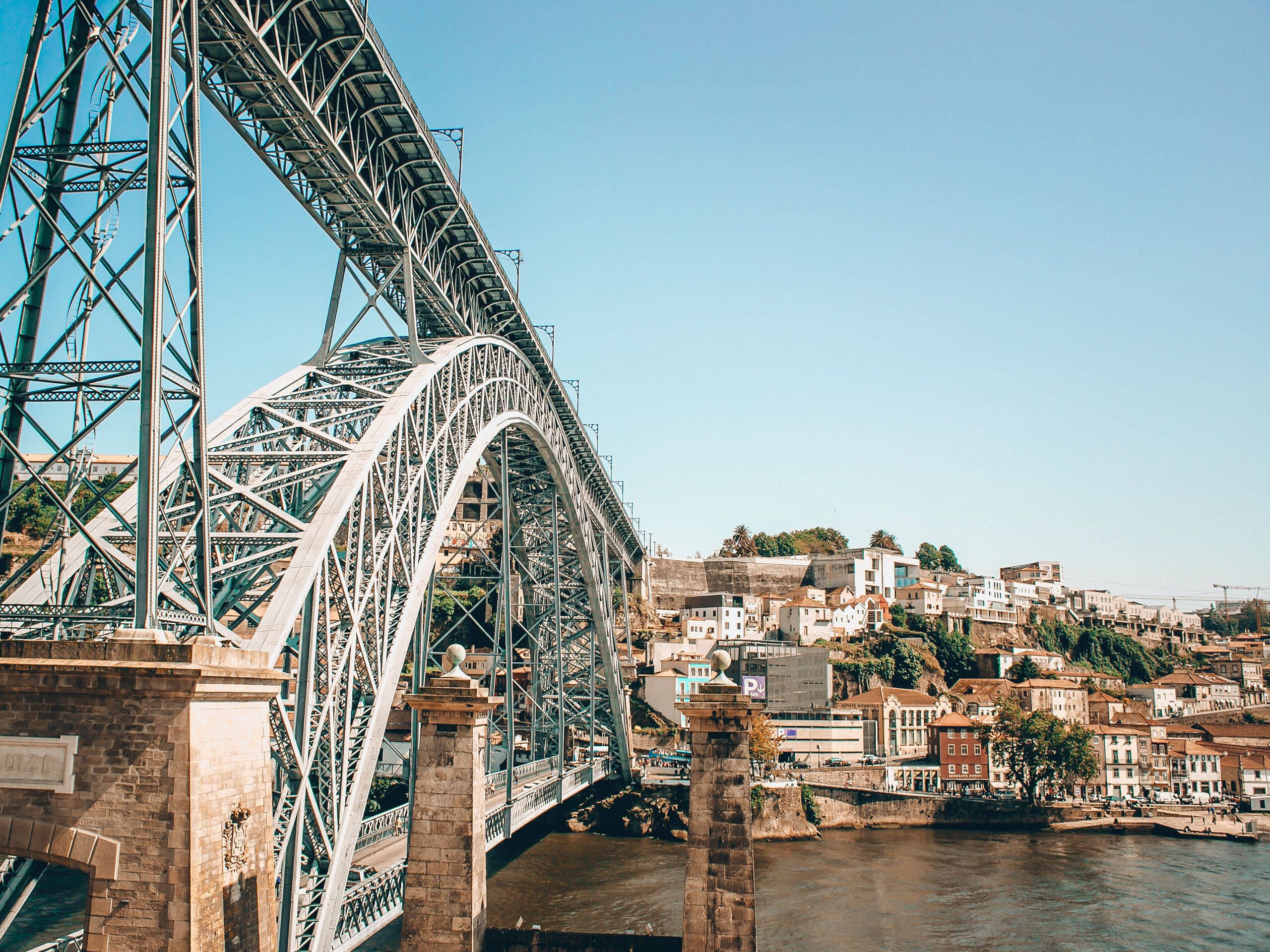
Camino Portugués - Day 1 - Porto is the second-largest city in Portugal
Camino Portugués Day 2: Porto to Vilarinho
Today marks your first day of walking. Departing from Romanesque Porto Cathedral you will begin to travel further inland, passing urban and industrial areas before entering the countryside.
Distance: 27km, Accommodations: Albergue Casa da Laura
Camino Portugués Day 3: Vilarinho to Barcelos
A welcome change from yesterday, today you will be wandering through the more rural and prolific countryside. Travelling through several charming villages, you will end your day in the interesting town of Barcelos.
Distance: 27km, Accommodations: Albergue Cidade de Barcelos

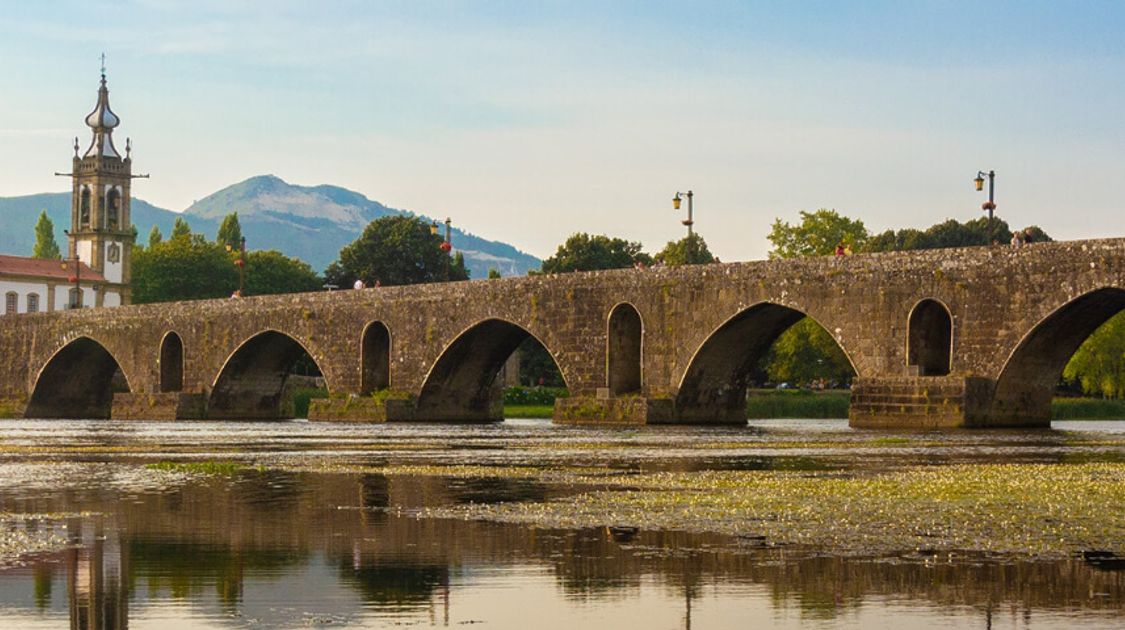
Camino Portugués - Day 3 - You will end your day in the interesting town of Barcelos
Camino Portugués Day 4: Barcelos to Ponte de Lima
Today is a long day, so hopefully you got some rest! This undulating path will guide you up and down slopes through luxuriant meadowlands before delivering pilgrims to Ponte de Lima. Make sure you grab a glass of the famous vinho Verde to end the day.
Distance: 35km, Accommodations: Albergue de Peregrinos de Ponte de Lima
Camino Portugués Day 5: Ponte de Lima to Rubiães
Day 5 demands some stamina as you ascend the peak of Alto da Portela Grande de Labruja which boasts awe-inspiring views of the luxuriant countryside.
Distance: 35km, Accommodations: Albergue de Peregrinos de Rubiães
Camino Portugués Day 6: Rubiães to Tui
Day 6 is an exciting day! Traveling from Rubiães to Tui, pilgrims will meander through more urban settings before crossing the border into Galicia, Spain! Make sure to explore the medieval village of Tui before resting your head for the night!
Distance: 19km, Accommodations: Albergue de Peregrinos de Tui

Camino Portugués - Day 6 - Make sure to explore the medieval village of Tui
Camino Portugués Day 7: Tui to Redondela
Hiking over 30.0 km, today is a long trek which can be broken into two days by stopping over in O Porriño. You will likely be joined by several more pilgrims hopping on to satisfy the last 100.0 km benchmark.
Distance: 32km, Accommodations: Albergue de Peregrinos Casa da Torre
Camino Portugués Day 8: Redondela to Pontevedra
Redondela marks the convergence spot for those also trekking the Camino Portugués Coastal route, so you will be in the company of even more like-minded adventurers making their way to Santiago de Compostela. When you arrive in Pontevedra be sure to explore the La Peregrina Church, a stunning chapel in the city center.
Distance: 20km, Accommodations: Albergue de Peregrinos Virgen Peregrina

Camino Portugués - Day 8 - Explore the La Peregrina Church, a stunning chapel in Pontevedra
Camino Portugués Day 9: Pontevedra to Caldas de Reis
Enjoy the level terrain as you hike through the countryside by way of asphalt and dirt roads. End your day by soaking your sore muscles in Caldas de Reis’ thermal springs. Pamper yourself with a glass of vino before retiring to your bunks.
Distance: 21km, Accommodations: Albergue de Caldas de Reis
Camino Portugués Day 10: Caldas de Reis to Padrón
Travelling through the lush Galician topography, you will end Day 10 in the culturally rich city of Padrón. Explore the city which claims to fame as the birthplace of the famous author, Rosalía de Castro.
Distance: 19km, Accommodations: Albergue de Peregrinos de Padrón
Camino Portugués Day 11: Padrón to Santiago de Compostela
Today is your last day of trekking. This section will guide pilgrims through Galicia’s prolific countryside and olive groves before entering the UNESCO-listed old town of Santiago de Compostela. Don’t forget to pick up your official Compostela!
Distance: 24km, Accommodations: Albergue Parroquial Fin del Camino
Camino Portugués Day 12: Departure from Santiago de Compostela
Today is the day to kick back and relax. Connect with fellow pilgrims who completed other routes over a well-deserved glass of vino. Wander through the charming medieval city before heading back to your home base, wherever that may be!
Pilgrims with extra days can extend their journey on a Self-guided Finisterre Way tour and walk another 90 km from Santiago de Compostela out to the Atlantic coast.

Camino Portugués - Day 12 - Wander through charming Santiago de Compostela
Standard Camino Portugués Coastal Itinerary
The Coastal Portuguese Way is exactly as the name suggests. Wander along the coastline of the Atlantic Ocean, through fishing villages, over beaches, and through eucalyptus fields, this trek offers a diverse range of topographies. The Camino Portugués Coastal reconnects with the Camino Portugués Central in Redondela which is where this itinerary ends. To finish off the pilgrimage to Santiago de Compostela, refer to Day 8 above! If you don’t want to handle the burden of organizing your pilgrimage, check out our Self-guided Portuguese Way Coastal tour.
Camino Portugués Coastal Day 1: Arrival in Porto
Today you will arrive in Porto. Check-in to your albergue and head out into the city to explore the UNESCO-listed city of Porto and Luiz I Bridge. Don’t forget to grab a glass of vino!
Accommodations: Albergue de Peregrinos do Porto
Camino Portugués Coastal Day 2: Porto to Labruge
Begin your spiritual journey to Santiago de Compostela today! From Porto you will be guided along the coastline of the Atlantic Ocean and the banks of the Douro River.
Distance: 25km,Accommodations: Albergue de Peregrinos São Tiago de Labruge

Camino Portugués Costal - Day 2 - Begin your spiritual journey from Porto
Camino Portugués Coastal Day 3: Labruge to Póvoa de Varzim
Today boasts breathtaking vistas of the ocean. Wandering through dunes, over wooden walkways, and along sandy beaches, the stunning scenery warrants countless photo opportunities.
Distance: 14km,Accommodations: Albergue de Peregrinos São José de Ribamar
Camino Portugués Coastal Day 4: Póvoa de Varzim to Marinhas
Travelling through several charming coastal towns you will be rewarded yet again with epic Maritime panoramas. Pilgrims will have to cross over the Cávado River before reaching their endpoint in Marinhas.
Distance: 25km, Accommodations: Albergue de Peregrinos de São Miguel
Camino Portugués Coastal Day 5: Marinhas to Viana do Castelo
Day 5 warrants a more inland experience. Welcome the change of scenery as you travel through the countryside and down into the Neiva riverbed. After six days of trekking, you deserved to treat yourself! Grab a glass of port and indulge in some seafood.
Distance: 21km, Accommodations: Albergue de Peregrinos São João da Cruz dos Caminhos
Camino Portugués Coastal Day 6: Viana do Castelo to Caminha
Today is the last day of the pilgrimage through Portugal. Make sure to soak up all the charm and cultural experiences before entering Spain. Explore the Atlantic coastline and rejuvenate your tired body in the chilly ocean water.
Distance: 27km, Accommodations: Albergue de Peregrinos de Caminha

Camino Portugués Costal - Day 7 - Explore the Atlantic coastline
Camino Portugués Coastal Day 7: Caminha to Porto Mougás
Begin your day crossing the border into Galicia, Spain. Passing A Guarda, pilgrims will be led along the rugged coastline and enchanting fishing hamlets before arriving in Porto Mougás.
Distance: 24km, Accommodations: Albergue Aguncheiro
Camino Portugués Coastal Day 8: Porto Mougás to A Ramallosa
Day 8 is another amazing adventure along the shoreline. Revel in the sights of mountains and a lighthouse before reaching Baiona—a magical town worth exploring. Follow the path to A Ramallosa where you will end your day.
Distance: 16km, Accommodations: Albergue Hospedería Pazo Pías
Camino Portugués Coastal Day 9: A Ramallosa to Vigo
With two route options to choose from, we will time and time again choose the coastline route. Hike over the A Ramallosa bridge before hugging the coastline to Vigo. Enjoy the last day of seaside promenades.
Distance: 21km, Accommodations: Albergue de Peregrinos de Vigo
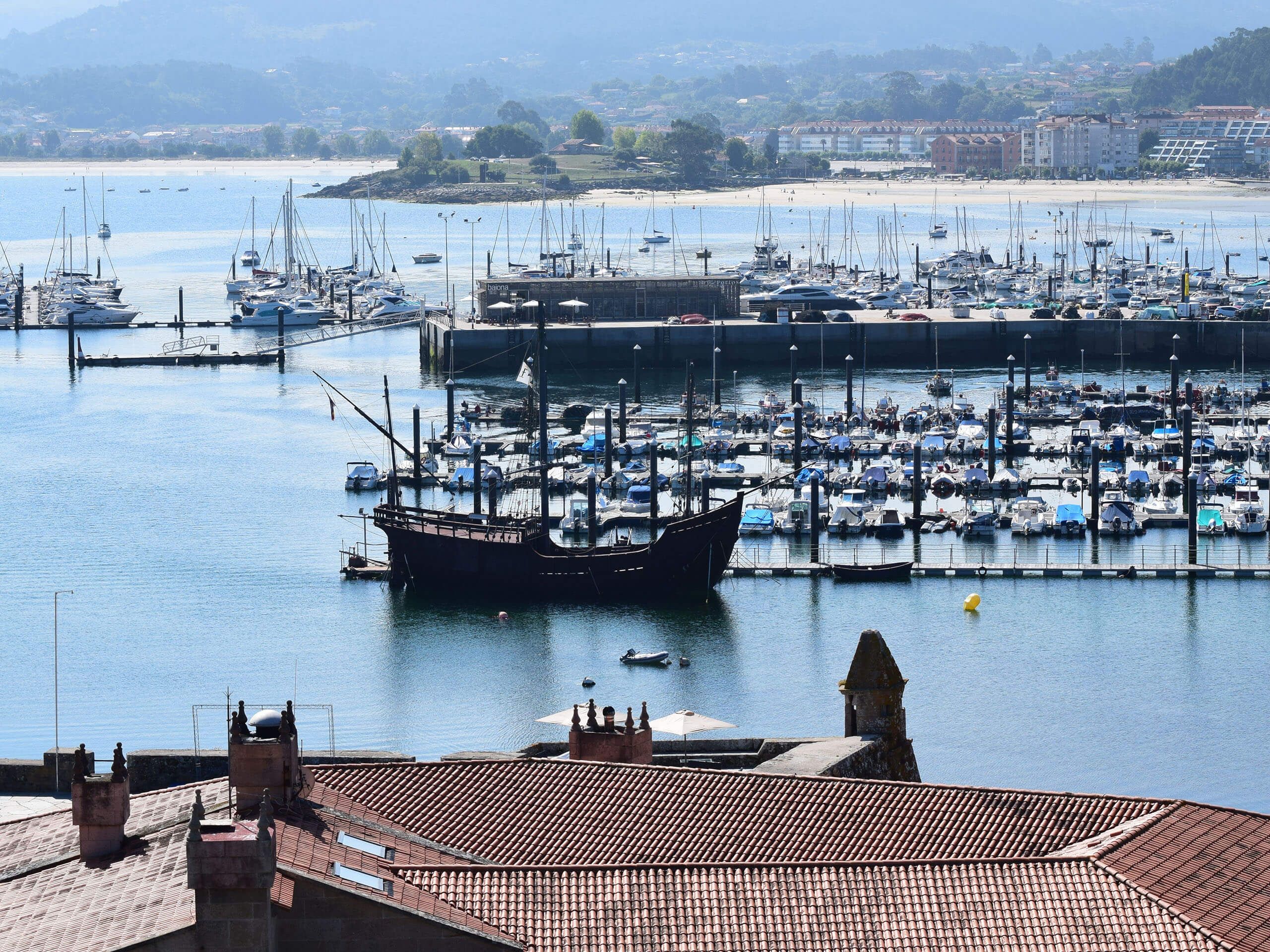
Camino Portugués Costal - Day 9 - Baiona, a magical town worth exploring
Camino Portugués Coastal Day 10: Vigo to Redondela
Enjoy your last day of hiking in solitude, as tomorrow you will be joined by pilgrims who ventured the Camino Portugués Central. This walk boasts incredible maritime vistas as you make your way to Redondela.
Distance: 16km, Accommodations: Albergue de Peregrinos Casa da Torre
Camino Portugués Coastal Day 11: Connect with the Camino Portugués Central
To get to Santiago de Compostela refer to the Portugués Central itinerary, day 8, and follow the schedule to ultimately arrive at the cathedral.
When to Walk the Camino Portugués in 2026?
Offering two route options, the Portuguese Way exhibits diverse topographies and climates. Those who opt for the Camino Portugués Coastal will experience Maritime weather, which means rainier and cooler conditions, even in the summer months. The Coastal Way is best ventured from May-September. Contrarily, the Camino Portugués Central can be unbearably warm in the summer months, so for this reason, this passage is best experienced in the shoulder season—April, May, June, and September. Eager to learn more about the pilgrimages’ seasonality? Check out our article, the best time to walk the Camino de Santiago for more information!

Camino Portugués Costal - The Coastal Way is best ventured from May-September
About the Camino Portugués
The Camino Portugués dates back to the XII century, following the independence of Portugal. What are now the pilgrimage routes, were once Roman roads many moons ago. Also used as trade routes for medieval commerce and production, the worn paths played an important role in consolidating the relationship between Galicia and Portugal.
It wasn’t until after the remains of St. James were discovered and King Alfonso II ordered the construction of the basilica in Santiago de Compostela that the routes were utilized by pilgrims. Christians from Portugal and southern Galicia would wander these trails to the cathedral to venerate the apostle.
Camino de Santiago Trip Planning Articles
- Camino Planning: How to prepare to Walk the Camino
- Route Guide for the Camino Frances
- Route Guide for the Camino Finisterre
- Route Guide for the Camino Primitivo
- Route Guide for the Camino Ingles
- Route Guide for the Camino del Norte
- Route Guide for the Camino Via de la Plata
- Route Guide for the Camino Invierno
- Camino de Santiago Facts
- 6 Best Long-Distance Walking Routes in Spain for 2026
- Best Autumn Walks in Europe
- What to Wear on a Walking Holiday
- Self-guided pilgrimage tours
Claire Whitters
Apr 23, 2026
Claire shares her love of travel and has worked as a writer and editor at 10Adventures.
Recent stories
Destinations
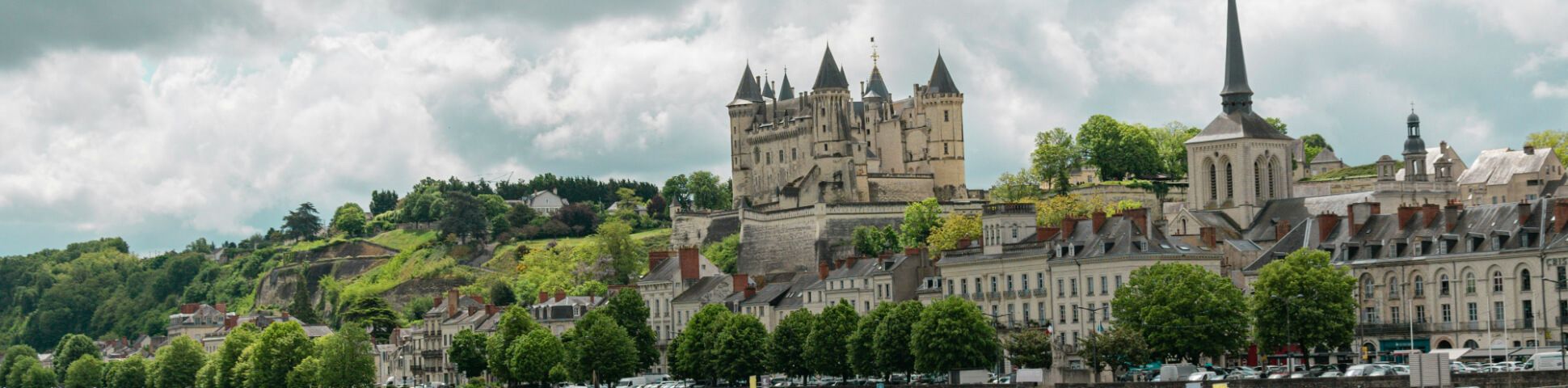
Top Walking and Cycling Tours with Luggage Transfer
A point-to-point walking or cycling trip is easier to manage when you only carry what you need during the day.
Nadine Gravis
Sep 22, 2026
Destinations
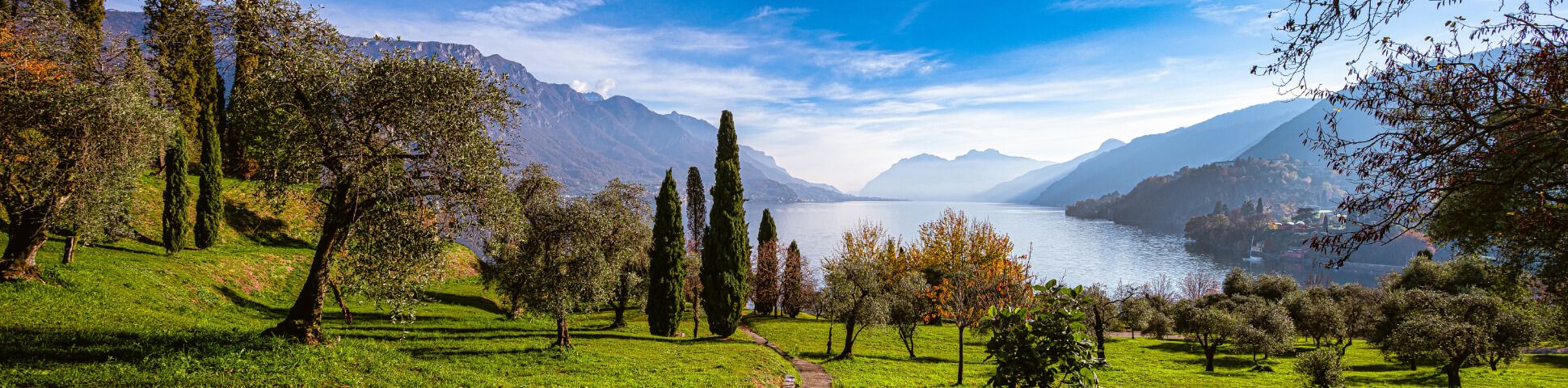
Best Hiking and Cycling Tours for First-Time Active Travelers
Your first active vacation does not need to mean climbing a major peak or riding a mountain pass every day.
Lynn Campbell
Sep 19, 2026
Destinations
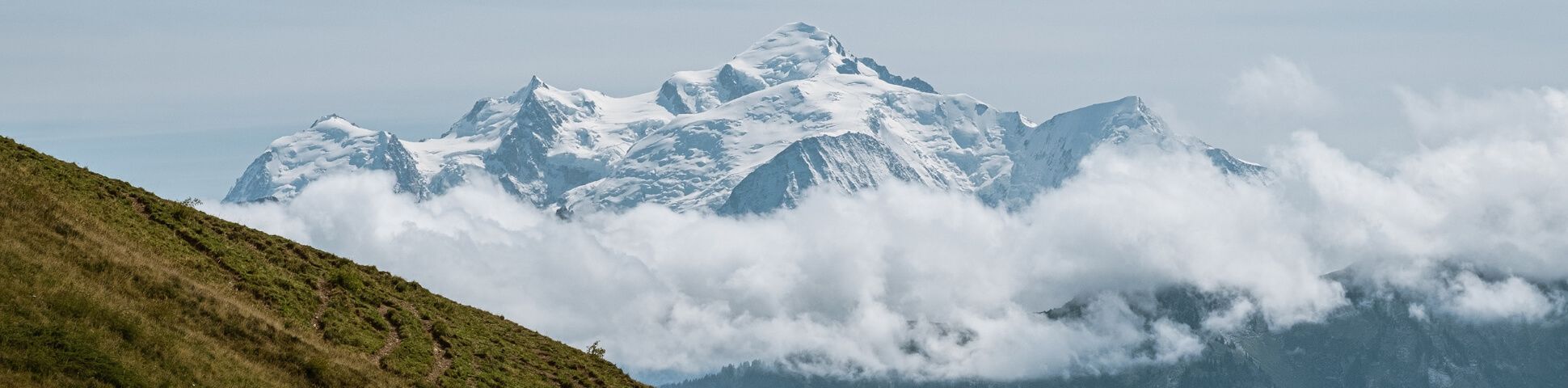
Best Time to Hike Tour du Mont Blanc in 2027
Mont Blanc's scenery evolves from a wildflower spectacle to a magical winter wonderland throughout the seasons, transforming from an "easier" (for lack of a better word) trek to a more technical adventure.
Kelsey Krahn
Sep 16, 2026