
BlogDestinationsMount Toubkal Trek: Route, Difficulty, Best Time and What to Expect
Mount Toubkal Trek: Route, Difficulty, Best Time and What to Expect
Kelsey Krahn
Oct 17, 2026
Kelsey hated hiking when she was a kid. Her parents would always force her to venture up mountains with them, and she would always complain about how pointless it was to wind along a path to a "stupid view." But now, you can find Kelsey happily weaving to a collage of stunning views cloaking mountains across the globe!
Wanting to tackle the Mount Toubkal Trek? At 4,167 m (13,671 ft), Mount Toubkal is the highest peak in Morocco’s High Atlas. The walk usually starts in Imlil, climbs to a mountain refuge and reaches the summit the following morning. In the warmer months, the standard ascent does not normally require technical climbing, but the altitude, loose ground and long descent make it a serious mountain hike.
A direct route puts the summit at the centre of the trip. With more time, you can cross passes above the Azzaden Valley, stay in mountain villages or walk around the massif toward Ifni Lake before the final climb.
Where does the Mount Toubkal trek start?
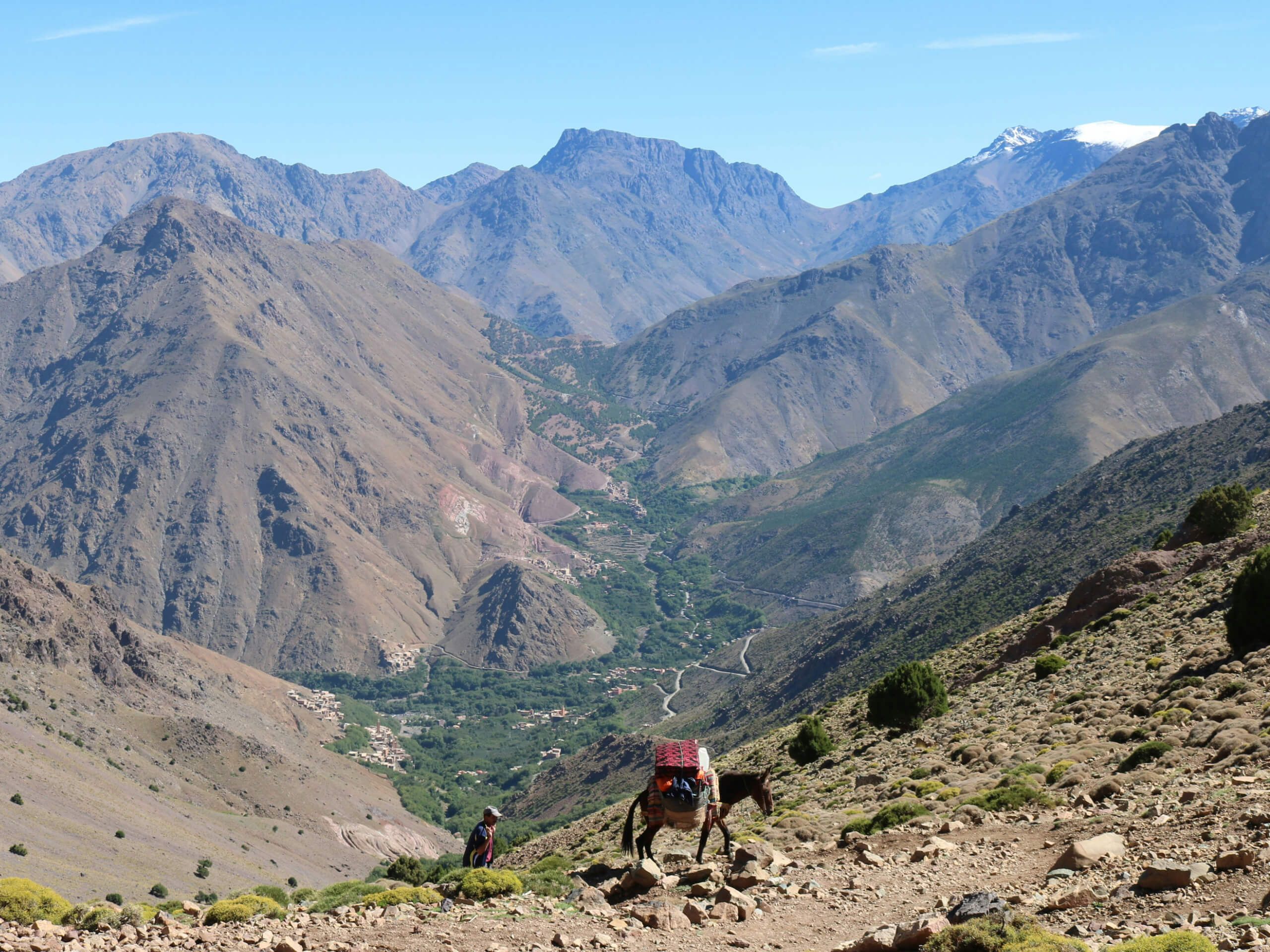
Imlil is reached by road from Marrakesh and sits at roughly 1,740 m. The most direct route follows the Mizane Valley past Sidi Chamharouch toward the Toubkal refuges at about 3,200 m. On the classic Toubkal ascent from Imlil, walkers spend a night in a mountain hut before continuing to the summit.
The drive from Marrakesh to Imlil takes roughly an hour and a half. If you are travelling independently, arrange your return transport in advance, especially if you will descend all the way to Imlil after the summit.
A route through the Azzaden Valley adds passes, villages and more time on foot before reaching the refuge. The extra days can make the trip richer, but they do not necessarily make it easier: some approaches cross high passes before the summit. Pay attention to both the walking hours and where you sleep each night.
What is the route like?
The climb to the refuge
On the direct approach, the path climbs steadily through the valley before the ground becomes rockier near the refuge. A longer route can cross a pass and descend into another valley first, adding a walking day and an overnight stop before the Toubkal Refuge.
The guided Mount Toubkal Summit Trek follows the Azzaden approach. The first walking day crosses Tizi n’Mezzik to Tamsoult in about five hours. The next crosses the Aguelzim Pass and descends to the Toubkal Refuge in about seven hours. These are full mountain days before the summit climb even begins.
Summit morning and the descent
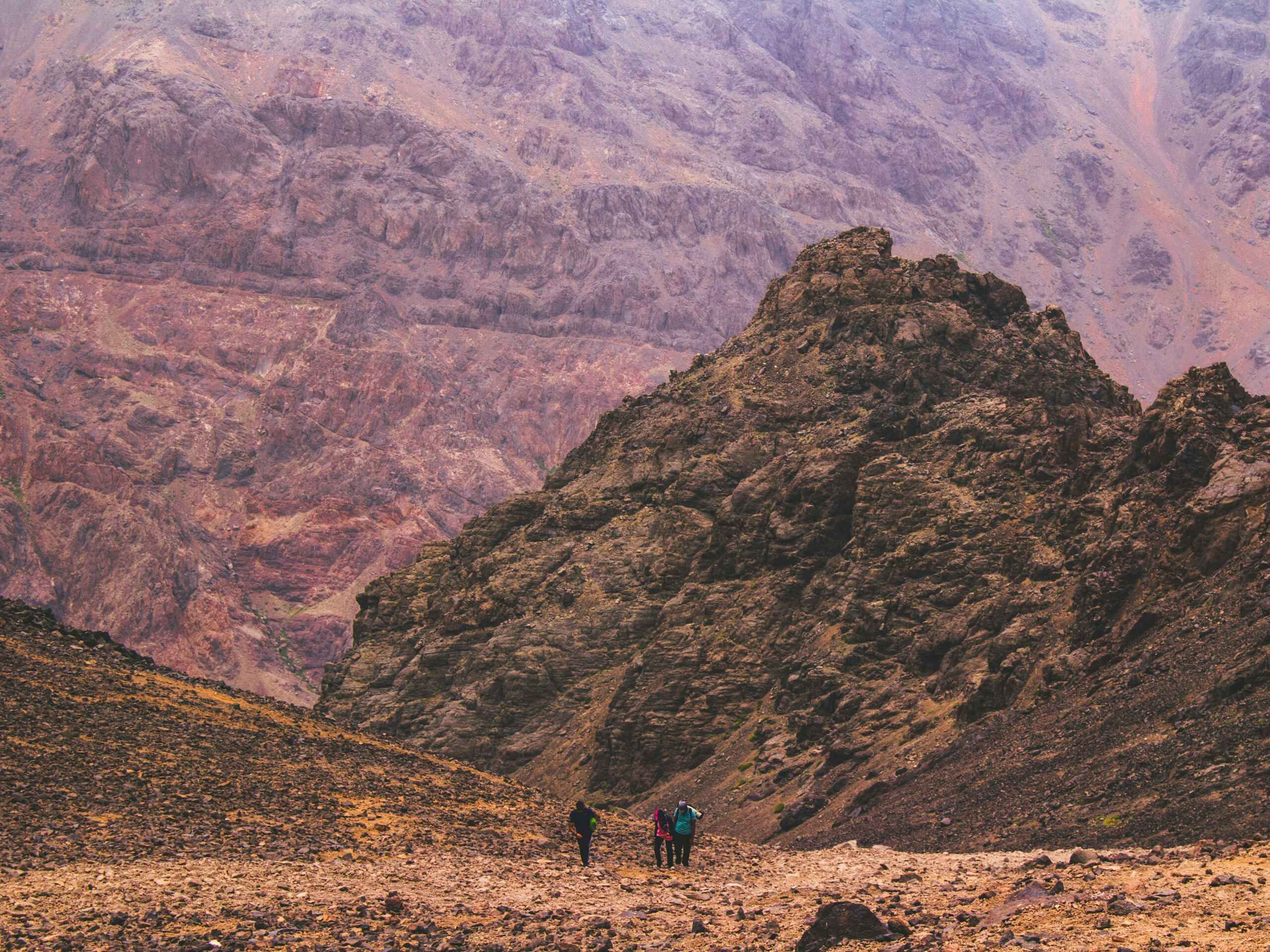
The climb from the refuge starts early and gains nearly 1,000 m on uneven rock and loose ground. Note that the summit is only part of the day: you must still descend to the refuge and, on many routes, continue all the way to Imlil. The summit climb and descent to Imlil can take eight to nine hours on foot.
How difficult is the Mount Toubkal trek?
In normal warm-season conditions, you do not need technical climbing skills for the standard summit route. You do need the stamina for steep ascents, rough footing and a long descent after a night above 3,000 m. Summit day is demanding even for walkers who are comfortable on mountain trails.
Prepare with long hikes on uneven ground and include descents when your legs are already tired. Walking on consecutive days helps too, especially if your route crosses high passes before the summit. Trekking poles may help on loose sections, but steady footing and endurance matter more.
Altitude is a separate challenge
Fitness does not predict how you will feel at elevation. Headache, fatigue, nausea or loss of appetite can be signs of altitude illness. The CDC’s high-altitude travel guidance advises gradual ascent and says travellers with symptoms should not continue higher until they recover. Worsening symptoms require descent and medical attention. Discuss a rapid ascent or relevant health conditions with a clinician before you travel.
A longer approach can spread the ascent over more days, but it does not guarantee that you will feel well at the refuge or on the summit. When comparing routes, look at sleeping altitude as well as the high point reached each day.
How many days should you allow?
The Moroccan tourism office’s trekking guide puts a straightforward climb from Imlil at two or three days on the mountain. However, the five-day summit holiday has three walking days, with arrival and departure in Marrakesh at either end.
For a longer journey, the guided Complete Toubkal Circuit Trek crosses several passes, visits villages and reaches Ifni Lake before the summit. The full holiday takes eight days. Compare the actual days on foot, the height of the overnight stops and the hardest day, rather than relying on the total trip length.
When is the best time to trek Mount Toubkal?
June through October is the main warm-season window for a Toubkal trek. Dry trails are more likely, though cold, wind or poor visibility can still affect the higher slopes. Snow may linger early in the season or return later in autumn, so check conditions close to departure. A guide may turn the group back if the weather or trail is unsafe. A warm afternoon in the valley tells you little about the temperature at the refuge before sunrise.
Winter brings a different kind of ascent. Snow and ice can require specialist equipment and experience using it, and shorter days leave less margin for delays.
Refuges, guides and what to carry
The Toubkal refuges have shared sleeping areas and an early start is common on summit day. Check what bedding is provided and whether you need a sleeping bag. Longer circuits may add nights in village gîtes or camps before you reach the refuge, so look at the accommodation for each night rather than assuming it will be the same throughout.
The five-day summit trek includes muleteers to carry the main luggage. Keep water, warm layers, snacks and anything you need during the day in your own pack.
Bring boots you have already worn on rocky trails, a waterproof shell, warm layers, sun protection and a headlamp. Poles can make the descent more comfortable. The refuge and summit can be cold even when Marrakesh is warm, so use the equipment list for your actual trip and season.
Should you summit or choose a valley walk?
You can spend several days in the High Atlas without climbing to 4,167 m. The guided Atlas Valley Trekking Tour follows gentler paths through Ouirgane National Park and the Azzaden Valley, with nights in village gîtes and views of the surrounding peaks. It is an easy five-day holiday for walkers who prefer villages and valleys to a high summit.
Toubkal suits you if the summit is a main reason for travelling and you are ready for the long day at altitude. If scenery and village walking matter more, browse guided hiking trips in Morocco for other routes through the Atlas Mountains.
Frequently asked questions
Can a beginner trek Mount Toubkal?
The standard warm-season route does not require technical climbing, but it is a poor first mountain hike. Build up to full days on steep trails before tackling the long summit climb and descent. If you have not yet done that kind of walking, start with a lower valley route.
Is the five-day Toubkal tour five days of hiking?
No! You walk for three days. The first day is for arrival in Marrakesh and the last is for departure.
Do you sleep on Mount Toubkal?
Most summit itineraries spend a night at a mountain refuge near 3,200 m, below the summit. Some longer routes add village stays, gîtes or camps before that night. After reaching the top, you descend to the refuge or continue down to Imlil.
Is Mount Toubkal safe to trek in winter?
Winter conditions can make the route far more demanding than the summer walk. Snow and ice may call for technical gear and winter mountain experience. The guided Toubkal trips featured here run from June through October.
Kelsey Krahn
Oct 17, 2026
Kelsey hated hiking when she was a kid. Her parents would always force her to venture up mountains with them, and she would always complain about how pointless it was to wind along a path to a "stupid view." But now, you can find Kelsey happily weaving to a collage of stunning views cloaking mountains across the globe!
Recent stories
Destinations
Walking Trips in Tanzania: Kilimanjaro, Mount Meru and Beyond
Tanzania boasts an exciting collection of walking adventures.
Nadine Gravis
Oct 20, 2026
Trip reports
Why Walking the Camino in My 50s Was Exactly What I Needed
In September and October 2026, my wife Lynn and I spent 14 days walking the Portuguese Coastal Camino from Porto to Santiago de Compostela.
Richard Campbell
Oct 15, 2026
Destinations
Walking Trips in Chile: Patagonia, Lakes and Atacama
The best walking trip in Chile depends on your preference!
Kelsey Krahn
Oct 14, 2026