
BlogDestinationsSouth West Coast Path Guide: Best Sections and Walking Tours for 2026
South West Coast Path Guide: Best Sections and Walking Tours for 2026
Table of contents

Nadine Gravis
Jun 16, 2026
Whether exploring Algonquin Provincial Park by canoe, or hiking Torres del Paine, Nadine loves spending time outdoors and sharing about her experiences.
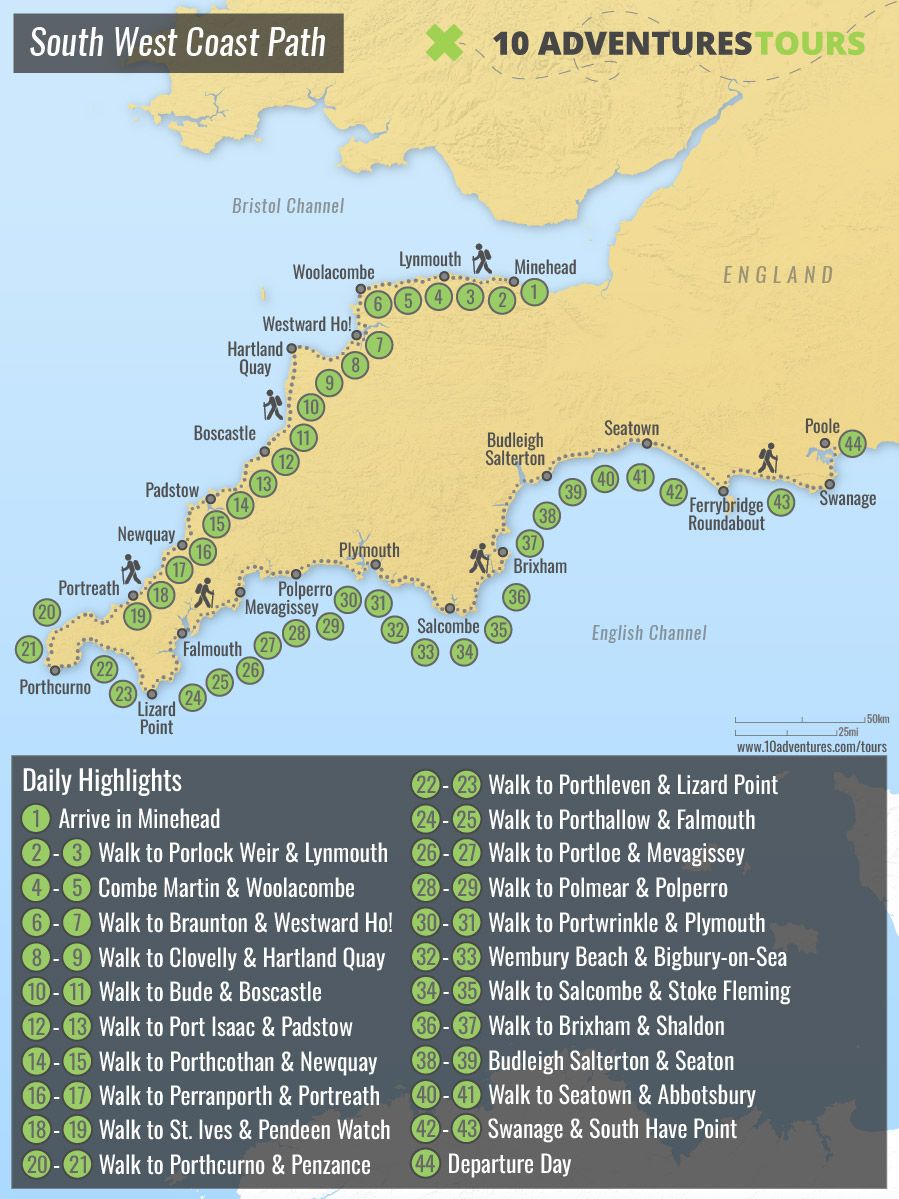
The South West Coast Path is one of England's great long-distance walking routes. Walkers venturing the entire route will go 630 miles from Minehead in Somerset to South Haven Point near Poole in Dorset. However, most travellers do not walk the entire trail in one go. (Talk about booking a lot of time off work!) Instead, they choose the best South West Coast Path sections for their time, fitness, and scenery preferences, then build a self-guided walking holiday around that stretch.
This guide explains the full South West Coast Path journey, then breaks the route down into the main sections that match 10Adventures trips and destination pages.
On a slightly different note, if you want a wider regional comparison before choosing a specific coastal section, Self-Guided Southern England Hiking Tours are a useful place to compare the South West Coast Path with other walking routes in the south of England. Or, if you’re not 100% sure the South West Coast Path is for you, it might be helpful to check out other walking routes in England before choosing your next walking excursion: Self-Guided Walking Tours in England.
What is the South West Coast Path?
The South West Coast Path, also known as the SWCP, is a long-distance National Trail around the southwest peninsula of England. The classic direction begins at Minehead on the edge of Exmoor, follows the coast through Somerset, North Devon, Cornwall, South Devon, and Dorset, then finishes at South Haven Point near Poole Harbour.
The route is famous for its variety. One week alone might wind by high Exmoor cliffs, Atlantic surf beaches, fishing villages, old mining landscapes, estuaries, ferry crossings, historic harbour towns, and the Jurassic Coast. The terrain changes constantly, which is part of the appeal, but it also means the difficulty changes by section.
Why Walk the South West Coast Path?
The South West Coast Path is ideal for walkers who want a journey that feels both wild and comfortable. You can spend the day above cliffs and coves, then finish in a village, harbour town, or guesthouse (with a pint in hand). It is also one of the best long-distance trails for section walking because you can choose a coast that fits your style rather than committing to the full route.
How Long is the South West Coast Path?
The full South West Coast Path is about 630 miles long. Strong long-distance walkers may complete it as a thru-hike, but most travellers walk it in sections. A one-week trip can focus on one standout stretch, while a longer 10- to 13-day itinerary can connect a larger part of the coast.
Because the trail repeatedly climbs and descends to beaches, river mouths, headlands, and clifftops, mileage alone does not tell the whole story. A 10-mile coastal day can feel much harder than a flat inland walk, especially in wind, rain, heat, or muddy conditions. The variety can make it difficult to know which section suits you best, so it’s a good thing you’re here and reading this blog!
Best Time to Walk the South West Coast Path
The best time to walk most South West Coast Path sections is from late spring to early autumn. May, June, September, and early October are often the most comfortable months because there is usually enough daylight for longer walking days, coastal services are more active, and the busiest summer crowds may be lower than in July and August.
Summer can be excellent for beach towns, long evenings, and open services, but popular places in Cornwall, Devon, and Dorset can be busy. Winter can feel atmospheric on the coast, but storms, mud, short daylight hours, and exposed cliffs make planning more important. Some ferries and seasonal services may also operate less frequently outside the main walking season.
When not to walk the South West Coast Path
We advise against treating the South West Coast Path as an easy seaside stroll in poor weather. Exposed headlands, cliff edges, muddy descents, high winds, and tidal crossings can make some days more serious than the distance suggests. If you are planning a winter walk, a very long daily stage, or a section with ferries and estuary crossings, check the route details carefully and build in flexibility.
South West Coast Path Sections
The easiest way to understand the South West Coast Path is to break it into sections. The route can be divided in many ways, but the sections below match the main 10Adventures pages and tours, which makes them useful for planning a real walking holiday.
Somerset and North Devon: Minehead to Bude
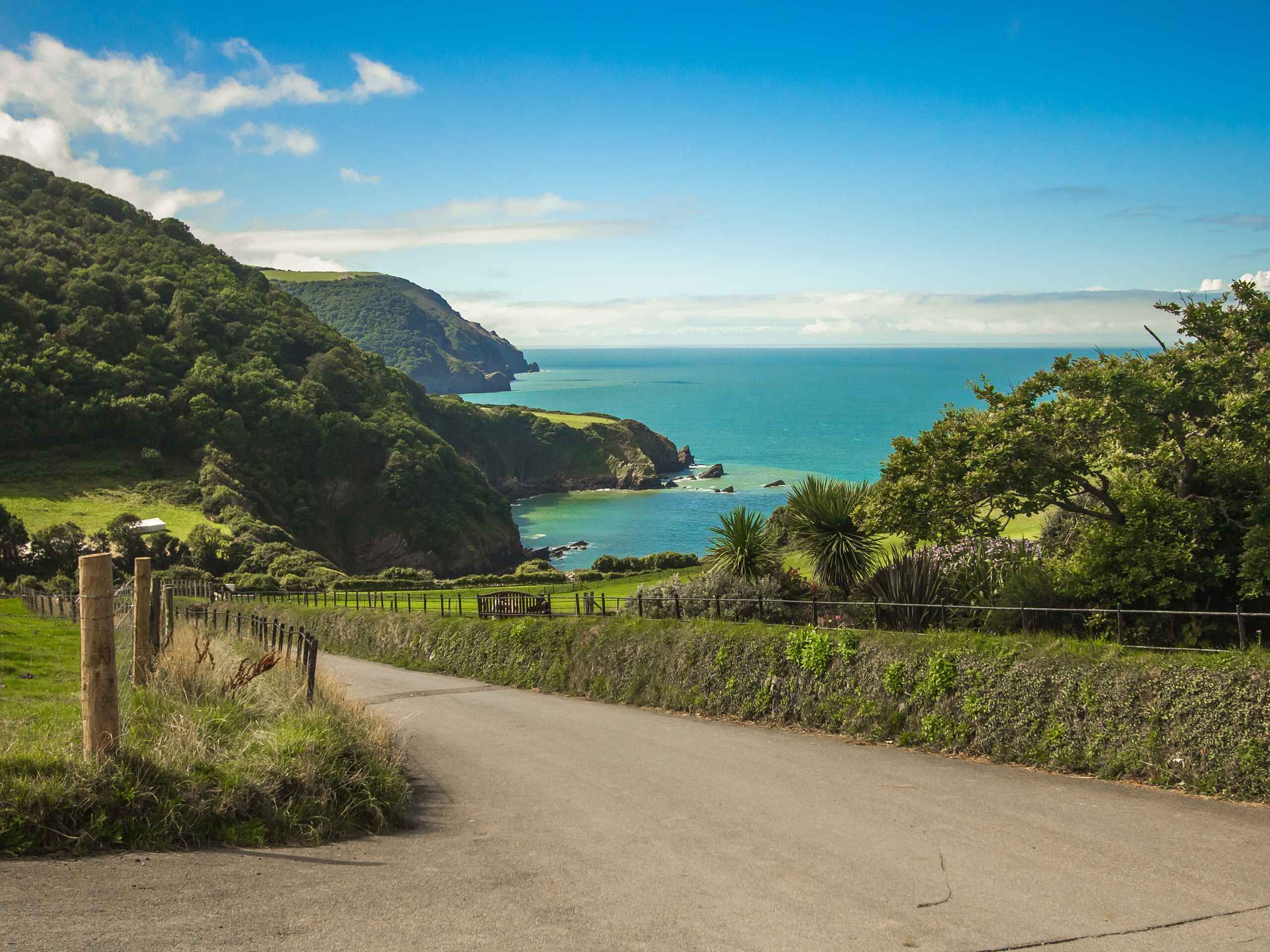
The western Somerset and North Devon section is one of the strongest choices for walkers who want a wilder start to the South West Coast Path. It begins around Minehead, passes Exmoor scenery, and follows a rugged coastline toward Bude. The Self-Guided South West Coast Path: Somerset and Devon Tour is the best direct match for this part of the route because it focuses on the western Somerset and northern Devon coast.
This section suits walkers who want sweeping views, quieter villages, steep coastal terrain, and a more remote feeling than some of the busier Cornish and Dorset stretches. It can also be a good fit for stronger walkers who like the idea of starting the trail at the traditional beginning and experiencing Exmoor before reaching the Atlantic coast.
For travellers adding extra day walks before or after a section trip, Exmoor National Park Walks are useful for comparing shorter routes around the early part of the trail.
North Cornwall Coast: Bude to Penzance
North Cornwall is one of the most popular South West Coast Path regions because it combines surf beaches, clifftop views, coves, fishing villages, and some of the most recognisable coastal scenery in southwest England. The Self-Guided South West Coast Path: North Cornwall Coast Tour follows the SWCP through North Cornwall from Bude to Penzance, making it the strongest tour link for this section.
This stretch is great for walkers who want classic Cornwall: rugged cliffs, Atlantic views, beach towns, and a mix of lively places and quieter coves. It can be moderate to demanding depending on the daily distances, because the path repeatedly rises and falls along the coast.
For a more focused look at part of this region, this article on Walking the South West Coast Path in Cornwall covers the Padstow to St Ives section and can help travellers understand what a shorter North Cornwall itinerary feels like.
Does walking in Cornwall match your dream walking holiday? Give the Best Walks in Cornwall a look! The link includes coastal walks and route guides that can help travellers compare shorter Cornwall walks alongside longer South West Coast Path sections.
For a specific North Cornwall day-route example from Padstow, the South West Coast Path: Padstow to Mawgan Porth Route Guide is useful for travellers who want to understand the coastal terrain, beach towns, and stage-style walking found in this part of the trail.
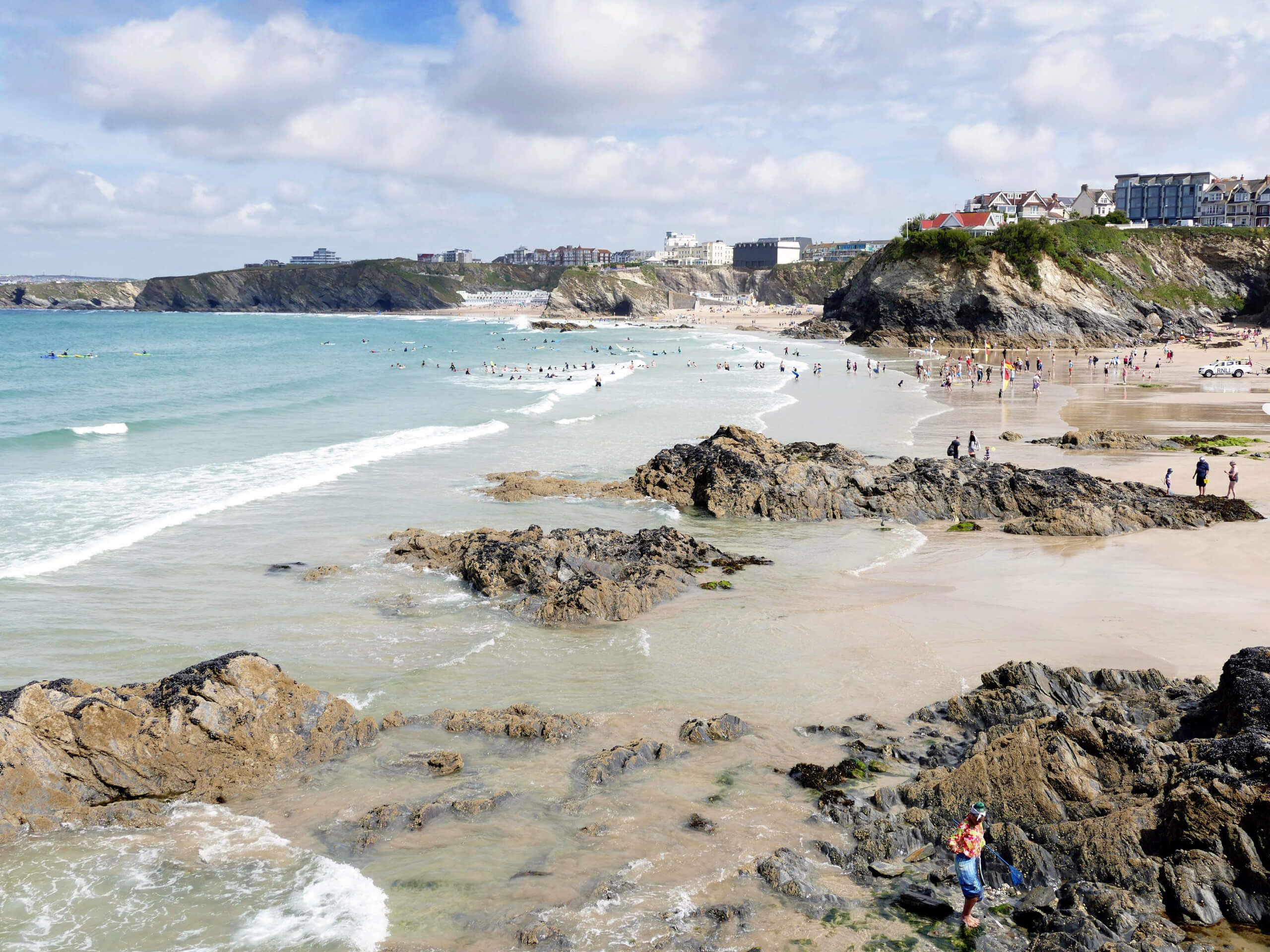
South Cornwall Coast
South Cornwall has a different character from the north coast. The coastline feels more sheltered in places, with fishing villages, estuaries, coves, gardens, historic harbour towns, and reminders of Cornwall's mining and maritime history. The Self-Guided South West Coast Path: South Cornwall Coast Tour is the main 10Adventures match for this part of the trail.
This section is a good fit for walkers who want coastal scenery with a slightly gentler atmosphere than the more exposed Atlantic stretches. It still has climbs, cliff paths, and long walking days, but it can feel more village-focused and varied, with plenty of chances to pair walking with harbours, seafood, and Cornish history.
Travellers who want a more specific South Cornwall walking holiday can also compare the Self-Guided Lizard Peninsula Walking Tour, which follows a dramatic part of the South West Coast Path around one of Cornwall's most distinctive coastal areas.
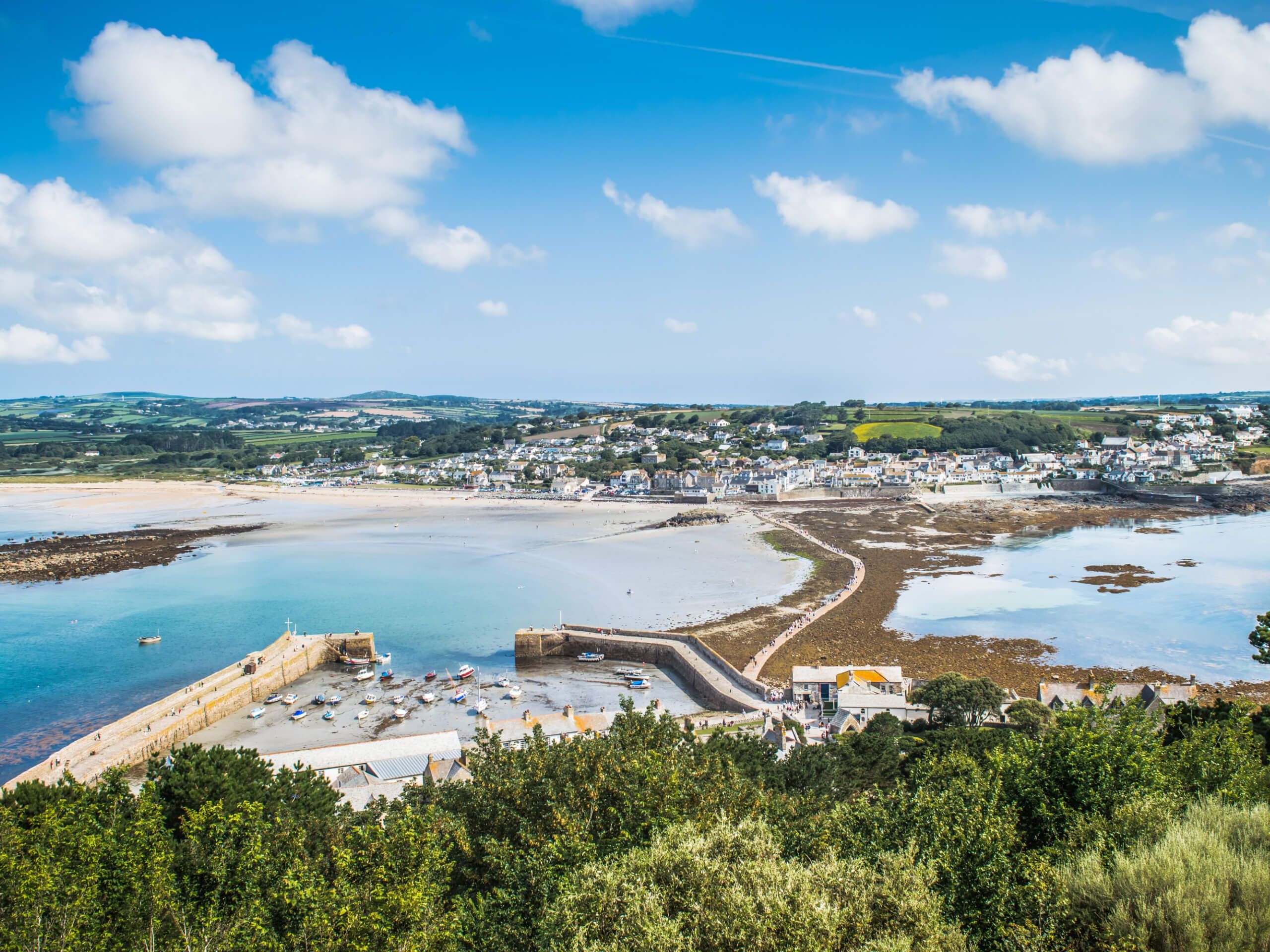
South Devon Coast
The South Devon Coast section is strong for walkers who want cliffs, estuaries, natural rock formations, seaside towns, and a less purely Cornish version of the South West Coast Path. The Self-Guided South West Coast Path: South Devon Coast Tour matches this section and focuses on the spectacular Devon coastline.
South Devon can be a rewarding choice for walkers who want a coastal trail with varied settlements and landscapes. Expect rolling terrain, sea views, ferry or estuary logistics in some places, and a mix of exposed cliffs and more sheltered coastline.
For shorter route ideas in the same county, Best Walks in Devon includes multiple South West Coast Path route guides and can help travellers compare day-walk options before choosing a longer section.
A great route example for South Devon is the South West Coast Path: Salcombe to Kingswear Route Guide, which highlights the cliffs, estuaries, villages, and coastal variety walkers can expect on this part of the route.
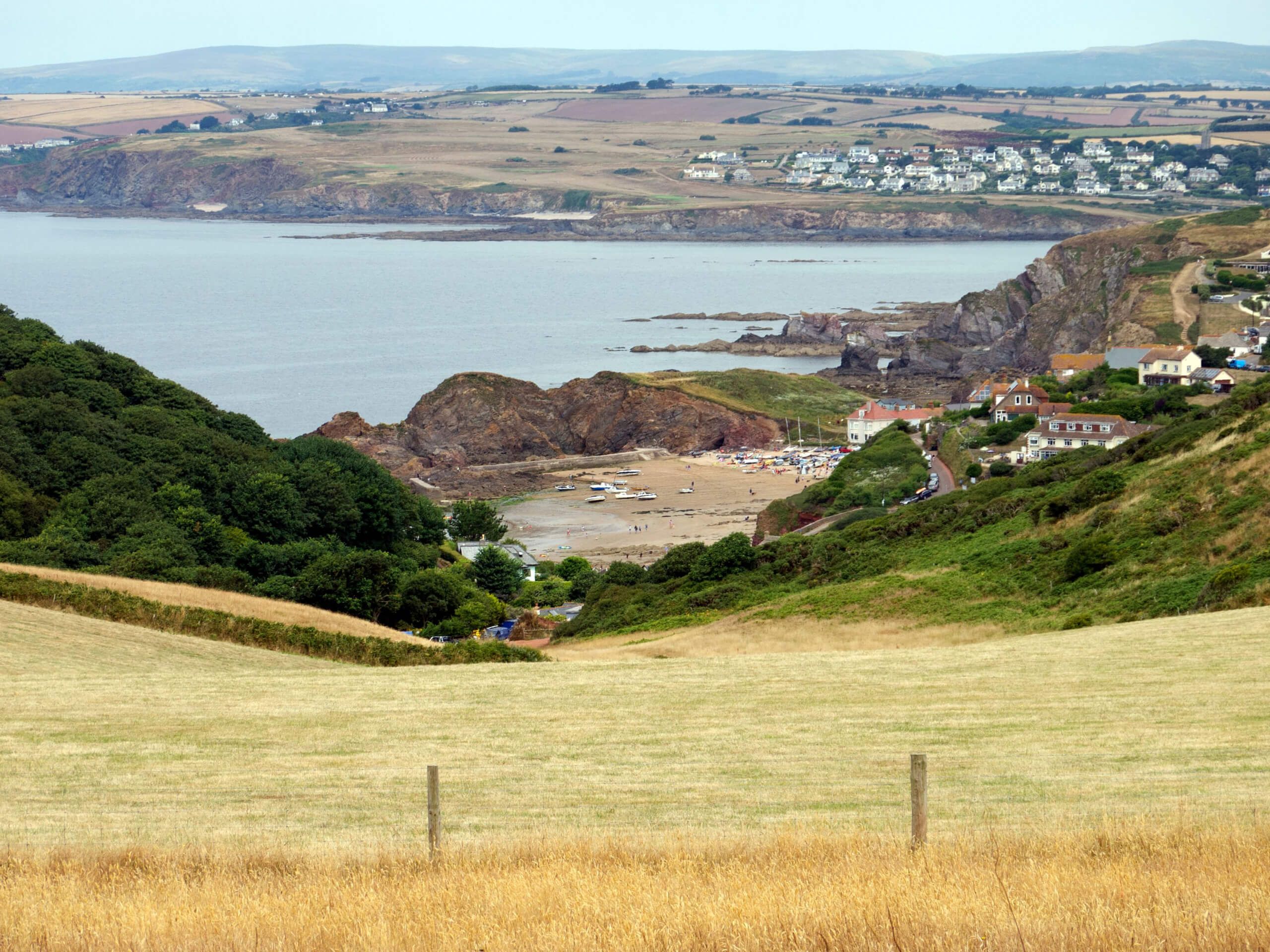
Jurassic Coast and Dorset: Budleigh Salterton to Poole
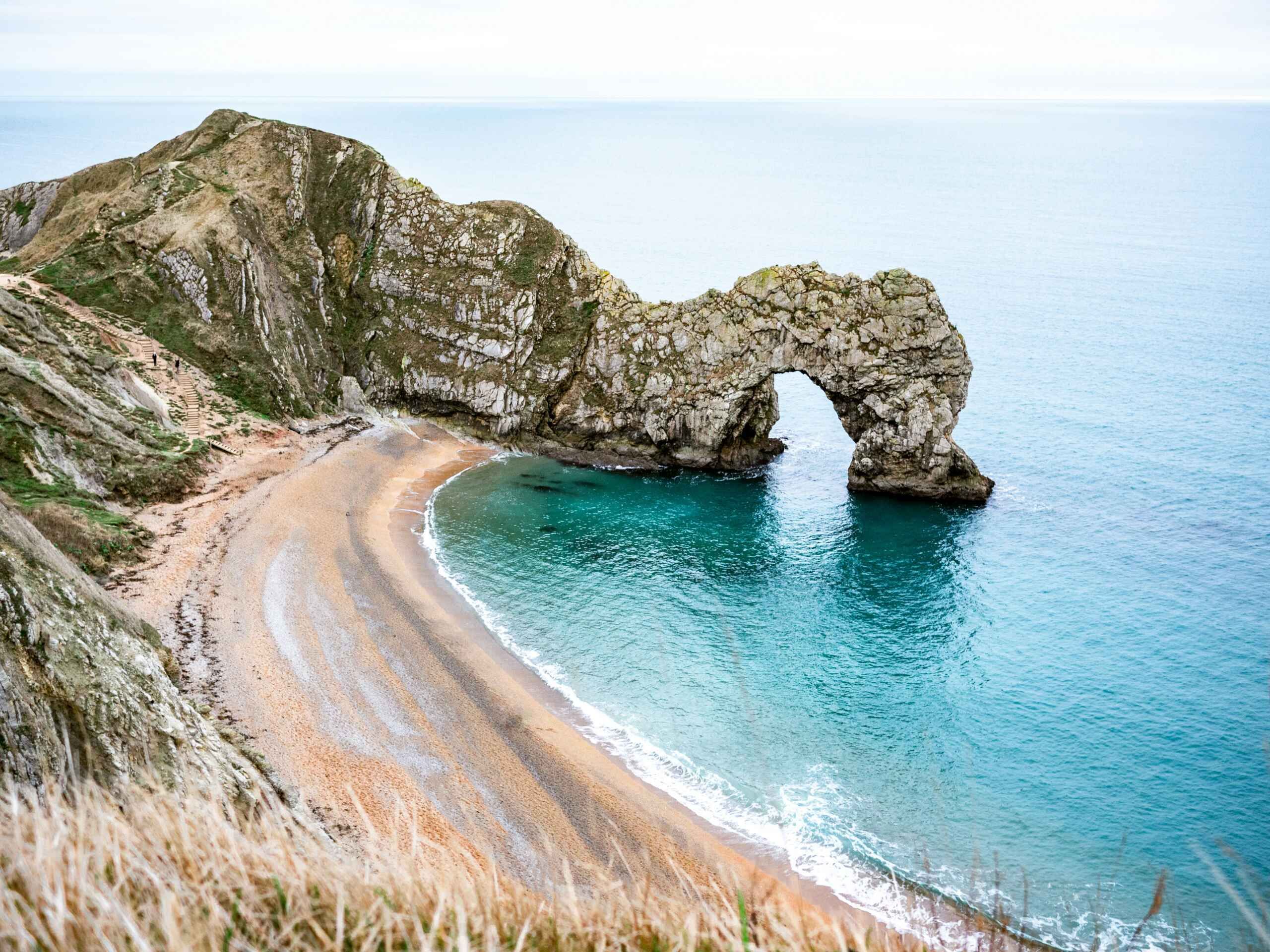
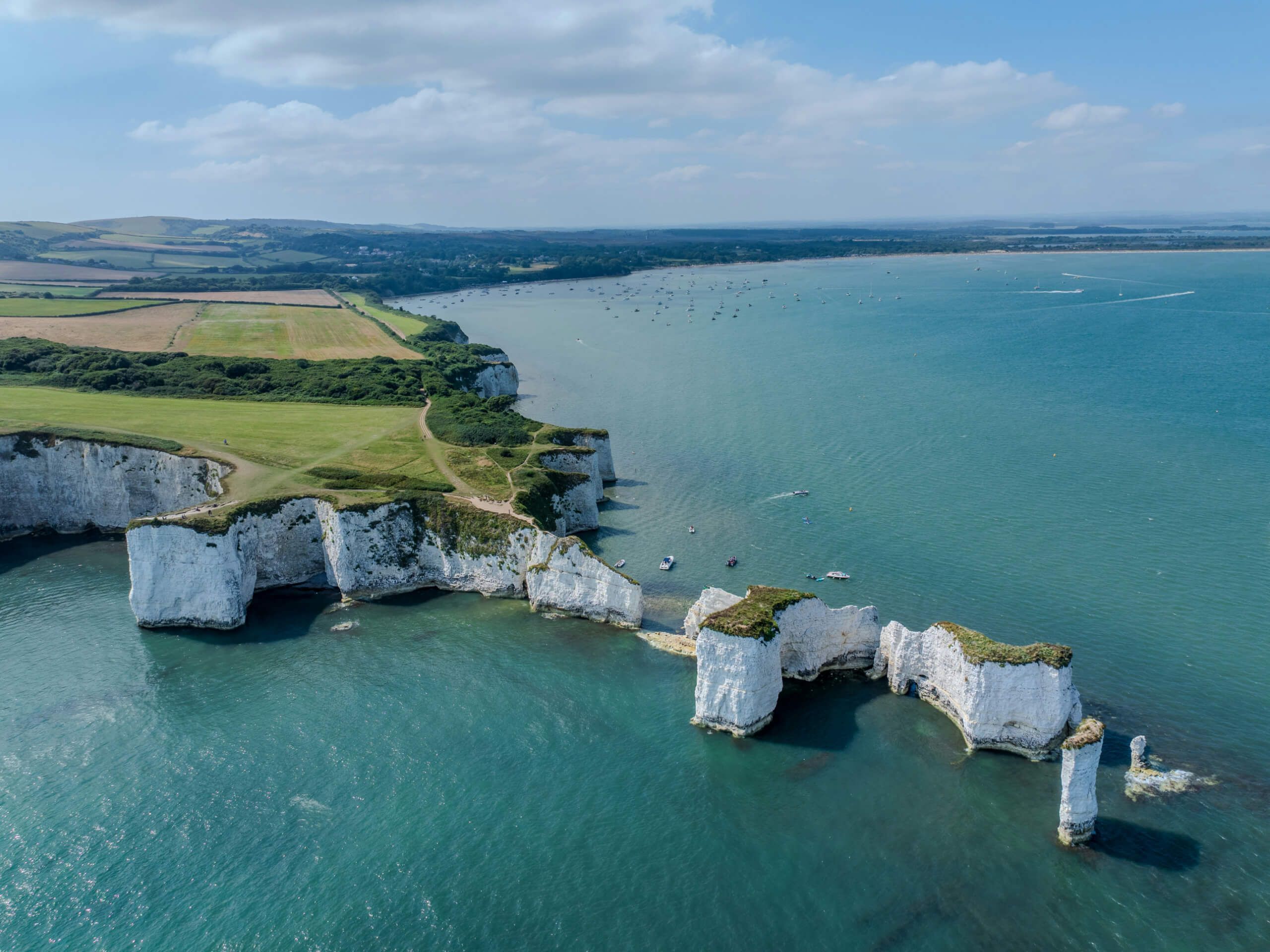
The eastern end of the South West Coast Path includes the Jurassic Coast, one of the most famous walking areas on the route. This section is known for geology, cliffs, beaches, Lulworth Cove, Chesil Beach, Dorset villages, and the final approach toward Poole. The Self-Guided South West Coast Path Walking Tour: Jurassic Coast is an incredible adventure for walkers who want the longer Jurassic Coast section from Budleigh Salterton to South Haven Point.
This is a great section for walkers who want big coastal landmarks and a clear sense of finishing the SWCP. It can be demanding in places because of repeated climbs, exposed cliffs, and long days, but it is also one of the most memorable parts of the path for geology and coastal scenery.
Want a shorter Jurassic Coast walking holiday? The Self-Guided Walking England's Jurassic Coast is another relevant option that focuses on a compact five-day coastal itinerary.
For day-walk inspiration near the final section, Best Walks in Dorset includes route guides around Dorset and the Jurassic Coast.
Another strong Dorset example is the South West Coast Path: Weymouth to Lulworth Cove Route Guide which fits well for walkers interested in Jurassic Coast cliffs, coves, and classic Dorset coastal scenery.
Lastly, and yes, this is our final suggestion for Jurassic Coast and Dorset, South West Coast Path: Swanage to Haven Point Route Guide is an ideal choice for walkers interested in the final approach to the official finish.
Which South West Coast Path Section Is Right for You?
Too long; didn’t read? In summary:
- Choose Somerset and North Devon if you want a wilder start, Exmoor scenery, quieter villages, and more rugged coastal walking.
- Choose North Cornwall if you want classic Atlantic Cornwall with surf beaches, cliffs, coves, and lively coastal towns.
- Choose South Cornwall if you want harbours, villages, estuaries, mining history, and a varied but slightly more sheltered coastal feel.
- Choose South Devon if you want cliffs, estuaries, seaside towns, and a section that feels different from Cornwall.
- Choose the Jurassic Coast if you want famous landmarks, geological drama, Dorset scenery, and the satisfaction of walking toward the official finish near Poole.
Best South West Coast Path Walking Tours
The best South West Coast Path walking tour depends on how much time you have and what kind of coast you want. First-time walkers who want famous scenery often start with North Cornwall or the Jurassic Coast. Walkers who want a quieter and more rugged beginning may prefer Somerset and Devon. Those who want villages, harbours, and a gentler Cornish feel may prefer South Cornwall.
A self-guided tour can be especially helpful on the South West Coast Path because accommodation, route notes, luggage transfers, and local logistics can take time to organize. This matters on a coastal trail where stage lengths, village availability, ferries, transport, and weather can all affect the walking experience.
- Self-Guided South West Coast Path: Somerset and Devon Tour: best for walkers who want the traditional start near Minehead, Exmoor scenery, wild cliffs, and a rugged North Devon introduction.
- Self-Guided South West Coast Path: North Cornwall Coast Tour: best for classic Atlantic Cornwall, surf beaches, dramatic headlands, harbour towns, and a longer Cornwall-focused section.
- Self-Guided South West Coast Path: South Cornwall Coast Tour: best for walkers who want fishing villages, estuaries, sheltered coves, maritime history, and a softer Cornish coastal feel.
- Self-Guided South West Coast Path: South Devon Coast Tour: best for walkers who want cliffs, beaches, estuaries, seaside towns, and a varied Devon section without committing to the full path.
- Self-Guided South West Coast Path Walking Tour: Jurassic Coast: best for Dorset scenery, famous geology, exposed cliffs, and walking toward the official finish near South Haven Point.
How Difficult is the South West Coast Path?
The South West Coast Path is not technically difficult in the mountaineering sense, but it can be physically demanding. The challenge comes from repeated climbs and descents, uneven cliff paths, long daily distances, exposure to wind and rain, and the cumulative effort of walking several days in a row.
Some sections are suitable for fit first-time long-distance walkers, while others are better for experienced hikers. The most important thing is to compare daily mileage and elevation rather than choosing only by region name. A shorter section with steep climbs may feel harder than a longer but flatter day.
Where to Start on the South West Coast Path
You’ve got options on the best places to start on the SWCP:
- If you want the traditional start, begin in Minehead and walk into Somerset and North Devon.
- If you want classic Cornwall, start with North Cornwall or a shorter Padstow to St Ives-style section.
- If you want a strong introduction without committing to the longest sections, the Jurassic Coast is a good choice because it has famous scenery and clear walking-holiday options.
Travellers with limited time should choose one section and walk it well rather than trying to rush across too many regions. The South West Coast Path is best enjoyed slowly, with time for views, villages, beaches, ferry timings, and weather changes.
Accommodation and Luggage on the South West Coast Path
Accommodation on the South West Coast Path usually means a mix of guesthouses, B&Bs, small hotels, inns, and local places to stay in or near coastal towns and villages. Availability can be tight in popular months, especially in Cornwall and Dorset, so booking early is important if you want specific dates or shorter walking stages.
Luggage transfer can make a big difference. Carrying a daypack instead of a full backpack makes the repeated climbs and descents more enjoyable, especially on multi-day sections. This is one of the main reasons self-guided walking tours work well on the South West Coast Path.
Getting to and Around the South West Coast Path
Because the South West Coast Path is a long linear trail, transport planning matters. Many walkers use trains, local buses, taxis, and pre-arranged transfers to reach the start of a section and leave from the finish. Some areas are easy to reach by public transport, while smaller villages may require more planning.
When choosing a section, check both the walking days and the arrival/departure logistics. It is often easier to plan around established section tours because the route has already been matched with overnight stops, luggage movement, and realistic walking distances.
What to Pack for the South West Coast Path
A good South West Coast Path packing list should include broken-in walking boots or shoes, waterproof jacket and trousers, layered clothing, sun protection, a refillable water bottle, snacks, blister care, a small first aid kit, and offline maps or route notes. Trekking poles can be useful on steep descents and repeated climbs.
Pack for coastal weather, not just the calendar. A sunny morning can turn windy or wet, and exposed cliffs can feel cooler than sheltered villages. Even in summer, a lightweight waterproof and warm layer are worth carrying.
Final Tips for Planning the South West Coast Path
Start by deciding whether you want wild cliffs, classic Cornwall, harbour villages, Jurassic Coast geology, or a traditional start-to-finish feel. Then pick the section that matches your fitness, available time, and travel logistics.
Book accommodation early, avoid overloading the first few days, check ferry or tide-dependent crossings where relevant, and keep some flexibility for weather. The South West Coast Path rewards walkers who slow down enough to enjoy the coast rather than treating it as a mileage challenge.
Frequently Asked Questions About the South West Coast Path
How long is the South West Coast Path?
The South West Coast Path is about 630 miles long, running around England's southwest coast from Minehead in Somerset to South Haven Point near Poole in Dorset.
Where does the South West Coast Path start and finish?
The traditional route starts in Minehead, Somerset, and finishes at South Haven Point near Poole Harbour in Dorset. Some walkers reverse the direction, but most route descriptions use Minehead to Poole.
How many days does it take to walk the South West Coast Path?
Walking the full route can take several weeks, depending on pace and rest days. Most travellers choose one section and walk for about 5 to 13 days rather than attempting the whole trail at once.
What is the best section of the South West Coast Path?
There is no single best section for everyone. North Cornwall is great for classic Atlantic scenery, Somerset and North Devon are good for rugged and quieter walking, South Cornwall is strong for harbours and villages, South Devon offers varied coastal terrain, and the Jurassic Coast is best for famous geology and landmarks.
Is the South West Coast Path difficult?
The path can be difficult because of repeated climbs, descents, exposed cliffs, long days, and changeable weather. Some sections are moderate, while others are better suited to experienced walkers.
Can beginners walk the South West Coast Path?
Beginners can walk selected sections if they choose realistic daily distances, use luggage transfers, and prepare for coastal weather. A shorter self-guided itinerary is usually better than trying to cover too much distance too quickly.
When is the best time to walk the South West Coast Path?
Late spring to early autumn is usually best, especially May, June, September, and early October. July and August can be beautiful but busier, while winter requires more caution because of storms, mud, and shorter daylight hours.
Can you walk the South West Coast Path self-guided?
Yes, the South West Coast Path is well suited to self-guided walking, especially when accommodation, luggage transfers, route notes, and local support are arranged in advance.
Nadine Gravis
Jun 16, 2026
Whether exploring Algonquin Provincial Park by canoe, or hiking Torres del Paine, Nadine loves spending time outdoors and sharing about her experiences.
Recent stories
Destinations
Where to Go Instead: 10 Less Crowded Alternatives to Europe’s Famous Trails
Europe's best-known hiking trails deserve their reputations, but popularity changes the experience.
Nadine Gravis
Sep 16, 2026
Destinations
Best Family Adventure Tours for Kids 12 and Under
As most parents know, family adventure travel is hard to plan while your children are young.
Richard Campbell
Sep 16, 2026

Destinations
How Much Does the Tour Du Mont Blanc Cost?
How much does the Tour du Mont Blanc cost in 2026?
Kelsey Krahn
Sep 15, 2026